AGES Radar for Infectious Diseases – 12 November 2026
Summary
Since calendar week 40, acute respiratory infections have been monitored more closely in Austria and across Europe: so far, only isolated cases have been detected, and influenza and RSV activity remains low. SARS-CoV-2 cases are on the rise in many European countries.
The West Nile virus season is drawing to a close: whilst only a single imported case of WNV in a human and three WNV outbreaks in animals were recorded in Austria last year, this year’s season has again seen a significant rise in reported cases.
The Ebola outbreak in the Democratic Republic of the Congo continues, with 10,741 confirmed cases to date, including 5,230 deaths. Nigeria and Kenya have also reported cases.
In France, the world’s first case of Shamonda virus infection in a human was recorded; until now, the virus had only been found in animals.
In this month’s feature, we present the OHSURVector project, which has expanded the monitoring of ticks and mosquitoes across several European countries and strengthened cross-border cooperation.
In the news: the AGES product warning regarding tomatoes from Sicily due to salmonella, and a publication on the rising number of measles cases among children worldwide.
Influenza
Isolated cases of influenza have been detected in Austrian wastewater. A small number of cases of influenza A have been reported by the doctors’ practices participating in the surveillance programme (sentinel). Hospital admissions due to influenza have also been recorded only sporadically to date.
At the level of the European Union and the European Economic Area (EU and EEA), the influenza virus is being detected in both doctors’ practices and hospitals; overall, influenza activity remains relatively low. The influenza viruses detected are mainly influenza A. People aged 65 and over are particularly at risk of developing severe cases.
One of the most important and effective preventive measures against severe illness and its complications is the annual influenza vaccination. The influenza vaccination is recommended for everyone aged six months and over and is available free of charge as part of the public vaccination programme. The vaccination is particularly important for people at risk of severe illness and their close contacts/household members, as well as for those who are at increased risk of infection due to their living circumstances or occupation. The best time to have the influenza vaccination is from mid-October or in November. Further details can be found at www.impfen.gv.at/influenza and in the current Austrian Vaccination Schedule 2026/2027.
The ‘Topic of the Month’ in the AGES-Radar of 15 October 2026 explains the process of vaccine production and authorisation for the flu vaccination, which is adapted annually due to rapidly mutating influenza viruses.
In episode 003 – Influenza & Co: How can I stay safe during the flu season? of the AGES podcast ‘Mut zum Risiko’, infectious disease epidemiologist Fiona Költringer explains what the real flu is all about and how best to protect yourself against it.
RSV
Since the beginning of September, only one case of the respiratory syncytial virus (RSV) has been recorded in the sentinel surveillance system. RSV has not been detected in wastewater in recent weeks (as at 9 November 2026). So far, there have only been isolated cases of hospital admissions due to RSV infections. Across Europe, RSV activity is very low.
The 2025/2026 RSV season began in Austria in February, peaked at the end of February and lasted into April.
Children under the age of five and people over 65 are at particularly high risk of developing a severe RSV infection. For adults, the RSV vaccine is recommended from the age of 60.
There is currently no authorised RSV vaccine for children for active immunisation. However, monoclonal antibodies are available for passive immunisation: Beyfortus (nirsevimab) is authorised for the prevention of lower respiratory tract RSV disease in newborns, infants and young children up to the age of 24 months. Immunisation is recommended for newborns and infants during their first RSV season, as well as for certain young children up to the age of 24 months (certain children born before 1 April 2026), who remain at risk of severe RSV disease during their second RSV season. The RSV vaccination is administered between 1 October and 31 March and will also be available in the 2026/27 free childhood vaccination programme funded by the federal government, the Länder and social security. A vaccine for pregnant women is also authorised for the passive immunisation of children. Further information on the vaccinations is available at RSV (Respiratory Syncytial Virus) | Vaccination simply protects. and in the current Austrian Vaccination Schedule 2026/2027.
RSV – AGES
SARS-CoV-2
Unlike influenza and RSV, SARS-CoV-2 does not exhibit a predictable seasonal pattern. The viral load in wastewater remains low overall (as at 9 November 2026). Hospital admissions due to SARS-CoV-2 remain at a low level.
Across the EU and the EEA, evidence of SARS-CoV-2 is increasing in many countries. People aged 65 and over are particularly affected.
The COVID-19 vaccine is available free of charge in Austria and is recommended for everyone aged 12 and over who wishes to reduce their risk of developing a severe form of the disease. Further information on the vaccination and the indications can be found at impfen.gv.at/covid-19 and in the Austrian Vaccination Schedule 2026/2027.
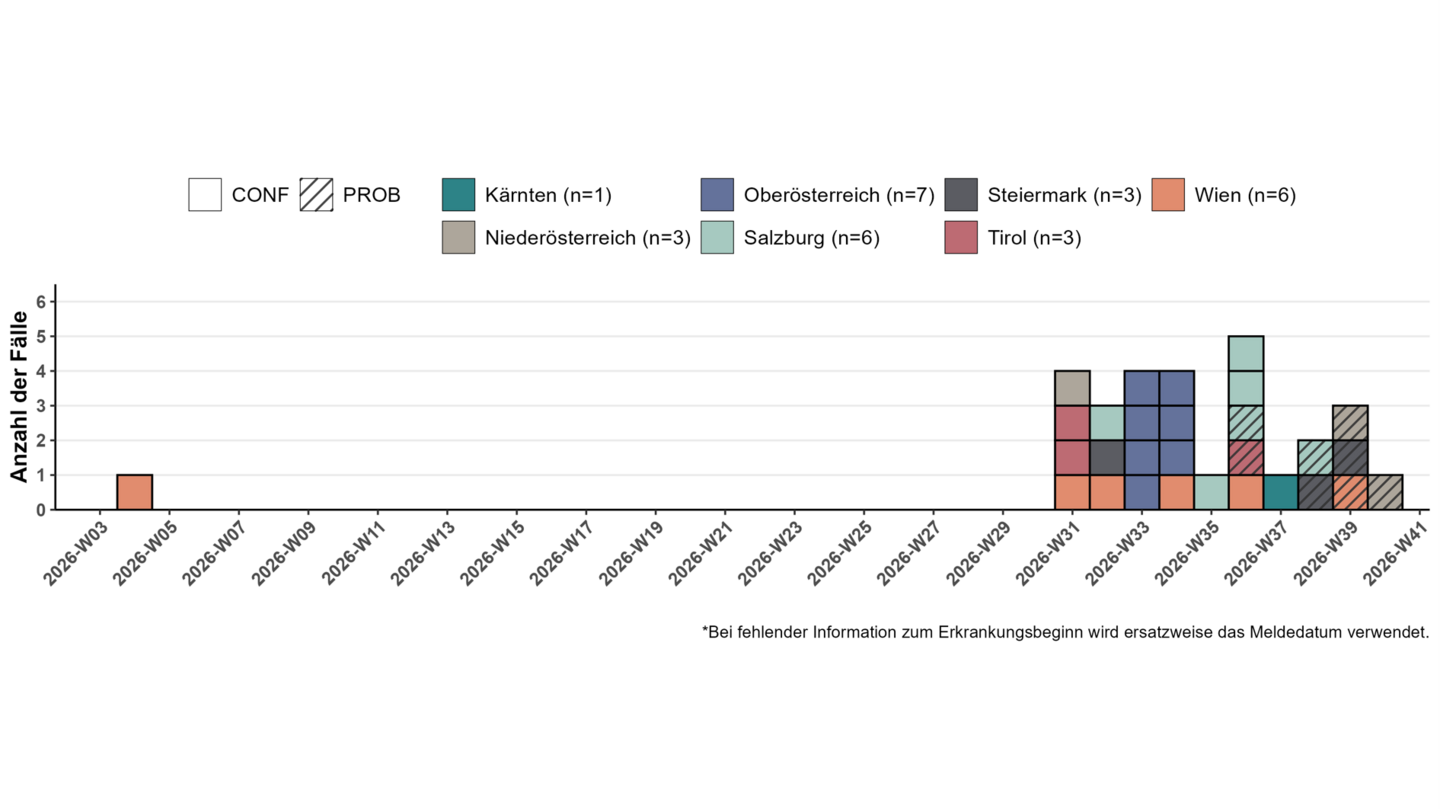
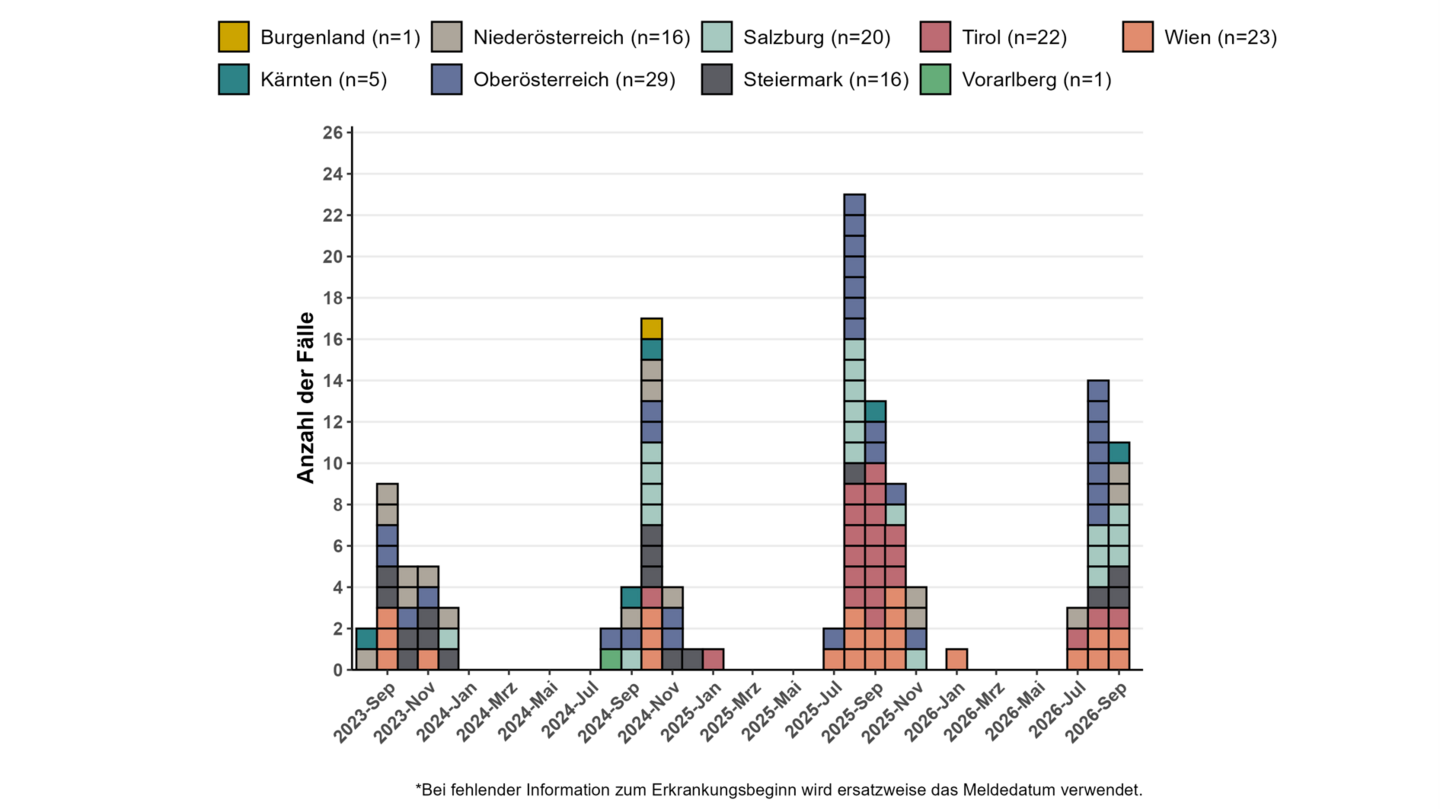
With November, the West Nile virus (WNV) transmission season in Austria is drawing to a close. Whilst only a single imported case of WNV in a human and three WNV outbreaks in animals were recorded in Austria last year, this year’s season has again seen a significant rise in reported cases. As of 4 November 2026, there have been 10 reports of WNV cases in humans in Austria to date, including one imported case and one case with an unknown place of infection. In addition, WNV infections have been reported in 14 wild birds and 5 horses, and the virus has been detected in a mosquito pool. All cases, both in animals and humans, are concentrated in north-eastern Austria, in the already known risk areas in the federal states of Vienna, Lower Austria and Burgenland.
In Austria, WNV is mainly transmitted by mosquitoes of the genus Culex. Whilst around 80 per cent of infections are asymptomatic, approximately 20 per cent of infected patients develop flu-like symptoms, including a sudden onset of fever, which can be high in some cases (West Nile fever), often accompanied by headaches, muscle and joint pain, headaches and, occasionally, gastrointestinal symptoms and a mottled, nodular rash. The most dangerous form is the neuroinvasive form of WNV disease, which primarily affects older people and occurs in fewer than 1 per cent of those infected. This can lead, amongst other things, to inflammation of the brain (encephalitis) with the potential for permanent damage, and in severe cases, to fatal outcomes. However, the proportion of cases with a neuroinvasive course amongst registered WNV infections is significantly higher, as many WNV infections with an asymptomatic or mild course are not diagnosed or reported.
In Europe, more regions were affected in 2026 than in any previous season. Both human cases and animal outbreaks were more numerous than in previous years. Italy is the hardest-hit country, with 783 locally acquired human cases (as at 6 November 2026) and 353 outbreaks in birds (as at 15 October 2026). Greece (465) and France (191) both reported the highest number of locally acquired human cases ever recorded in their respective countries. In France, a record number of WNV outbreaks in horses (307) was also observed. WNV activity has spread further geographically this year, including into northern Europe. Human cases and outbreaks in animal populations have been recorded in several regions of Belgium and the Netherlands. Belgium reported its first locally acquired human case this season; as of 6 November, the total stands at 15.
A geographical spread has also been observed in Germany. To date, locally acquired cases of human WNV infection have mainly occurred in the north-east of the country, in areas where WNV is already known to be endemic in horses and birds. This year, for the first time, two locally acquired cases in humans were also reported in the federal state of Baden-Württemberg in the south-west of the country. Given that the virus had already been detected in birds and horses there in previous years, and that a human case had already been reported this year from the neighbouring federal state of Rhineland-Palatinate, the first detection of a locally acquired human case was only a matter of time.
These examples illustrate that, even for Austria, it is by no means certain that local virus transmission will remain confined to the eastern part of the country in future.
With the onset of the cold season, mosquito activity – and thus the likelihood of local spread of the virus – decreases significantly. Consequently, hardly any further cases are expected this year, including no imported cases from other European countries.
In France, a case of infection with the Shamonda virus has been recorded in a human for the first time. The patient, a 60-year-old man with leukaemia, had developed encephalitis in early October, approximately one month after a stem cell transplant, and subsequently died. A case report was published in Eurosurveillance in October.
The Shamonda virus (SHAV) had previously only been detected in animal populations. In Africa, SHAV infections in animals have been known for many decades, and they have also been detected in Japan for some time.
In the summer of 2026, SHAV was detected for the first time in farm animals in several European countries: Belgium, Germany, France, Italy, the Netherlands, Austria, Portugal, Switzerland and Spain. A diagnostic procedure was rapidly established at AGES, and in mid-August 2026, SHAV was first detected at two Austrian cattle farms in Vorarlberg and Upper Austria. Infections have since been detected throughout the country.
SHAV belongs to the Orthobunya virus group. It is normally transmitted between animals by midges. Two variants of SHAV circulate amongst European livestock: Shamonda virus Europe 1 and Europe 2 (SHAV-EU1 and SHAV-EU2). Whilst SHAV-EU1 has so far been detected in sheep, goats, alpacas and horses, both SHAV-EU1 and SHAV-EU2 circulate in cattle. To date, only SHAV-EU1 has been detected in Austrian cattle. The majority of detections in Austria continue to involve cattle, although the detection rate has now fallen significantly. This may be due to environmental conditions for the vectors having deteriorated, or it may indicate widespread infection. Cases in horses remain rare. SHAV can cause damage to the foetus in pregnant ruminants and, subsequently, lead to malformations. These cases do not become apparent until the spring of the following year. The Schmallenberg virus, which has been endemic in Austrian livestock populations since 2012 and belongs to the same viral genus, made its presence felt upon its first appearance through a similarly rapid spread and the occurrence of malformations in the following year. Colleagues from the Animal Health Department at AGES published an article on this subject in 2014.
The French patient had been infected with SHAV-EU1. He lived in a rural area in south-eastern France, where the virus had previously also been detected in cattle. He may possibly have been infected through the bite of a midge. Infection via the consumption of contaminated food, a blood transfusion or a transplant cannot be ruled out either, although these routes of transmission are considered less likely.
No general risk to humans can be inferred from this isolated case, as the patient was a severely immunocompromised individual. No other cases of SHAV infection in humans have been reported worldwide to date. The European Centre for Disease Prevention and Control (ECDC) is monitoring developments in close collaboration with the European Commission and the European Food Safety Authority, which oversees animal health and food safety in the EU. Investigations to gain a deeper understanding of the case are still ongoing.
There are still no signs that the current Ebola outbreak in Africa is stabilising. In the Democratic Republic of the Congo (DRC), https://www.ecdc.europa.eu/en/ebola-disease-multi-country-outbreak-2026 a total of 10,741 confirmed cases and 5,230 deaths have been recorded between May 2026 and 2 November 2026. The case fatality rate therefore remains unchanged at around 48 per cent.
The outbreak continues to be centred in the DRC, although isolated cases of Ebola have now also been reported in Nigeria and Kenya. The infected person from Nigeria was transferred to Switzerland for medical treatment. The person, who had previously been in Uganda, developed the first symptoms on 7 October and tested positive for the Bundibugyo virus on 20 October. Nigeria launched an intensive contact tracing exercise, during which 62 close contacts were identified.
In Kenya, nine confirmed cases, including two deaths, had been recorded by 6 November 2026. All cases were linked to the first case confirmed in Kenya in early October. We reported in more detail on this case – involving a person who had travelled from the Democratic Republic of the Congo via Uganda to Kenya – in the 15 October 2026 issue of AGES-Radar.
One of the greatest challenges in containing the epidemic remains the incomplete tracing of chains of infection. Many patients do not seek treatment at the designated treatment centres, meaning that routes of transmission often remain undetected. Around 40 per cent of newly diagnosed cases have so far not been linked to any known contact of an Ebola patient. According to experts at the World Health Organisation (WHO), although this proportion has fallen since the start of the outbreak, it remains too high for the epidemic to be effectively controlled.
In addition to tried-and-tested disease control measures – in particular rapid diagnosis, rigorous contact tracing, the isolation of patients and safe burial procedures – high hopes are pinned on the development of effective vaccines. No authorised vaccine is currently available for the Bundibugyo Ebola virus that is currently circulating. However, several clinical trials are already in preparation or in the recruitment phase.
In various trial projects in the DRC, the vaccine Ervebo® is being administered to close contacts of patients and to healthcare workers. Ervebo® was originally developed to combat the Zaire Ebola virus, but has also demonstrated protective effects against the Bundibugyo variant in animal trials. In addition, further vaccine candidates are under development, including a vaccine developed by the University of Oxford and an mRNA-based vaccine from the company Moderna. Clinical trials for these candidates are currently being prepared.
The AGES podcast ‘The Courage to Take Risks – In Context: Ebola’ explains how a suspected case of Ebola was handled in Austria and which factors, apart from the medical aspects, play an important role.
Regular updates on the outbreak in the DRC can be found at:
According to the WHO, vector-borne diseases are responsible for more than 700,000 deaths worldwide each year, most of which could be prevented through vector control. Ticks and mosquitoes, as well as the pathogens they transmit, do not respect national borders. Factors such as the movement of goods and people, globalisation and climate change are leading to changes in their geographical distribution. It is therefore essential to monitor which species of vectors are present where, and which pathogens they carry that are transmissible to humans or animals and can cause disease. This is precisely where the European OH SURVector project comes in.
OH SURVector stands for ‘One Health surveillance and Vector monitoring for cross-border pathogens’. Since January 2024, eight institutions from Austria, the Czech Republic, Greece, Hungary and Slovakia have been working together to strengthen the surveillance of ticks, mosquitoes and vector-borne pathogens. The EU4Health project, coordinated by the Austrian Agency for Health and Food Safety (AGES), will run until January 2027.
The aim of the project is to establish or further develop national monitoring systems and to improve their cross-border integration. Laboratory capacities are being strengthened, data is being collected more systematically, and national vector databases are being established. Over the past few years, ticks and mosquitoes have been and continue to be collected, their species identified and tested for selected pathogens. The focus includes, amongst others, the West Nile virus, Borrelia bacteria as the causative agents of Lyme disease, and the Crimean-Congo haemorrhagic fever virus (CCHFV).
Table 1: Participating countries, pathogens investigated, vectors investigated
| Borrelia | Coxiela burnetii (Q fever) | Crimean-Congo haemorrhagic fever virus | TBE virus | West Nile virus | |
| Austria | x |
| x |
| x |
| Czech Republic | x |
|
|
| x |
| Greece |
|
| x | x |
|
| Hungary | x | x | x | x | x |
| Slovakia | x |
|
| x | x |
Vector-borne pathogens circulate within complex systems between vectors such as ticks or mosquitoes, animal hosts, natural reservoirs and humans. Changes in vector distribution, pathogen circulation and the occurrence of disease cases cannot be considered in isolation, but require collaboration across disciplines and national borders. Only by understanding all the individual components can negative impacts on health be actively countered and successful pandemic prevention ensured. This project is therefore based on the One Health approach, which recognises that humans, animals and the environment are closely interconnected and must be considered together.
The comprehensive monitoring carried out by OH SURVector serves as the basis for risk assessments and the implementation of targeted measures for the prevention and control of vector-borne diseases. Through monitoring, developments and warning signs can be identified at an early stage and appropriate action taken.
Birds are the natural reservoir of the West Nile virus, which can be transmitted to horses and humans via mosquitoes.
The findings from OH SURVector highlight the added value of cross-border surveillance. A One Health analysis of the 2024 WNV season combined data on humans, animals and mosquitoes with genomic analyses. The findings attribute an important role to Hungary in terms of WNV diversity and the spread of the virus across Europe. The spread of the virus from Hungary was observed in particular towards Central and South-Eastern Europe. The joint analysis of epidemiological, veterinary, entomological and genomic data thus enables an understanding of transmission dynamics that goes beyond national case figures.
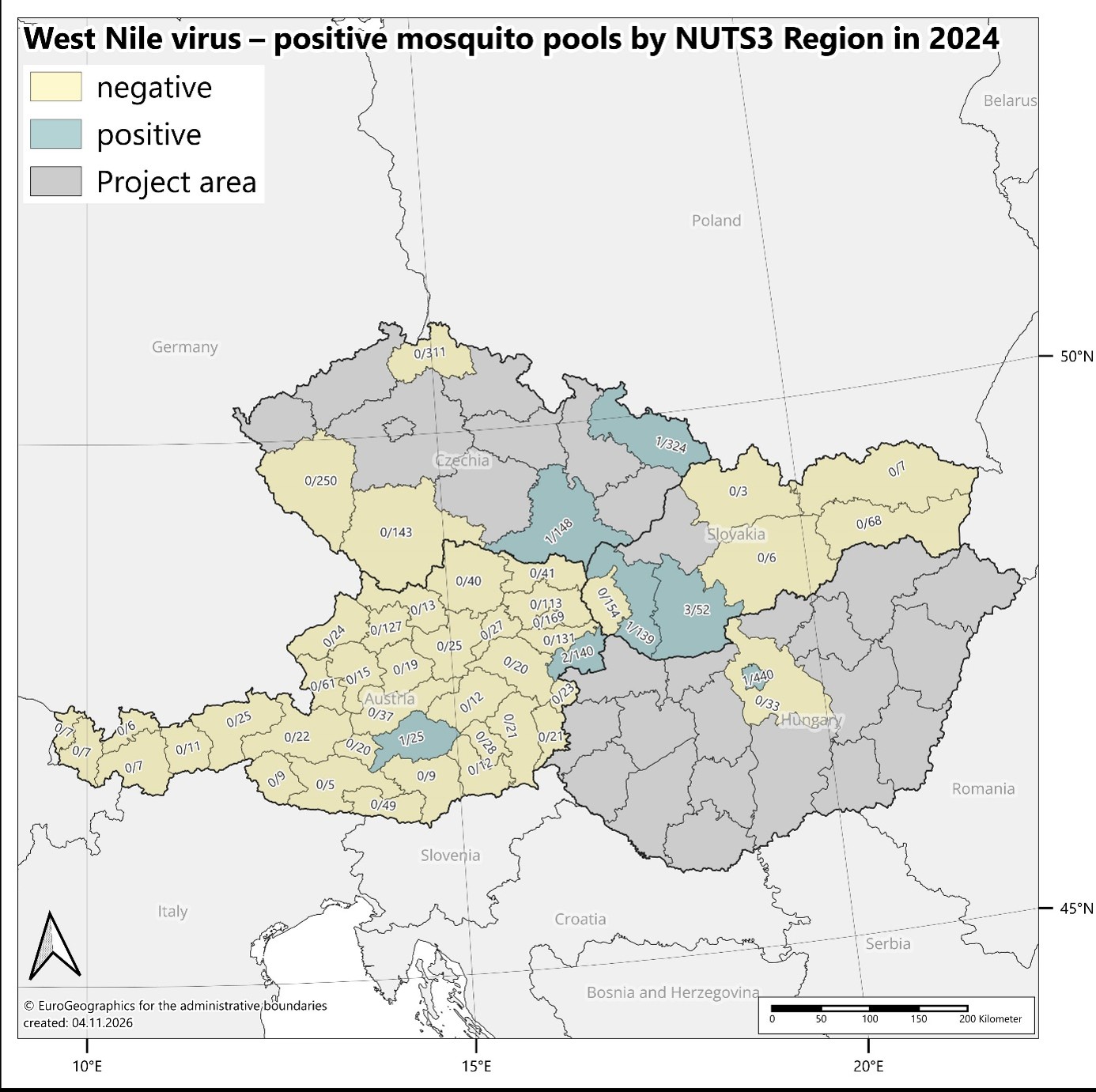
In Austria, too, data on tested mosquito pools, birds, horses and humans are analysed in combination in the context of WNV. 2024 was a particularly severe year for WNV: a total of 36 domestically acquired human cases were reported, along with 59 cases in horses and 22 in birds. The virus was detected in three mosquito pools tested, including one in Styria (Figure 1). This is particularly noteworthy, as WNV cases in humans and animals are normally concentrated in the east of the country.
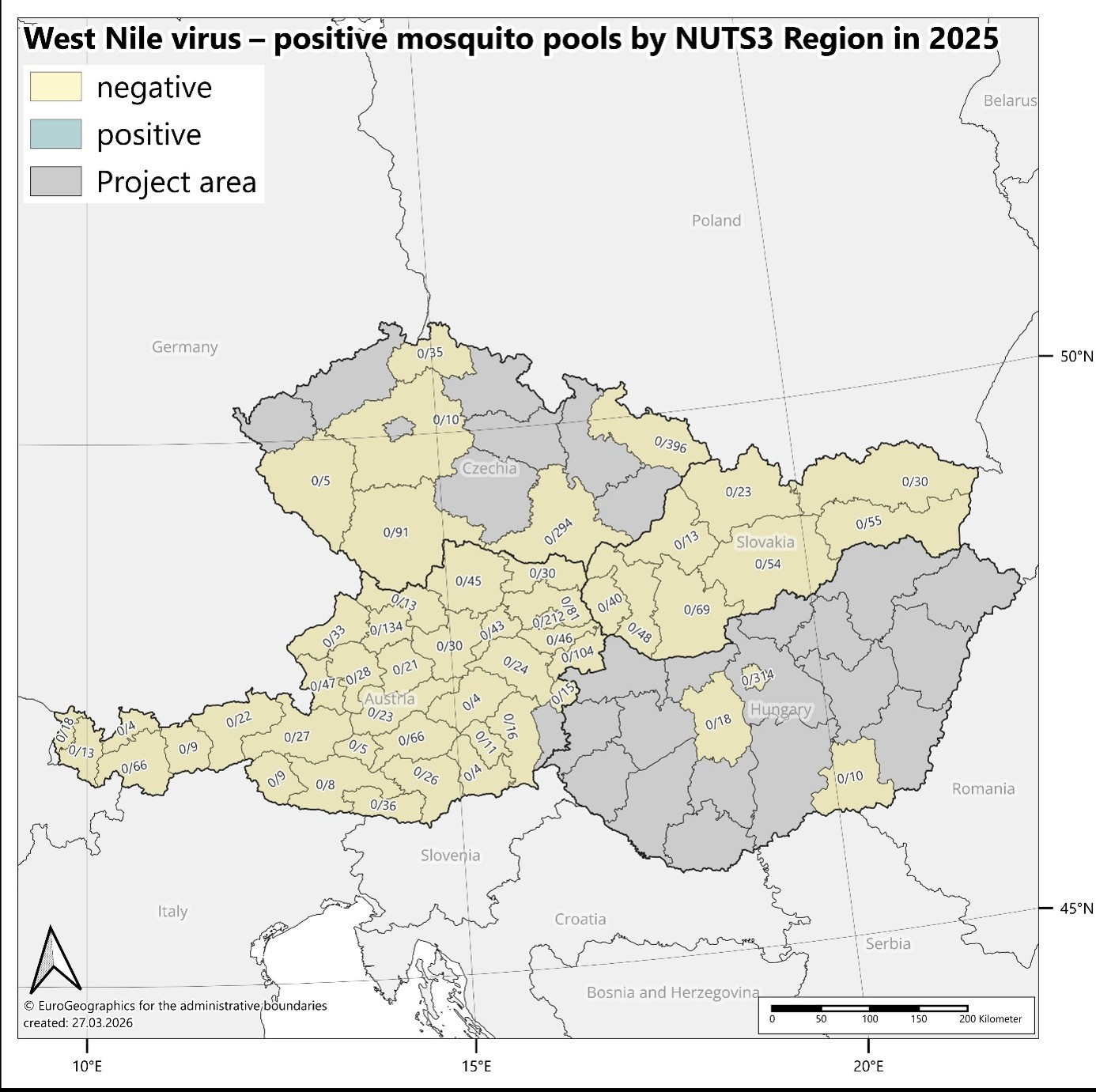
In the 2025 monitoring year, all mosquito pools tested negative for WNV (Figure 2). Ongoing analyses for 2026 show one WNV-positive pool in Vienna.
Following last year’s reports of just a single imported human case and three animal cases of WNV infection, this season appears to have been significantly more severe once again. Further information on the latest figures can be found in this issue under ‘Situation in Austria’.
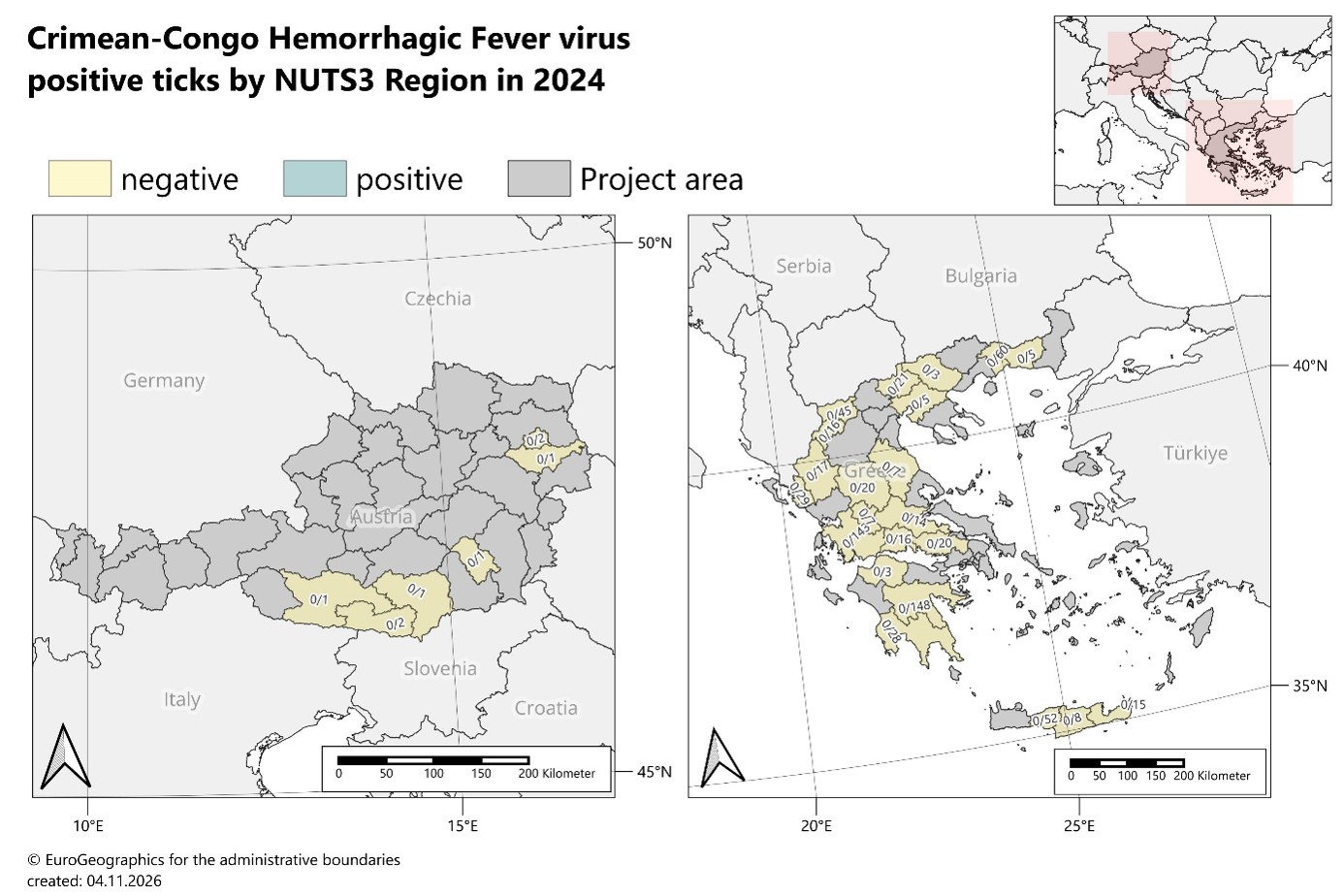
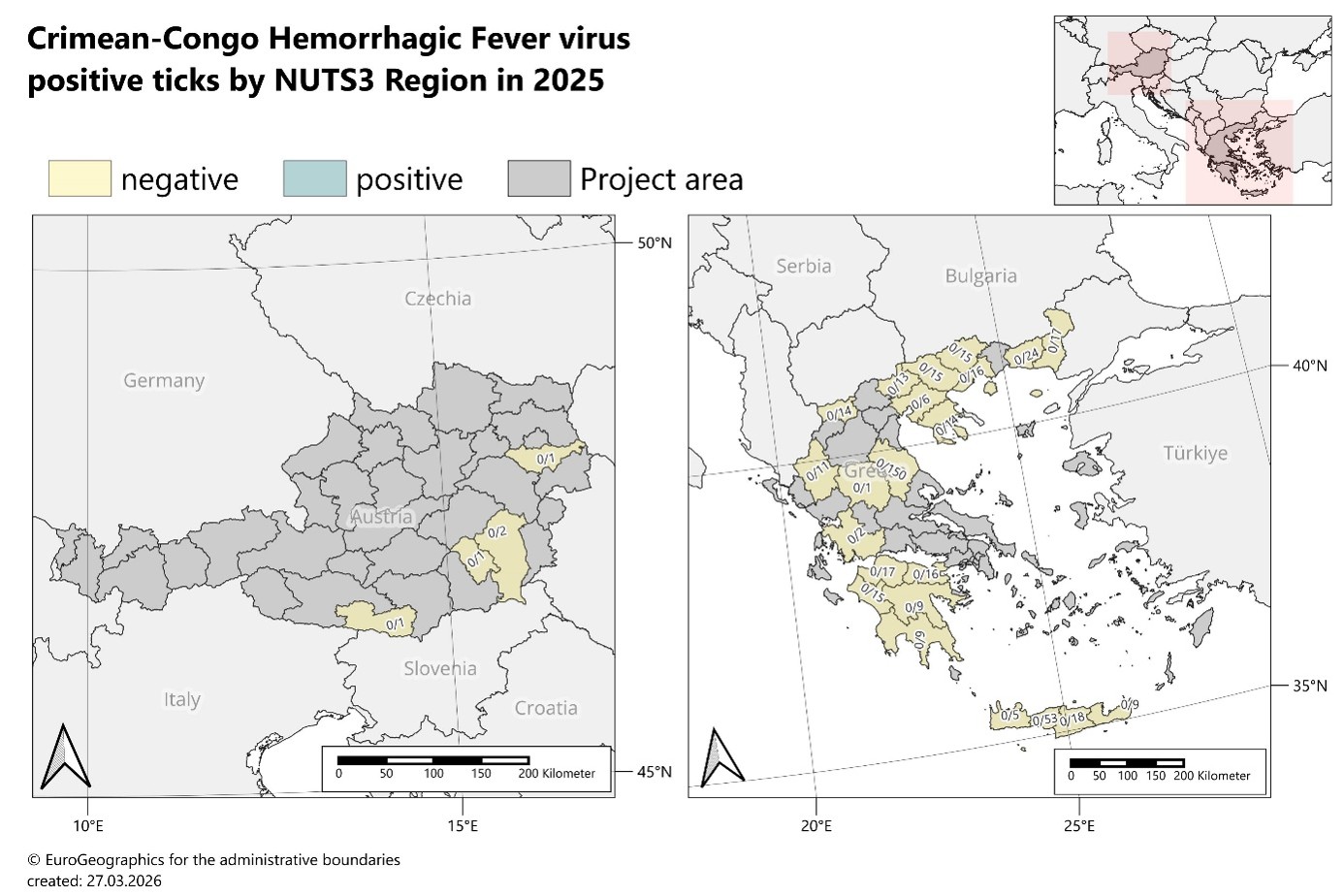
Another key focus of the project is CCHFV, the main vectors of which are ticks of the genus Hyalomma, also known as giant ticks. In the Austrian tick monitoring programme, eleven Hyalomma ticks were confirmed in 2024, with almost all of them being linked to a stay abroad. In 2024, eight ticks were tested for CCHFV, and in 2025, five; all samples were negative (Figures 3 and 4). In contrast, Rickettsia aeschlimannii was detected in three ticks; this bacterium can cause tick-borne fever. Over recent years, there has been a relative increase in Hyalomma ticks in Austria that are not associated with travel. So far this year, there have been 11 reports of Hyalomma ticks from various locations in Lower Austria, Upper Austria, Carinthia and Styria, the majority of which had no history of travel (as at 6 November 2026).
Within the OH SURVector project, Austria and Greece have commenced systematic Hyalomma monitoring and CCHFV testing. Samples analysed to date have remained negative. At the same time, this part of the project highlights a significant challenge in international vector monitoring: Whilst, for example, PCR-based diagnostic methods can be harmonised relatively easily, field and collection strategies must take local climatic, ecological and infrastructural conditions into account. The aim is therefore not necessarily complete methodological standardisation, but rather the generation of surveillance data that is as comparable as possible.
The importance of an established monitoring infrastructure became apparent in Greece in June 2025. Two autochthonous cases of CCHF were recorded, including a fatal index case and a secondary infection in a healthcare worker. This rare event triggered a comprehensive One Health response, which, in addition to epidemiological investigation and contact tracing, also included veterinary and entomological investigations. Data from the tick monitoring programme established as part of OH SURVector were incorporated into these investigations.
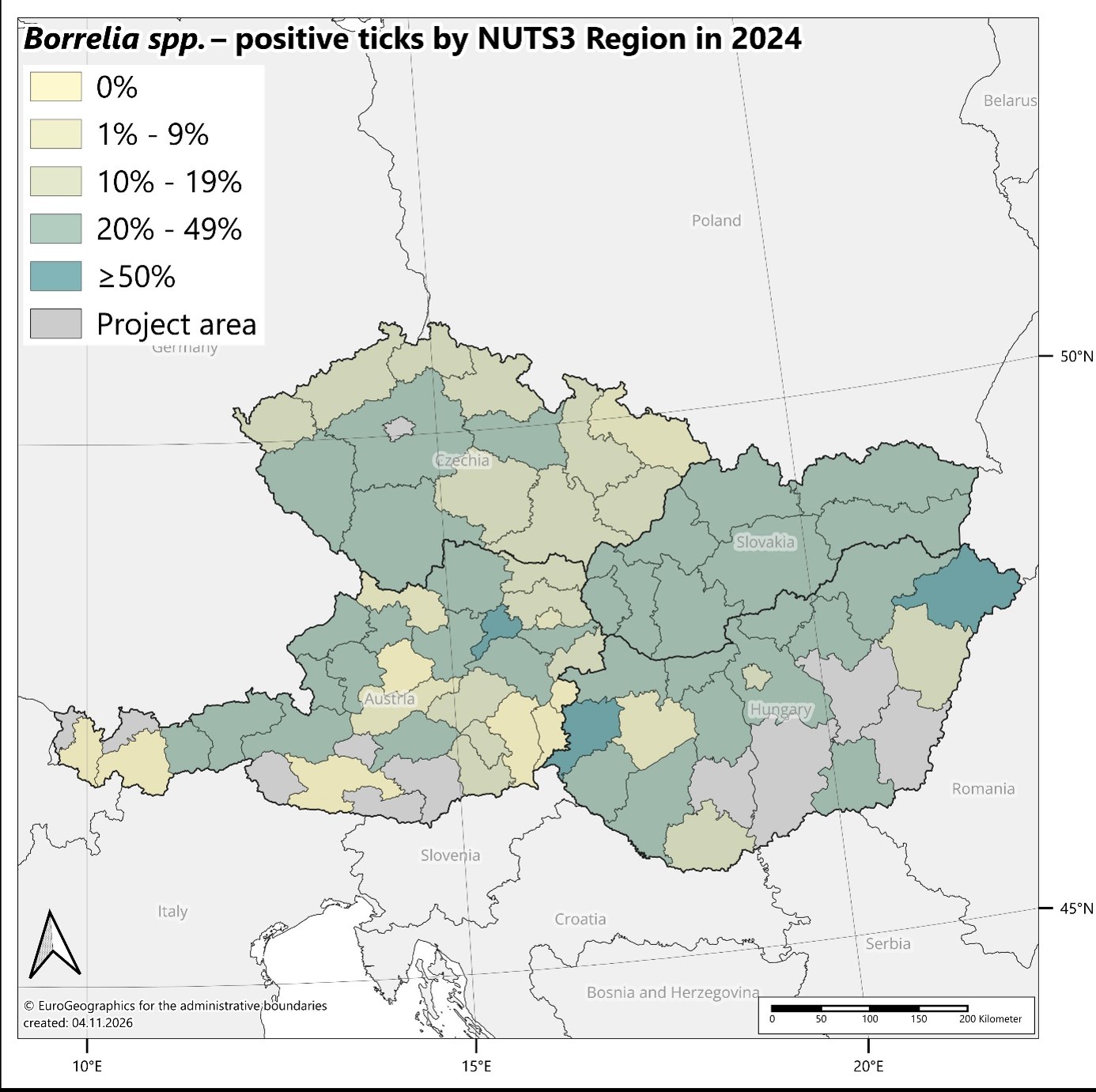
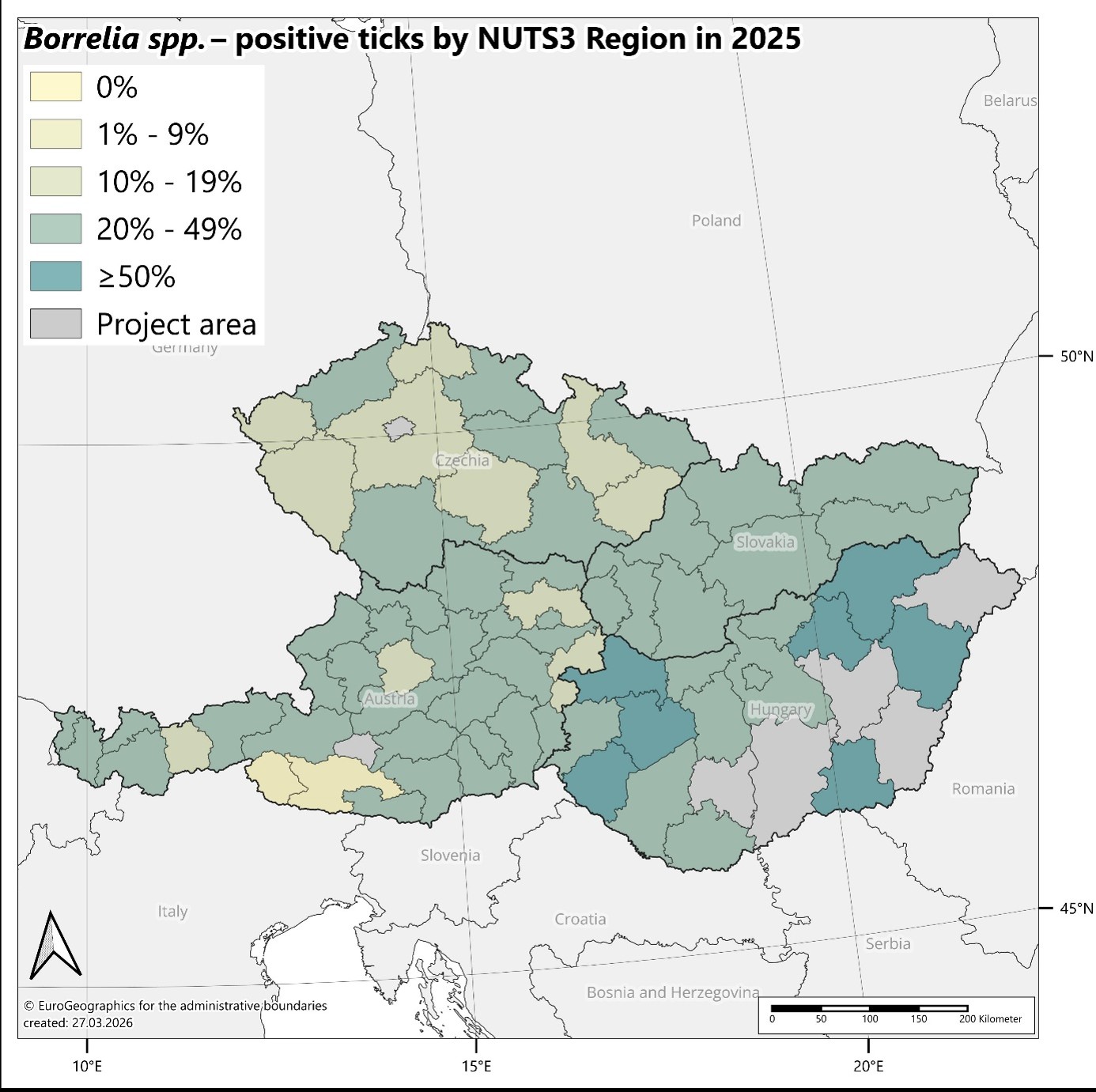
Lyme disease is caused by bacteria belonging to the Borrelia burgdorferi sensu lato complex and is transmitted in Europe primarily by Ixodes ricinus. OH SURVector data show a widespread distribution of Borrelia bacteria in ticks examined from Austria, Hungary, Slovakia and the Czech Republic. In the 2024 Austrian tick monitoring programme, Borrelia bacteria were detected in 20 per cent of the ticks examined. In I. ricinus, the most important European vector, the detection rate was 23 per cent, with regional variations observed (Figure 5). For 2025, the project data for Austria show that 24 per cent of the ticks tested were Borrelia-positive (Figure 6). So far in the current year 2026, 2,235 ticks have been tested for Borrelia, of which 24.5 per cent were positive (as at 6 November 2026).
At the same time, a cross-national analysis highlights differences in human surveillance systems. Whilst Lyme borreliosis is a notifiable disease in Hungary, Slovakia and the Czech Republic, there is no corresponding reporting requirement in Austria. This limits the direct comparability of human case data. Vector monitoring is therefore an important supplementary data source for recording the geographical distribution of Borrelia spp., irrespective of differences in national reporting systems.
After three years, the OH SURVector project will enter its final phase in January 2027. A key lesson learnt from the project is that vector monitoring does not necessarily require identical approaches in all participating countries. Rather, it is crucial to harmonise methods where this is technically and practically feasible, whilst ensuring that the data collected remains sufficiently comparable. This enables the creation of a common data set to detect changes in vectors and pathogens at an early stage and to better assess potential cross-border health risks.
Publications from the project countries illustrate this relevance, based on studies that were carried out thanks to the project in addition to those focusing on the prioritised pathogens. In Hungary, the first documented fatal autochthonous case of Usutu virus infection, a close relative of WNV, was reported in 2025. The Usutu virus (USUV) is an orthoflavivirus found in Europe and transmitted by mosquitoes. This case highlights the potential of European USUV strains to affect the nervous system; immunocompromised individuals are at particularly high risk. The identification of USUV in this case was made possible by comprehensive clinical, virological and phylogenetic analyses, which underline the need for enhanced surveillance and diagnostics.
Close collaboration with other EU projects, such as RAISE, enables not only expanded monitoring but also the detection of pathogens that have previously received less attention, such as the Alongshan virus (ALSV) in Austria: Screening of just under 3,000 ticks collected in 2024 revealed a median detection rate of 1.2 per cent. Analyses of archived tick samples also showed that ALSV has been circulating in Austria since at least 2005. In more than 1,300 human serum samples analysed, serological evidence of past ALSV infections in Austria was found for the first time; no acute infections were detected.
A review of the three-year project will be presented at the OH SURVector Symposium ‘From the Alps to the Mediterranean: One Health surveillance and Vector monitoring for cross-border pathogens’ on 24 November 2026. The focus will be on the key project findings and on bringing together experts and decision-makers from the fields of human and animal health, as well as international institutions. The event will take place from 9.00 am to 5.00 pm, both online and at the Natural History Museum in Vienna. Further information can be found at: Information on the OH SURVector Symposium
The structures established as part of OH SURVector and the cross-border collaboration will be continued in the follow-up project, OH SURVAIVE. From 2027 to 2029, the focus will be in particular on the surveillance of vector-borne diseases and avian influenza, and on strengthening the already integrated One Health approach across national borders.
Further information can be found at:
OH SURVector – One Health surveillance and vector monitoring for cross-border pathogens – AGES
A study published in *Nature Medicine* in October analysed global and regional trends in measles vaccination coverage and the resulting incidence and mortality from measles among children under the age of five.
Globally, between 2019 and 2023, the number of measles cases in this age group increased by 40 per cent, whilst deaths resulting from measles rose by 12 per cent. Vaccination gaps that emerged during and after the COVID-19 pandemic – and which have only been partially closed – have undermined the successes in measles control achieved in previous decades. Between 1990 and 2019, the global incidence of measles among children under five had fallen by 80 per cent, and mortality by 90 per cent. Over the same period, measles vaccination coverage rates had risen from 67.2 per cent to 83.6 per cent for the first dose and from 14.4 per cent to 68.4 per cent for the second dose. However, this trend towards the target of 95 per cent could not be sustained. Estimates for 2023 showed a slight decline to 81 per cent for the first dose, whilst for the second dose they showed only a relatively small increase to 71 per cent. This negative trend has continued since then, at least in certain countries and regions of the world. In 2023, one in five children missed the first dose of the measles vaccine. The measles virus, one of the most contagious pathogens in existence, thus remains one of the world’s leading causes of vaccine-preventable diseases and deaths among unvaccinated children.
AGES, acting on behalf of the Federal Ministry of Labour, Social Affairs, Health, Care and Consumer Protection (BMASGPK), has issued a warning against eating cherry tomatoes raw that originate from the Italian regions of Ragusa and Caltanissetta in Sicily: These tomatoes are linked to an annually recurring, multinational outbreak of Salmonella Strathcona.
Since the outbreak was first described in 2011, S. Strathcona has been repeatedly detected seasonally in several European countries. The outbreak strain is identified almost exclusively in connection with this recurring, tomato-associated outbreak and is otherwise rarely encountered. Cases occur every year, particularly from late summer through to December, with the number having risen significantly over the years. Since July 2026, more than 160 confirmed cases have been reported in ten European countries. In Austria, too, 40 cases have been recorded since the end of July.
Cocktail tomatoes from these regions should under no circumstances be eaten raw; they must be thoroughly cooked before consumption. Washing alone does not provide complete protection against Salmonella contamination. Italy has issued warnings at European level and via the Italian media against eating these tomatoes raw.
Product warnings & product recalls – AGES
Further information on this outbreak can be found in the October issue of the AGES Radar for Infectious Diseases.
Salmonella – AGES
Case figures for notifiable diseases under the Epidemic Diseases Act; the figures shown are for the previous month and, for the period from the start of the year to the end of the previous month, the figures for the current year, the previous year, and the median for the last five years for comparison (Epidemiological Reporting System, as at 11 November 2026).
a Diseases are assessed in accordance with the case definition. Diseases for which a case definition exists are shown, with the exception of transmissible spongiform encephalopathies. As a rule, confirmed and probable cases are counted. Changes may still occur as a result of late reporting or subsequent entries.
b Bacterial and viral food poisoning, in accordance with the Epidemics Act.
c Invasive bacterial disease, in accordance with the Epidemics Act.
d Includes only cases of pneumonia.
e Due to the lack of a case definition prior to 2025, only cases from 2025 onwards are shown; the median is also calculated only from 2025 onwards.
f Mpox has been a notifiable disease since 2022; the median is calculated only for those years in which it is a notifiable disease.
*Data for October 2026 is currently still undergoing quality checks and may be incomplete
Related News

Last updated: 22.05.2026
automatically translated