AGES Radar for Infectious Diseases – 15 October 2026
Summary
From calendar week 40, surveillance of acute respiratory infections was stepped up in Austria and across Europe: to date, only isolated cases have been detected, and activity levels for influenza, RSV and SARS-CoV-2 remain low.
Since 2011, there have been repeated seasonal outbreaks in several European countries caused by Salmonella Strathcona linked to tomatoes. Since July 2026, more than 160 confirmed cases have again been recorded in 10 European countries.
In early October, a 28-year-old laboratory worker in Russia died of severe pneumonia of unknown aetiology. The cause of the illness remains unclear; the WHO and ECDC are actively monitoring the situation.
The Ebola outbreak in the Democratic Republic of the Congo is continuing, with 8,978 confirmed cases to date, including 4,336 deaths.
In Germany, the first human case of Sindbis virus infection – a disease transmitted by mosquitoes – has been recorded.
In this month’s feature, we explore how the annual adjustment of the flu vaccine is carried out and how its safety is guaranteed.
In the news: the annual report from the National Reference Centres for Noroviruses has been published, along with a study published in The Lancet on vaccination coverage among European children.
From calendar week 40, surveillance of acute respiratory infections (ARI) was stepped up in Austria and across Europe, with a particular focus on illnesses caused by influenza viruses, respiratory syncytial virus (RSV) and SARS-CoV-2. These illnesses are monitored via various systems, such as the Austrian Influenza Diagnostic Network (DINÖ), the ILI (influenza-like illness) sentinel system and the Austrian RSV Network (ÖRSN). The situation in hospitals is tracked via the SARI (Severe Acute Respiratory Infections) dashboard. Since November 2025, the Austrian Agency for Health and Food Safety (AGES) has also been monitoring the spread of respiratory viruses through wastewater monitoring.
In the southern hemisphere, the flu season is half a year ahead due to the different sequence of the seasons. The course of the season there provides a rough indication of what the season in the northern hemisphere might be like: the season in Australia started later than in previous years. At the end of September/beginning of October, influenza activity remains unusually high, and it is not yet certain whether the national peak has already been reached. The Australian data also show that the seasonal influenza vaccine continues to be moderately effective and that there is generally good match between circulating viruses and vaccine strains. Influenza A clearly dominates. Most recently, A(H1N1) in particular has been on the rise. At the same time, COVID-19 remains at a low level in Australia and RSV has returned to its inter-seasonal level.
In September, the updated Austrian vaccination schedule for the 2026/2027 season was published, which includes, amongst other things, the current recommendations for COVID-19, influenza and RSV vaccinations.
Influenza
Only isolated cases of influenza were detected in Austrian wastewater. In the doctors’ surgeries selected for surveillance (sentinel sites), the first sporadic cases of influenza A were detected as early as September. This is early, but not unusual, and has so far been mainly attributable to travel-associated cases. Hospital admissions due to influenza have also been recorded only sporadically to date.
At the level of the European Union and the European Economic Area (EU and EEA), influenza activity also remains at a low level, with only a few countries reporting cases. These are mainly cases of influenza A, affecting primarily people over the age of 65.
In the rest of the Northern Hemisphere, an earlier flu wave is emerging: in both the United Kingdom and parts of the United States of America (USA), the number of positive tests is unusually high for September. In Japan, an unusually high number of flu infections for this time of year is being recorded. As a result, some schools have already had to close again shortly after the summer holidays.
The annual flu vaccination is a preventive measure against severe illness. The flu vaccination is recommended and is available free of charge as part of the public vaccination programme. The vaccination is particularly important for people at risk of severe illness, and their close contacts/household members, as well as for people who are at increased risk of infection due to their living circumstances or occupation. The best time to have a flu vaccination is from mid-October or in November. Further details can be found at www.impfen.gv.at/influenza and in the current 2025/2026 vaccination schedule.
This month’s feature explains the process of vaccine production and authorisation for the flu vaccination, which is updated annually due to rapidly mutating influenza viruses.
In episode 003 – ‘Influenza & Co: How do I navigate the flu wave safely?’ of the AGES podcast ‘Mut zum Risiko’, infectious disease epidemiologist Fiona Költringer explains what the flu is all about and how best to protect yourself against it.
RSV
In recent weeks, only one case of respiratory syncytial virus (RSV) has been recorded in the sentinel surveillance system. Hospital admissions due to RSV infections have so far been few and far between. Across Europe, RSV activity is low and at the expected inter-seasonal level.
The 2025/2026 RSV season began in Austria in February, peaked at the end of February and lasted into April.
Children under the age of five and people over 65 are at particularly high risk of developing severe RSV infection. For adults, the RSV vaccine is recommended from the age of 60.
There is currently no authorised RSV vaccine for children for active immunisation. However, monoclonal antibodies are available for passive immunisation: Beyfortus (nirsevimab) is authorised for the prevention of lower respiratory tract RSV disease in newborns, infants and young children during their first RSV season, as well as for children up to 24 months of age who remain at risk of severe RSV disease during their second RSV season. It will also be available in 2026/27 as part of the free childhood vaccination programme funded by the federal government, the Länder and social security. A vaccination for pregnant women is also authorised for the passive immunisation of children. Further information on the vaccinations is available under RSV (Respiratory Syncytial Virus) | Vaccination simply protects and in the current 2025/2026 vaccination schedule.
SARS-CoV-2
Unlike influenza and RSV, SARS-CoV-2 does not exhibit a predictable seasonal pattern. Whilst a moderate increase in the SARS-CoV-2 viral load in wastewater was recorded at the end of September, the trend has remained stable since the beginning of October. Hospital admissions due to SARS-CoV-2 remain at a low level.
In the EU and the EEA, detections of SARS-CoV-2 have been rising since August; for several weeks now, the positivity rate in primary care has been stable, whilst it is rising in hospitals. Globally, there is a reporting gap regarding SARS-CoV-2 data: 60 per cent of countries do not report.
The COVID-19 vaccine is available free of charge in Austria and is recommended for everyone aged 12 and over who wishes to reduce their risk of a potentially severe course of the disease. Further information on the vaccine and its indications can be found at impfen.gv.at/covid-19 and in the Austrian Vaccination Schedule 2026/2027.
Small tomatoes from Italy have been linked to an annual, seasonal and multinational outbreak of Salmonella Strathcona. Since July 2026, more than 160 confirmed cases have again been recorded across 10 European countries. Furthermore, sequencing results are still pending for over 100 further cases. Since a multinational outbreak was first described in 2011, S. Strathcona has been repeatedly detected seasonally in several European countries. The outbreak strain is identified almost exclusively in connection with this recurring, tomato-associated outbreak and is otherwise rarely encountered. Cases occur every year, particularly from late summer through to December, with the number having risen significantly over the years.
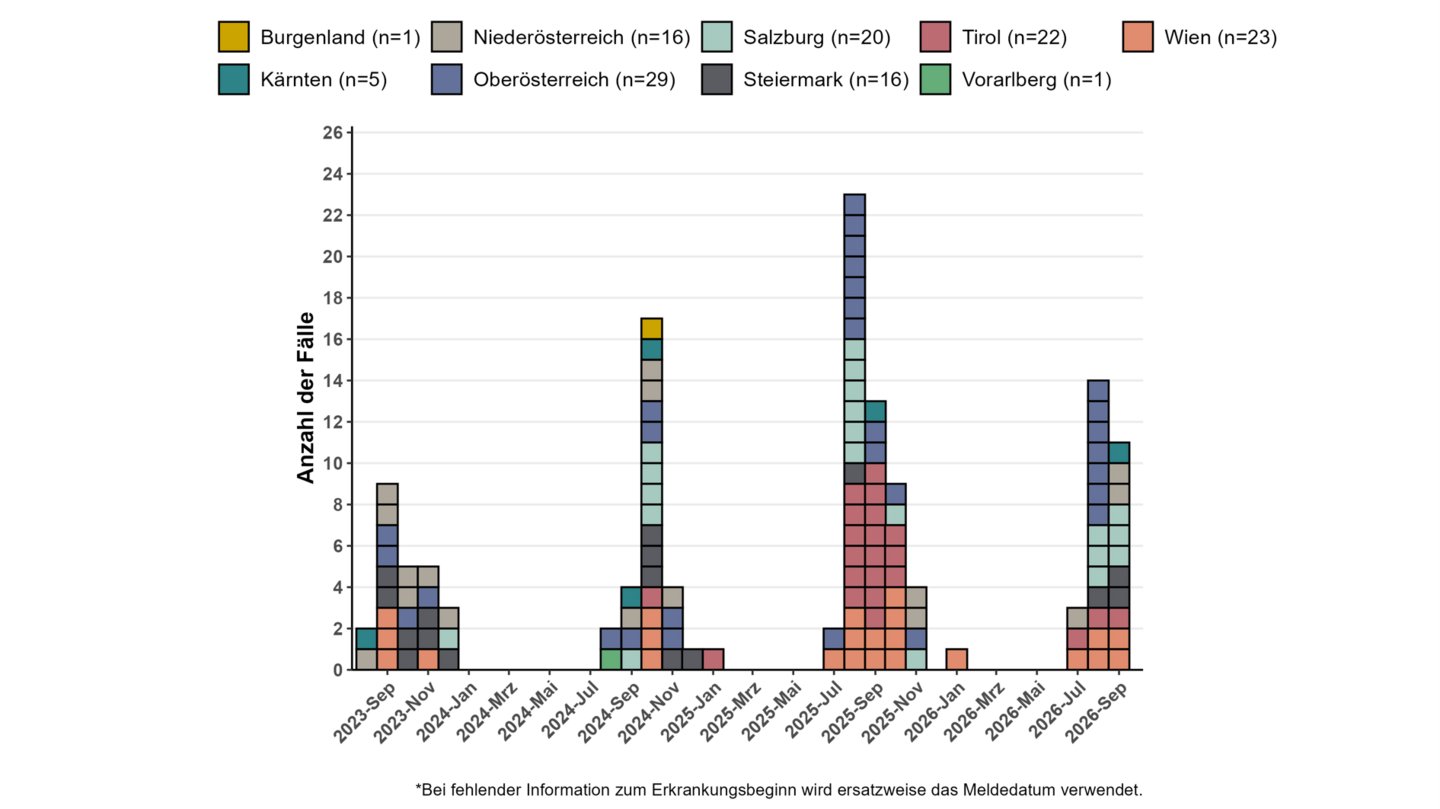
Between 2023 and 2026, over 800 outbreak cases were reported in 17 European countries, of which a total of 133 were in Austria (see Figure 2). Despite good cross-border cooperation, Germany experienced its largest outbreak to date caused by S. Strathcona in the 2025/2026 season, with 116 cases. These seasonally occurring outbreaks are caused by strains from a single clonal lineage. Integrated Genomic Surveillance (IGS) shows that the observed outbreaks since 2011 are genetically closely related to the strains from earlier outbreaks. In addition to this genetic relationship, the seasonal pattern of cases, patient interviews and food investigations also support the hypothesis that the outbreaks of recent years can be traced back to a long-standing common source of contamination.
Over the years, investigations have repeatedly pointed to tomatoes from Italy as the source of the outbreaks. Since 2023, cross-border cooperation in outbreak investigations has strengthened the evidence in this regard. At the end of 2025, AGES detected the outbreak strain in organic cherry tomatoes from Italy. We reported on this in the AGES Radar for Infectious Diseases on 16 October 2025. In addition, the outbreak strain was detected in the irrigation water of a tomato producer in Sicily.
Tomatoes were also the most frequently cited foodstuff in the German outbreak of 2025/2026: 83 per cent of the 30 patients surveyed reported having consumed tomatoes during the exposure period. Several tomatoes purchased in Germany could be traced back to Italy via supply chains. Since June 2026, 39 cases in Germany have already been attributed to the recent outbreak (RKI, as at 16 September 2026).
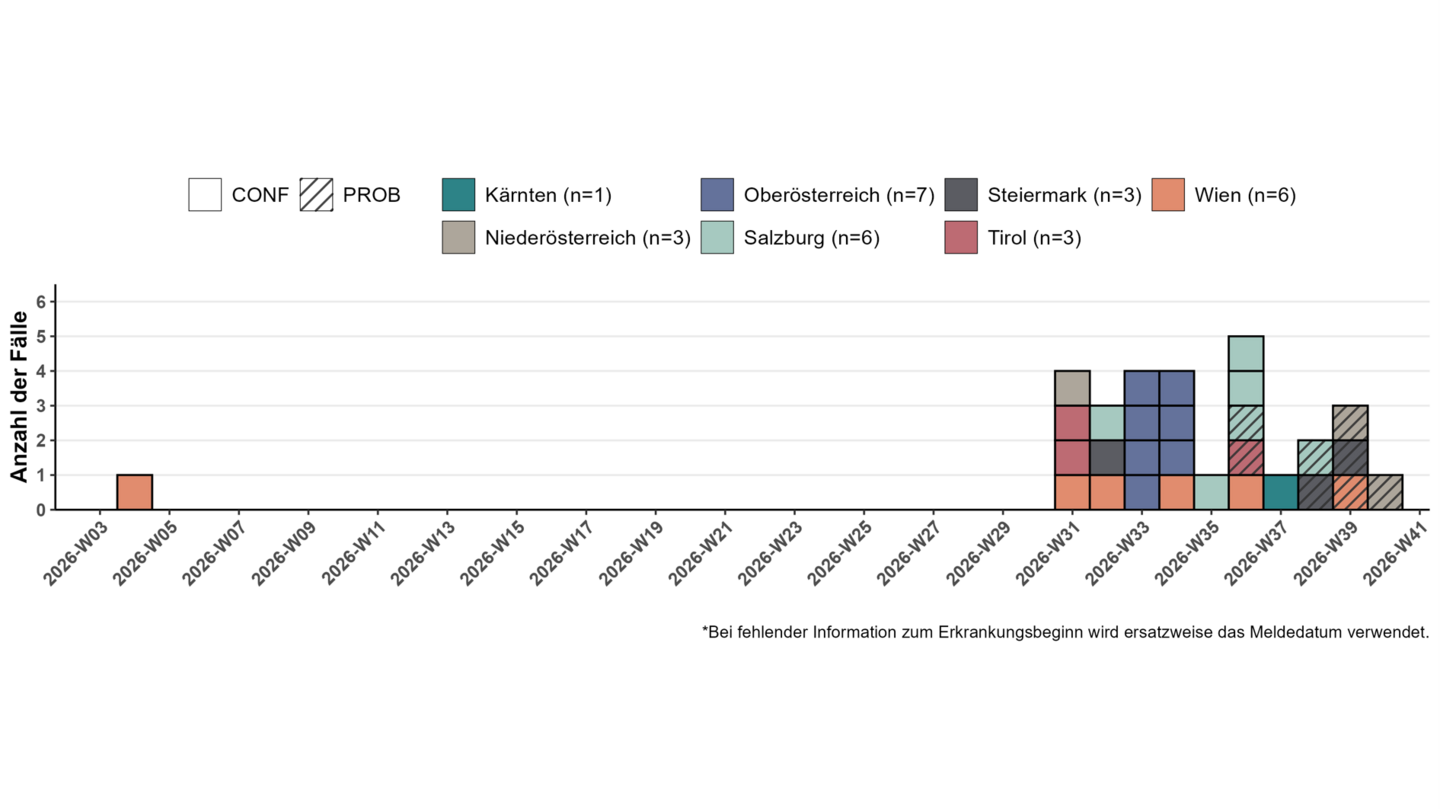
In Austria, a total of 29 cases (21 confirmed and 8 probable outbreak cases) of S. Strathcona have been reported this year. One case was reported during the winter, and 28 cases fell ill from the end of July 2026 onwards (see Figure 1). A total of 7 people (24 per cent) required hospitalisation. The median age of those affected is 36 years (min–max: 10 months–79 years). Of the cases, 17 were male (59 per cent) and 12 were female (41 per cent). Six cases were likely infected whilst abroad. Of these six, five reported having travelled to Italy and one reported having travelled to Croatia prior to the onset of illness.
Cases were reported from seven federal states. Most cases occurred in Upper Austria (n = 7), followed by Vienna (n = 6) and Salzburg (n = 6). Further cases were reported from Tyrol (n = 3), Lower Austria (n = 3), Styria (n = 3) and Carinthia (n = 1). Preliminary results from the ongoing surveys also point once again to visits to Italy during the possible exposure period, as well as to the consumption of tomatoes.
According to a risk assessment by the European Centre for Disease Prevention and Control (ECDC), the risk of new infections remains as long as contaminated tomatoes continue to be marketed seasonally. Further outbreaks in the coming seasons are considered likely unless the cause of the contamination is identified and effective control measures are implemented. In Italy, the health authorities have, as a precautionary measure, banned the use of raw tomatoes in schools, hospitals and care homes. In light of this measure, it is recommended that people, particularly vulnerable groups, refrain from eating raw tomatoes and instead consume thoroughly cooked tomato products.
In early October, a 28-year-old laboratory worker from Irkutsk, Russia, died of severe pneumonia of unknown cause. The media reported a possible laboratory accident involving the plague pathogen, Yersinia pestis; however, this has not been confirmed by the authorities. According to Russian sources, all identified contacts were monitored and tested, and remained symptom-free. According to the Russian authorities, there was neither a confirmed laboratory accident nor any evidence of the plague pathogen or other high-risk pathogens in the case or among the contacts. The cause of death is stated as pneumonia of unknown aetiology. Based on the information provided by Russia to date, the World Health Organisation (WHO) has found no evidence of ongoing transmission in connection with the incident.
The cause of the illness remains unclear, as no definitive diagnosis could be made in the deceased. The WHO has requested further information on the cause of the illness. Together with the ECDC and other international stakeholders, the WHO is actively monitoring the situation. AGES, as the national point of contact, is in regular contact with the ECDC.
On 11 October 2026, the Democratic Republic of the Congo (DRC) reported 8,978 confirmed cases and 4,336 deaths caused by the Bundibugyo Ebola virus (BDBV). This represents a further 34 per cent increase in the number of cases and deaths since the last edition of the AGES Radar on 17 September 2026. Ituri Province remains the hardest hit by the epidemic (ECDC, as at 12 October 2026).
In early October, Kenya also reported a case of Ebola. A Kenyan national living in the DRC had fallen ill approximately one month ago and had been treated in several hospitals. He subsequently travelled overland to the Ugandan capital, Kampala, and from there by air to the Kenyan capital, Nairobi. There, he was taken to hospital immediately upon arrival, where he was placed in isolation and eventually died. Kenya and Uganda have implemented appropriate measures, including contact tracing. In Kenya, 28 contacts were identified and placed in quarantine (WHO, as at 8 October 2026).
At the end of September, a staff member of ‘Médecins Sans Frontières’ who had been working in the DRC tested positive for the virus and was flown to the Netherlands. He is being treated there in an isolation unit at the University Medical Centre in Leiden.
According to model calculations, the ECDC continues to assess the risk of the BDBV being introduced into Europe from the outbreak area as very low.
The AGES podcast ‘Courage to Take Risks – In Context: Ebola’ explains how a suspected case of Ebola was handled in Austria and which factors, apart from the medical aspects, play an important role.
Regular updates on the outbreak in the DRC can be found at:
In September 2026, a symptomatic, locally acquired infection with the Sindbis virus (SINV) was laboratory-confirmed for the first time in a person in Germany, in Baden-Württemberg. The patient was a 60-year-old man who fell ill in July and had previously only been in Baden-Württemberg. Due to the presence of symptoms and the fact that he lived in an area with an established population of the Asian tiger mosquito, testing was initially carried out for infection with the Chikungunya virus. After the tests proved negative, the differential diagnosis was expanded and a SINV infection was ultimately confirmed serologically. SINV is a virus transmitted by mosquitoes, mainly of the genera Culex and Culiseta, whose natural transmission cycle occurs between mosquitoes and birds. Humans are considered accidental hosts; further transmission of the virus from infected humans via mosquito bites has not been reported, due to the brief duration and low level of viraemia. The virus had already been detected in mosquitoes in Germany since 2009 and, later, in wild birds as well. However, symptomatic infections in humans have not yet been documented.
Cases of SINV infection have so far been reported mainly in northern Europe. The disease is known as Ockelbo disease in Sweden and Pogosta disease in Finland. Symptomatic cases are usually characterised by an often itchy rash, mild fever and joint pain or inflammation. Severe and neurological forms of the disease are possible, but are the exception.
The case in Germany demonstrates that, where relevant symptoms are present during the mosquito season, a mosquito-borne disease should be considered even in the absence of travel abroad; furthermore, where tests for dengue or chikungunya are negative, a possible infection with SINV should also be considered. At the same time, this first detection underlines the importance of integrated One Health surveillance, which combines human surveillance with the monitoring of mosquitoes and wild birds. From 2025 to 2028, mosquitoes in Austria will be tested for SINV, amongst other things, as part of the RAISE project. In 2025, SINV was not detected in any sample. To date, no human infections with SINV have been recorded in Austria.
To prevent infection, mosquito bites should be avoided as much as possible. Wearing long, light-coloured clothing and applying effective repellents (insect repellents) can protect against bites.
Full information on mosquitoes and preventative measures can be found on the AGES website: Information on mosquitoes & diseases – AGES.
With the arrival of autumn, the flu season begins once again. At the same time, the annual, free flu vaccination programme begins. The Austrian Immunisation Schedule recommends flu vaccination for everyone aged six months and over, and particularly for people at risk of severe illness and their close contacts. These include, amongst others, adults aged 60 and over, people with certain chronic conditions, those who are severely overweight, people with a weakened immune system, pregnant women, breastfeeding women and women planning to have children. Healthcare workers and people with frequent social contact at work and in their leisure time are also advised to have the vaccination.
But how is the flu vaccine actually developed, given that it is adapted each year to the current viral situation?
A race against time
Influenza viruses are in a constant race against the human immune system. Through continuous genetic changes (mutations), they are constantly evolving. The composition of flu vaccines must therefore be regularly updated. This is based on a global surveillance network that continuously analyses which influenza viruses are currently circulating. As early as February – around half a year before the start of the flu season in the northern hemisphere – experts from this network recommend which virus strains should be included in the vaccine for the coming season. The European Medicines Agency (EMA) then publishes recommendations for influenza vaccine manufacturers, depending on the influenza vaccine technology used.
Production then begins. The vaccines are manufactured over the summer months, whilst the underlying dossier is reviewed by the regulatory authorities. Following successful batch testing, the vaccines are released onto the market. They are then available in the autumn, in good time before the start of the flu season.
Why does this happen so quickly every year?
As with any other new medicinal product, a completely new vaccine requires extensive quality and manufacturing tests, as well as pre-clinical and clinical trials to assess safety and efficacy. This development programme alone takes several years and is unsuitable for the annual adjustment required to prevent seasonal flu.
The approach to seasonal flu vaccines is therefore different: experience with influenza vaccines dates back to the 1940s, and the most commonly used manufacturing processes have been established for decades. Seasonally, only the viral antigens specified by the WHO and the EMA for the coming year are adjusted. The underlying manufacturing technology, composition (apart from the new viral antigens), dosage and method of administration were thoroughly assessed during the initial authorisation process and remain unchanged. Thanks to many years of experience, it is known that replacing the viral antigens does not fundamentally alter the safety profile. Consequently, the annual updates do not require complete new authorisation procedures; the update and regulatory approval take place via the so-called ‘strain update’ amendment procedure for an already authorised product.
Every batch is checked
Despite the need for rapid adaptation to seasonally circulating influenza viruses, the marketing authorisation holder must submit a quality dossier for the adapted vaccine – documenting the modified viral antigen composition and the vaccine’s manufacture – for regulatory review. Once authorisation has been granted, each individual batch must be tested by an independent government control laboratory (OMCL – Official Medicines Control Laboratories) as part of the mandatory batch testing process. Only once it has been confirmed that all quality requirements have been met and the batch has therefore been released may the batch be placed on the market.
In addition, regulatory authorities and manufacturers continuously monitor the safety of the vaccines. Suspected cases of adverse reactions are systematically recorded and assessed. Thanks to many years of experience with influenza vaccines and the internationally well-established system for recording and analysing potential adverse reactions through so-called pharmacovigilance systems, the flu vaccination can be counted among the safest vaccinations.
Which flu vaccines are available?
Various types of vaccine are available for seasonal influenza vaccination. Further information on this can be found in the recently published Austrian Immunisation Schedule 2026/2027.
Inactivated vaccines
Inactivated vaccines are the most commonly available flu vaccines. The viruses they contain are no longer capable of replicating, or retain only their essential characteristics (viral antigens), in order to elicit an optimal immune response. They are administered as an injection and, depending on the product, can be used from infancy (from 6 months of age). Many of these vaccines are traditionally produced in fertilised chicken eggs, whilst others use modern cell culture systems. In recent years, these vaccines have once again been produced as trivalent vaccines, meaning they offer protection against three different virus strains: two strains of influenza A (H1N1 and H3N2) and one strain of influenza B (Victoria lineage).
Live vaccine for children and adolescents
A live nasal vaccine is available for children and adolescents aged between two and 18 years. This is administered as a nasal spray and contains attenuated viruses that mimic a natural infection without causing the illness. Administration of the live vaccine results in optimal immunological priming upon first vaccination. This means that the immune system is exposed to the pathogen for the first time. Here too, the body ‘remembers’ the characteristics of the pathogen and can react more quickly and effectively upon subsequent exposure. As the vaccine is administered nasally, it acts directly on the nasal mucosa, which is very often a natural entry point for influenza viruses. The nasal spray formulation offers an additional advantage for use in (young) children.
Special vaccines for older people
As the immune system responds less strongly to vaccinations in older age, there are special vaccines for older people, which are recommended for those aged 60 and over in accordance with the vaccination schedule. These contain either a higher quantity of antigen or additional immune-boosting agents (adjuvants) to achieve a better immune response.
New developments
In addition to the established vaccines, a new mRNA vaccine was recently recommended by the European Medicines Agency (EMA) and subsequently authorised by the European Commission. This vaccine is based on messenger RNA (mRNA), which encodes viral proteins from influenza viruses and SARS-CoV-2 (the pathogen responsible for COVID-19), thereby triggering an immune response. It is authorised for people aged 50 and over. The National Immunisation Committee (NIG), which plays a key role in the technical development of the vaccination recommendations in the immunisation schedule, also issues a general recommendation for this vaccine. However, it points out that influenza and SARS-CoV-2 have often followed different seasonal patterns in recent years, which is why separate vaccinations timed to coincide with the respective waves of infection are to be preferred.
Further information can be found under the Austrian Immunisation Schedule 2026/2027 and Development and Authorisation of Vaccines – AGES
A paper published in September 2026 in *The Lancet Regional Health – Europe* presents a recent analysis of trends in childhood vaccinations in Europe.
This study analysed trends in vaccination coverage for seven routine childhood vaccinations administered during the first year of life across all 27 EU Member States between 1980 and 2024, based on publicly available data from the WHO and UNICEF. The findings show that, whilst vaccination coverage has risen significantly over the long term, it has been declining in recent years in many countries. This decline poses a threat to public health because it reduces so-called ‘herd immunity’ and, as a result, an increasing proportion of the population is exposed to vaccine-preventable diseases. This particularly affects those at increased risk, such as infants, older people and immunocompromised individuals. The study data for Austria show declining trends in vaccination coverage rates for diphtheria, tetanus and whooping cough, hepatitis B and poliomyelitis in recent years, whilst slightly rising trends are emerging for measles, rubella and Haemophilus influenzae type b. In general, the vaccination coverage rates estimated in the article for Austria are below the 95 per cent target for all antigens examined.
On 13 October 2026, the 2025 Annual Report of the National Reference Centre for Noroviruses was published.
In 2025, 3,215 confirmed and 118 probable norovirus infections were reported to the relevant health authorities in Austria. A total of 407 samples were analysed at the National Reference Centre for Noroviruses at AGES. Of these, 311 samples were submitted by laboratories in Austria participating in the sentinel surveillance programme for noroviruses. This year, 96 samples from 20 gastroenteritis outbreaks were sent to the Reference Centre for analysis. The norovirus outbreaks primarily affected nurseries and care homes for the elderly.
Case figures for notifiable diseases under the Epidemic Diseases Act; the figures shown are for the previous month and, for the period from the start of the year to the end of the previous month, the figures for the current year, the previous year, and the median for the last five years for comparison (Epidemiological Reporting System, as at 14 October 2026).
a Diseases are assessed in accordance with the case definition. Diseases for which a case definition exists are shown, with the exception of transmissible spongiform encephalopathies. As a rule, confirmed and probable cases are counted. Changes may still occur as a result of late reports or subsequent entries.
b Bacterial and viral food poisoning, in accordance with the Epidemics Act.
c Invasive bacterial disease, in accordance with the Epidemics Act.
d Includes only cases of pneumonia.
e Due to the lack of a case definition prior to 2025, only cases from 2025 onwards are shown; the median is also calculated only from 2025 onwards.
f Mpox has been a notifiable disease since 2022; the median is calculated only for those years in which it is a notifiable disease.
Related News
Last updated: 22.05.2026
automatically translated