Bee diseases diagnosis help

The following page is intended to provide you with a quick assessment of the condition of your bee colony with the help of photos. In addition, you will find more detailed information on individual pests, as well as pictures of characteristic symptoms and features of bee diseases, parasites and pests, as well as various damage patterns on the honeycomb stock and the hives.

By clicking on the selected term, a photo gallery and further information will appear.

We will be happy to assist you with our knowledge and expertise. You can find more information on sample submission here.

Dead people

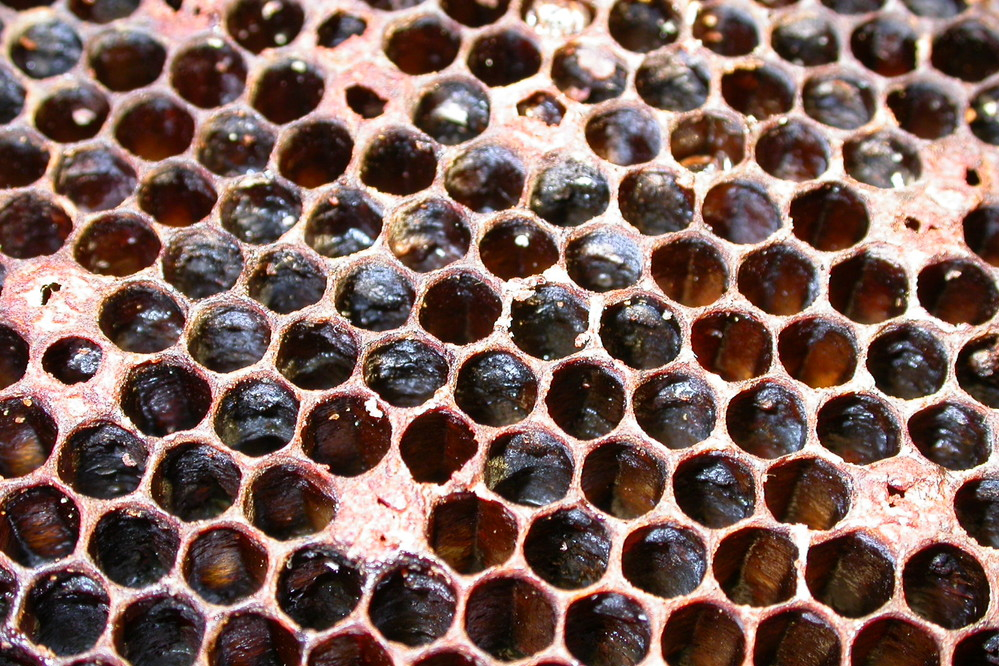
In this gallery you will find a picture overview of possible causes for the death of bee colonies.

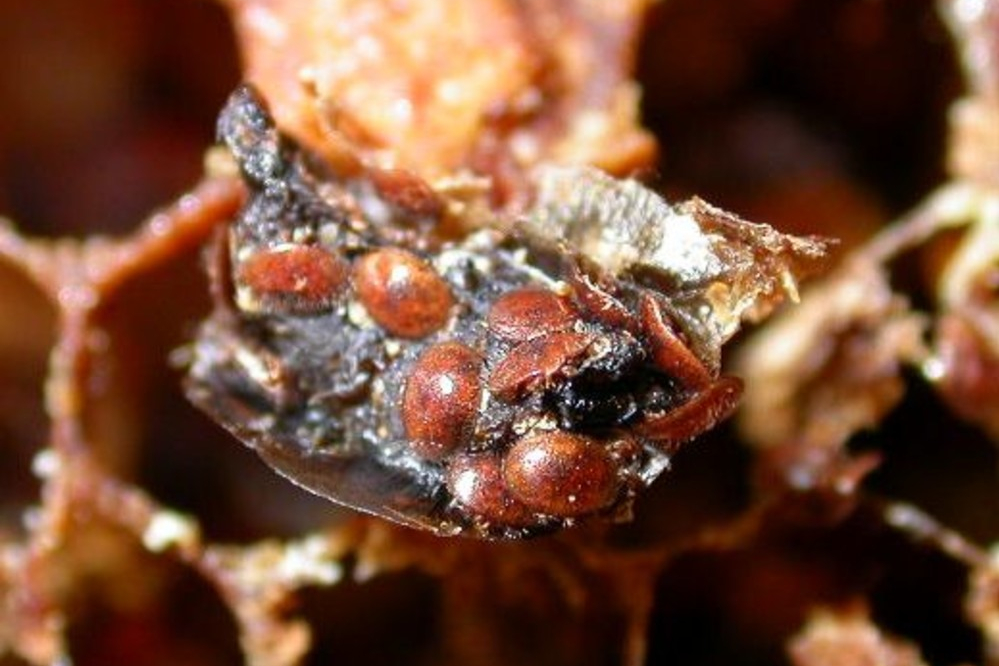
A common cause of die-off is damage caused by the varroa mite. For more information on the varroa mite, click here.
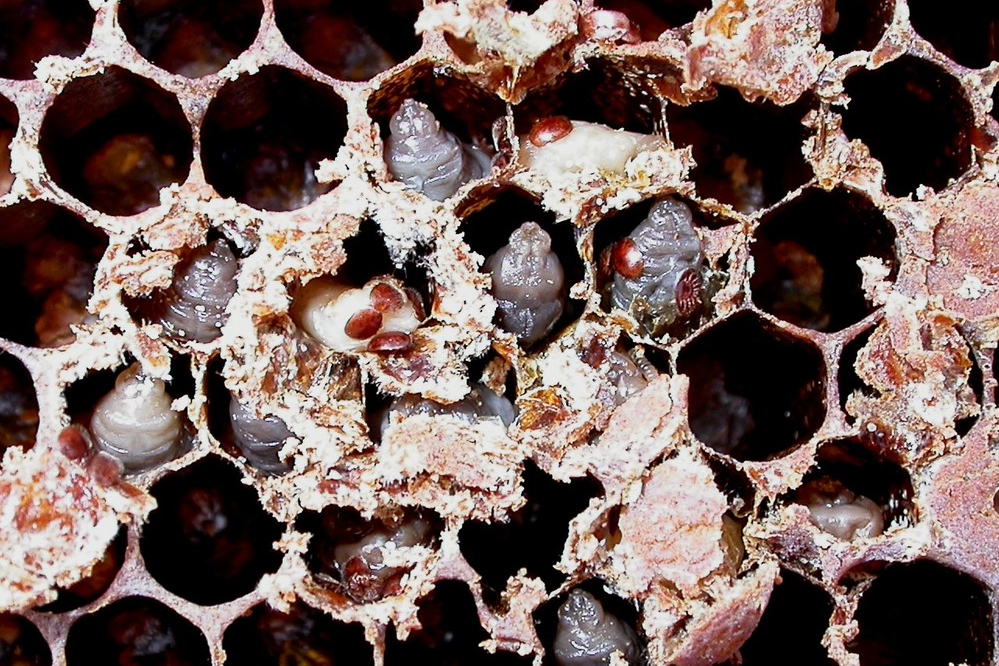
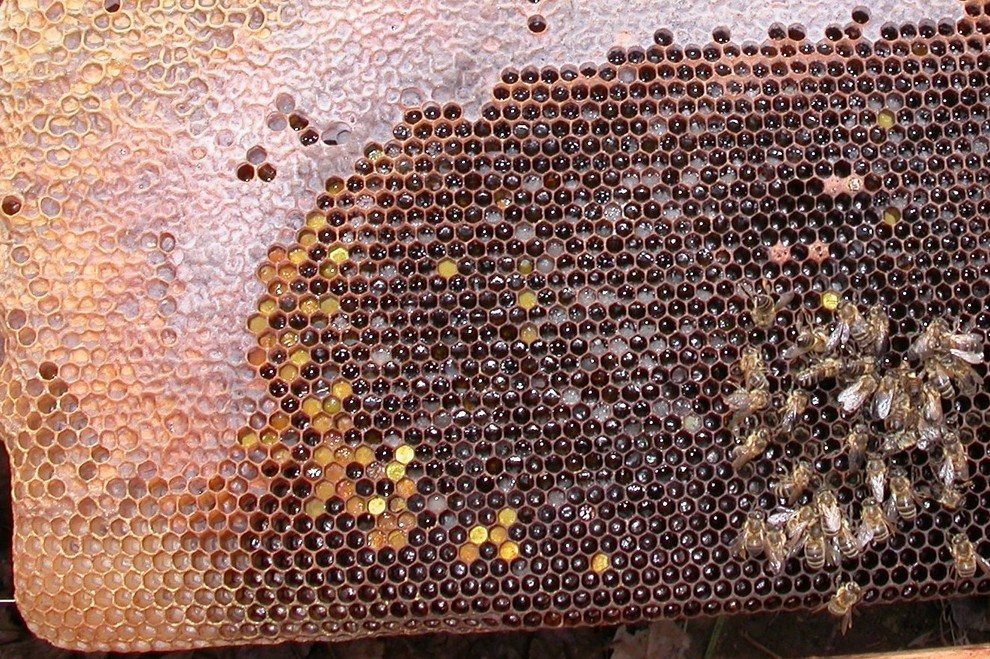
Totes Wintervolk / Vorroaschaden
Totes Wintervolk – Varroaschaden
Totes Wintervolk Restbrutwabe
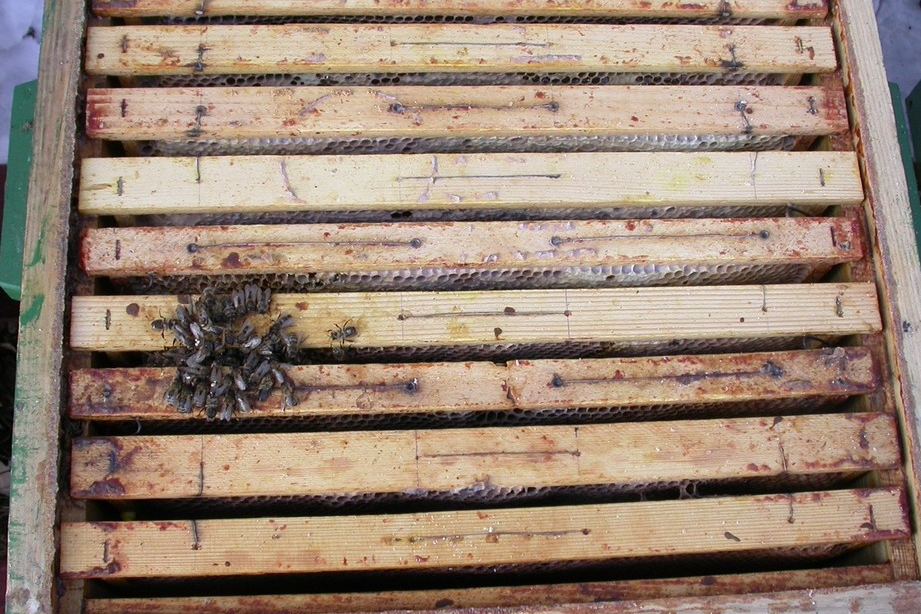
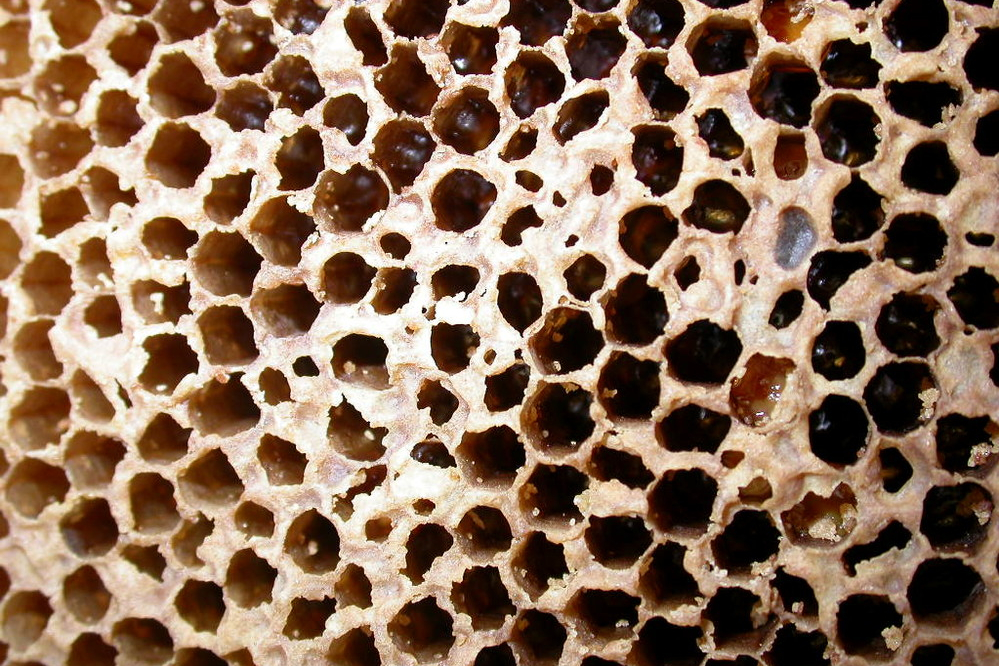
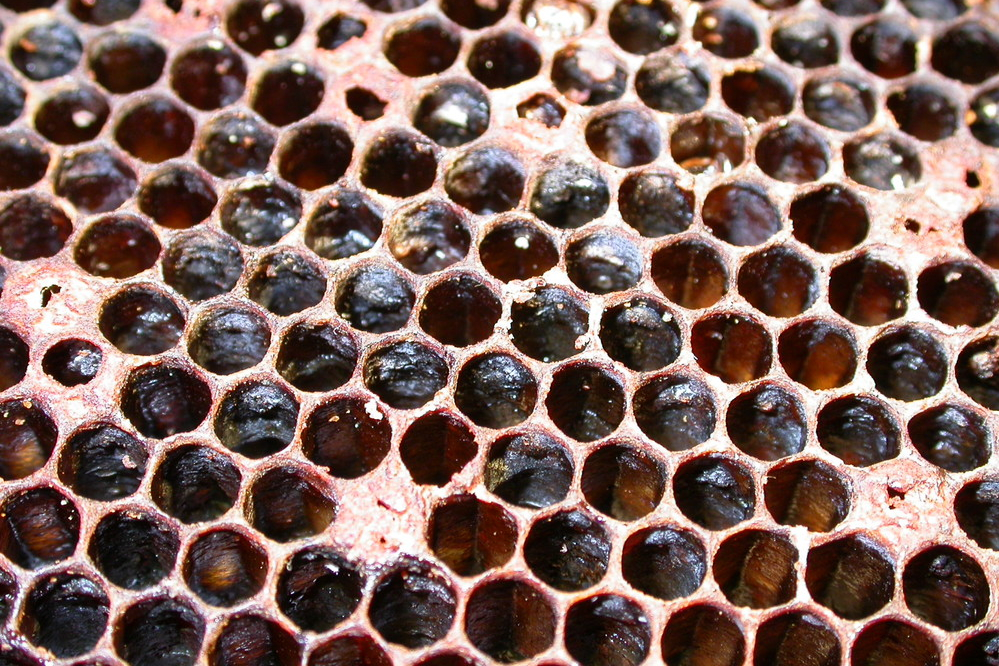
Wabe eines im Winter abgestorbenen Volkes mit wenigen aufsitzenden, toten Bienen. In Gemülle und verdeckelter Restbrut waren viele Varroamilben zu finden. Typisches Bild für einen Winterverlust, der durch Varroose bedingt ist.
Auswinterung / Totes Volk
Varroaschaden; erkannt beim Auswintern. Diese Restbrut war voll mit Varroamilben. Das Volk starb an Varroose.
Totes Wintervolk / Wenig Bienen
Totes Wintervolk mit sehr wenigen Bienen
Totes Wintervolk / Ruhrsymptome
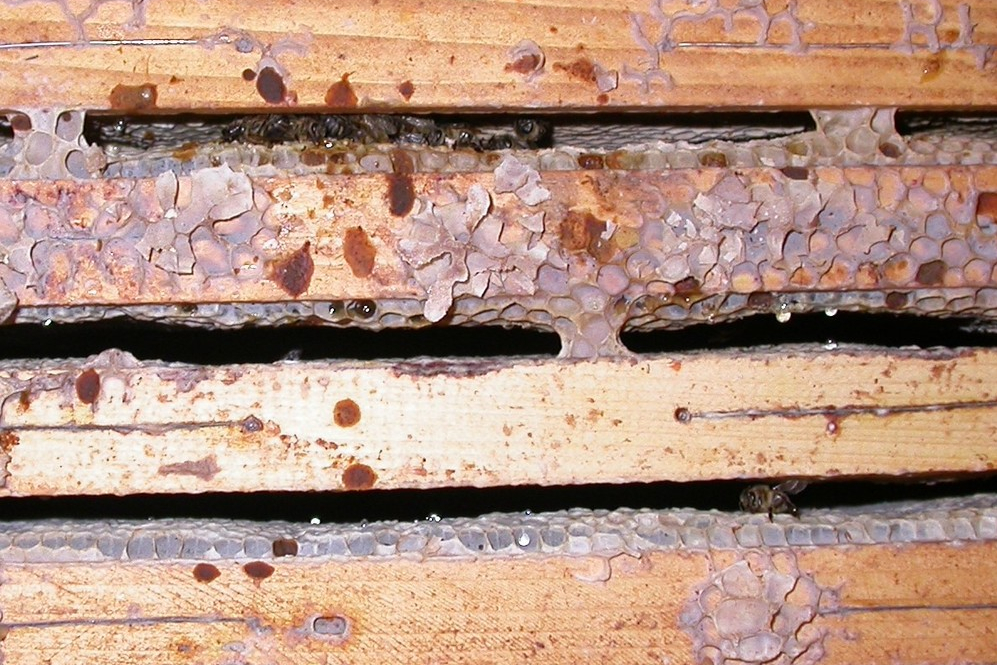
Ruhrsymptome in totem Wintervolk – Die Kotflecken auf den Rähmchenoberleisten zeigen, dass das abgestorbene Volk an Ruhr erkrankt war.
Wabe mit Ruhrsymptomen aus totem Wintervolk
Ruhrsymptome in totem Wintervolk – Die Kotflecken auf den Rähmchenoberleisten zeigen, dass das abgestorbene Volk an Ruhr erkrankt war.

Robbery

In this gallery you will find a picture overview of possible signs of predation.

Wabe / ausgeraubtes Volk
Predation - Ruptured honey cells are a typical sign of predation.
Räuberei
Predation - Roughly scraped lids of honey cells in the manure are also easily recognizable signs.
Räuberei
Predation - An uncleaned, sticky flight board is a typical sign of predation.

Brood combs

In this gallery you will find a picture overview of pests that can occur in the brood combs.

Two such pests are the American foulbrood and the sacbrood virus. You can find more information here (American foulbrood) and here (sacbrood).

Brutwabe / Gesundes Volk
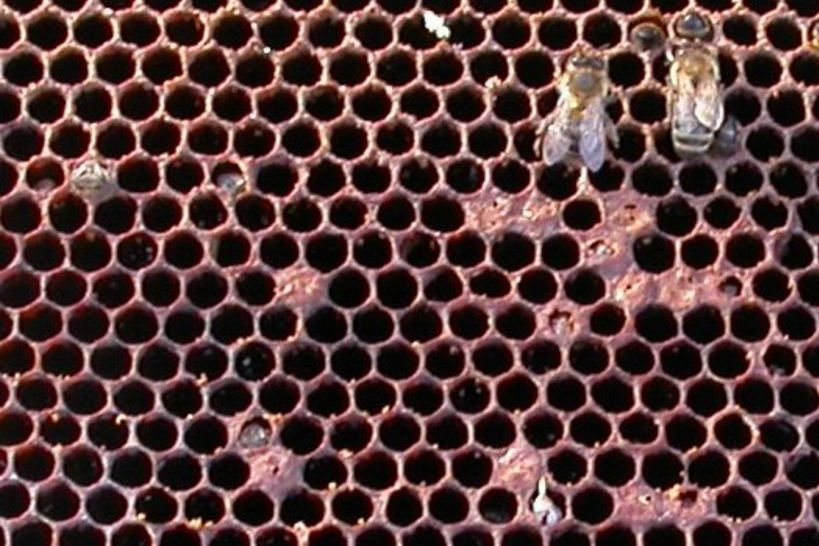
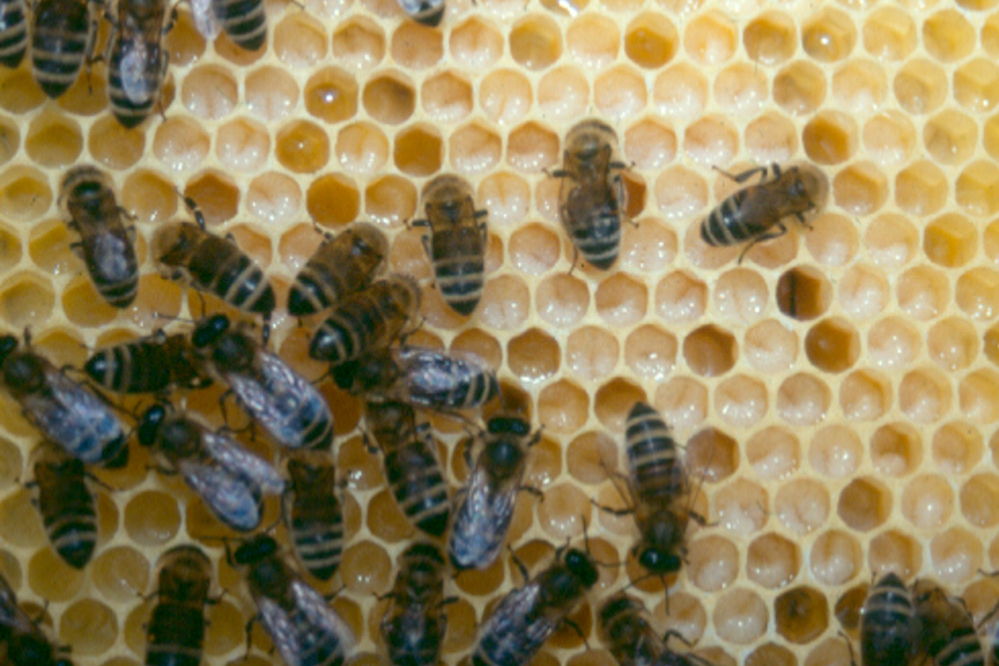
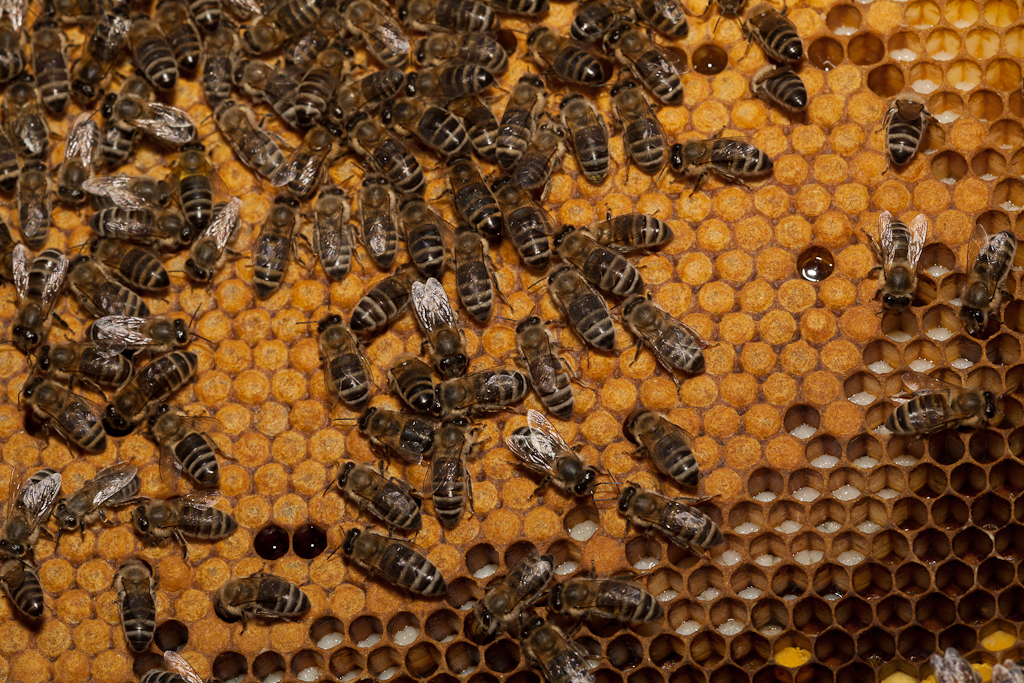
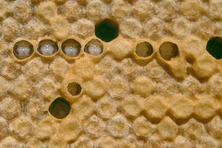
For comparison first: healthy bee brood -. Typical features: Brood area closed; uncovered cells occupied by eggs or round maggots; covered cells with raised lids without holes or discoloration; cells are occupied by stretch maggots, prepupae, pupae or hatchling young bees of healthy appearance without foreign odor.
Bienenstock
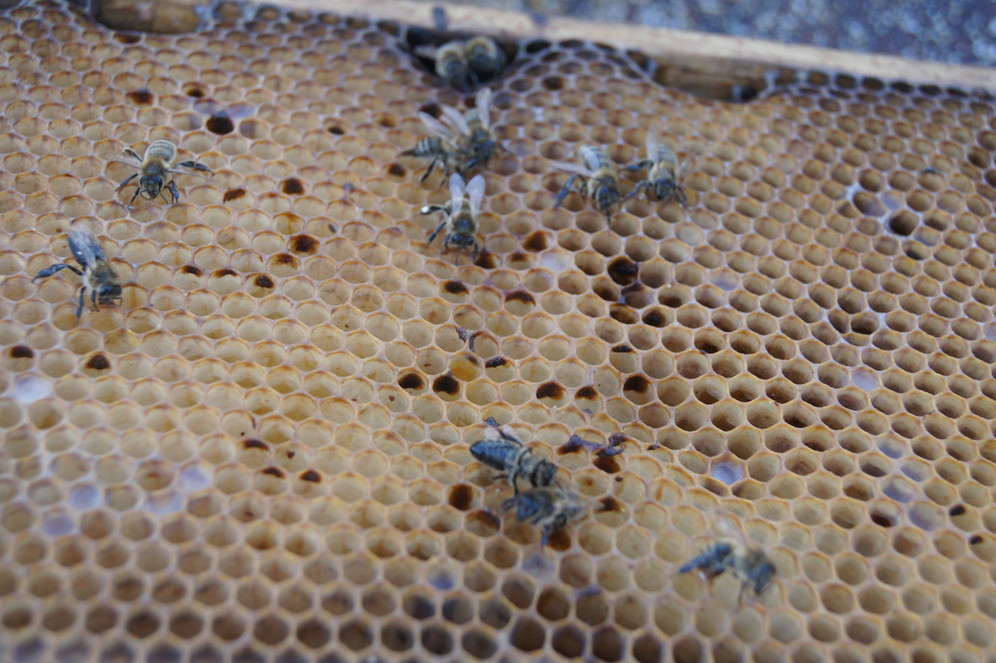
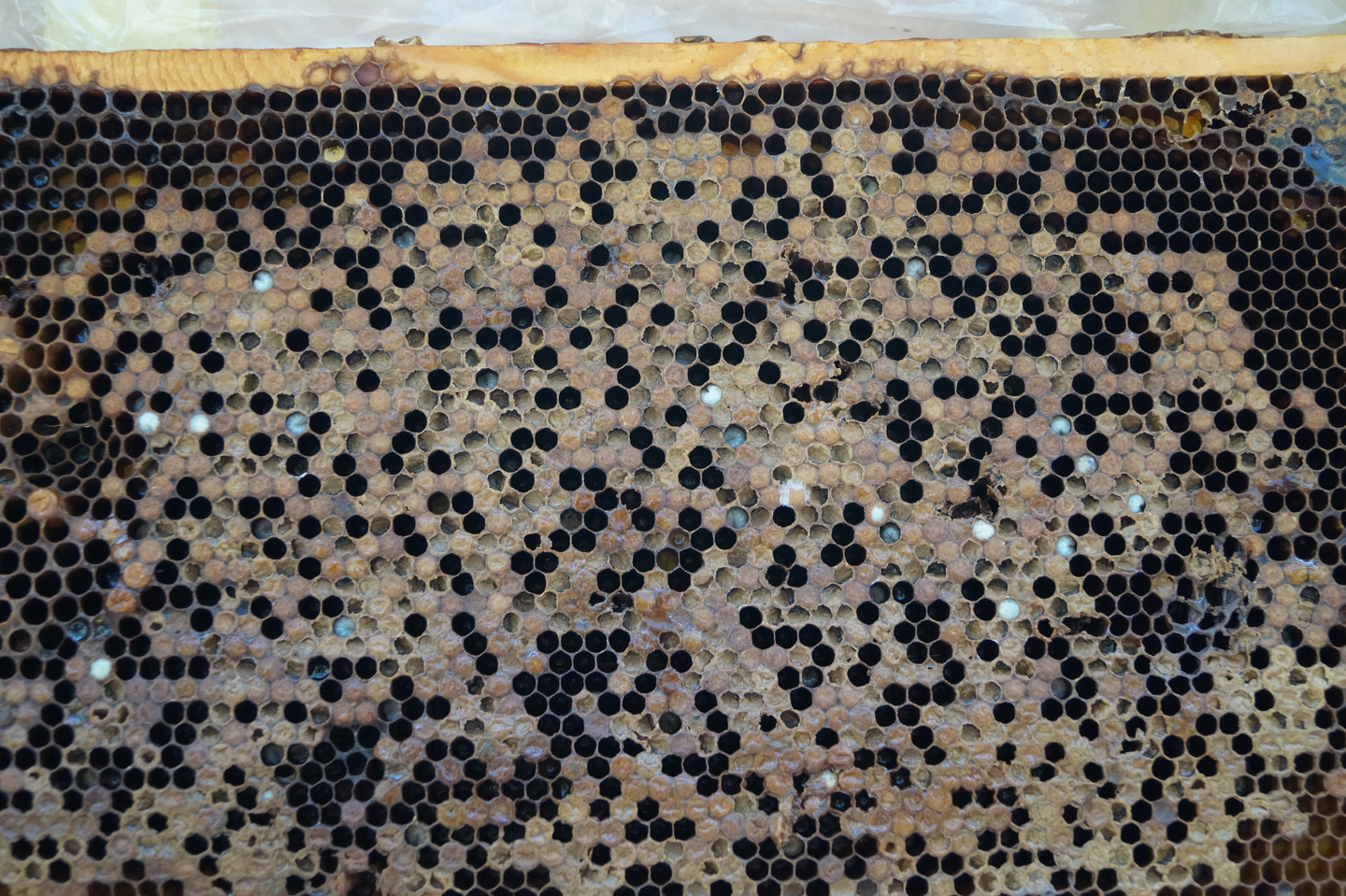
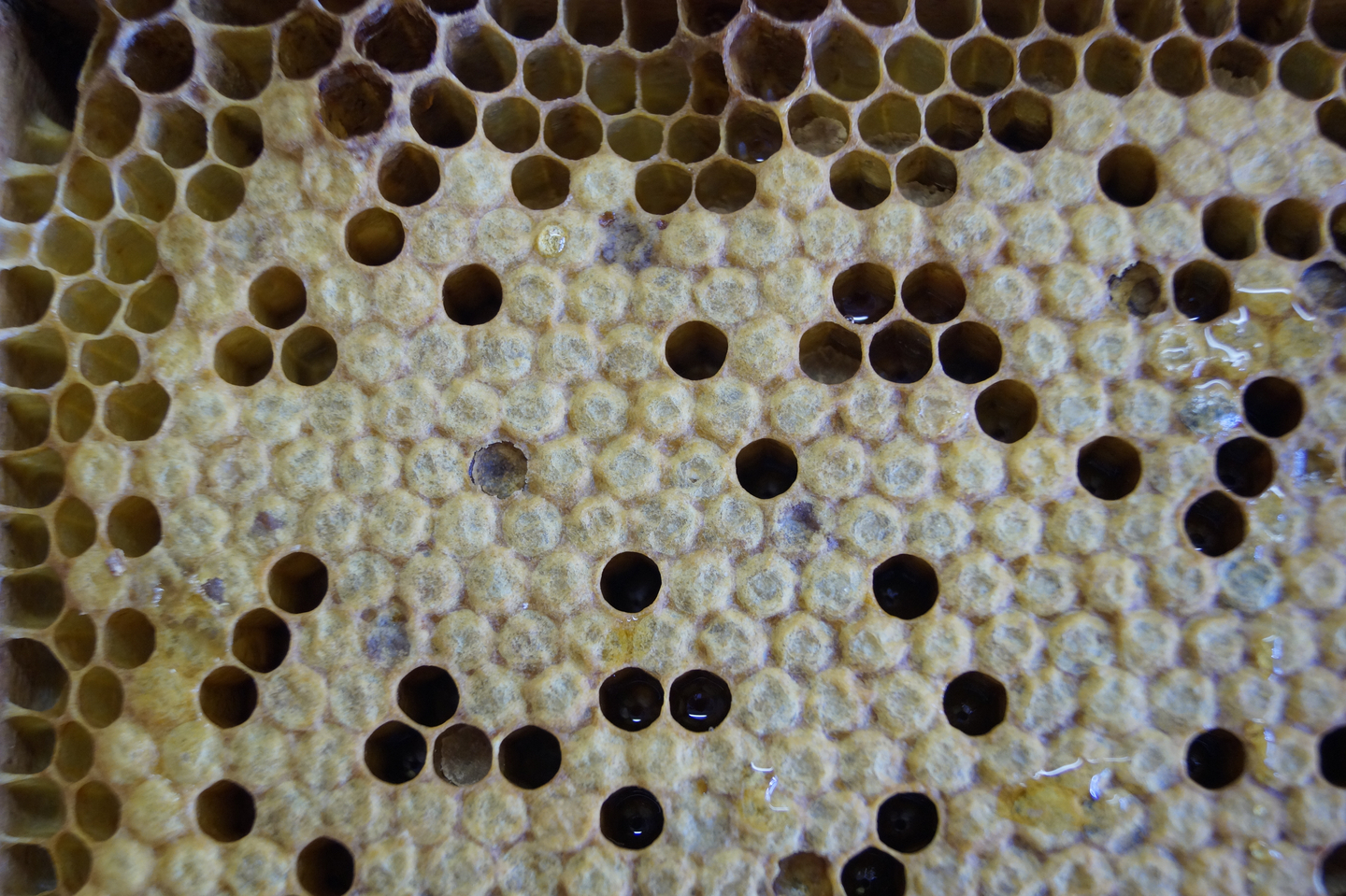
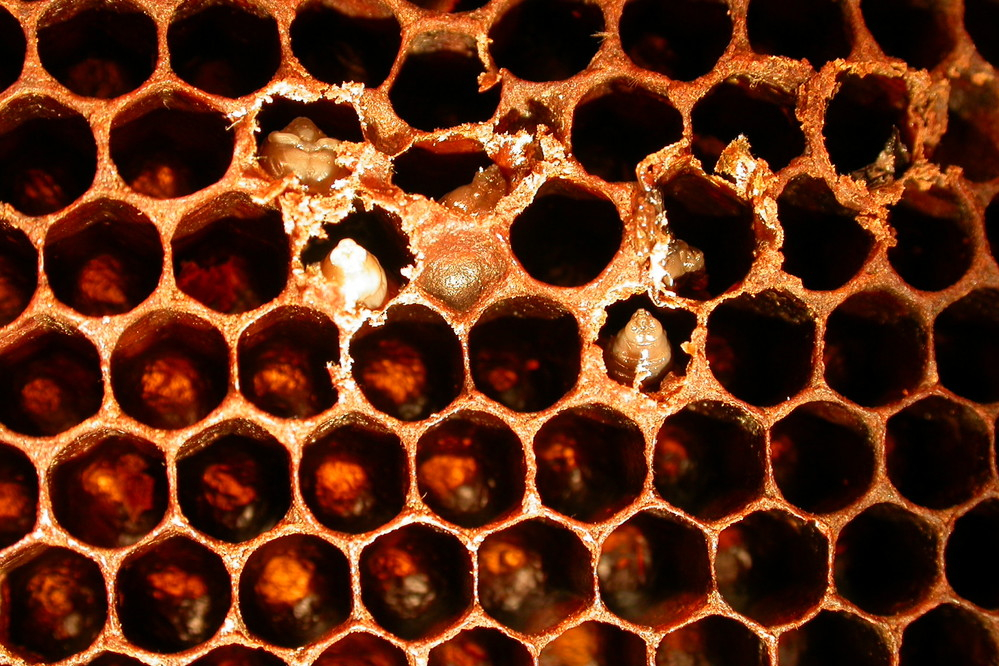
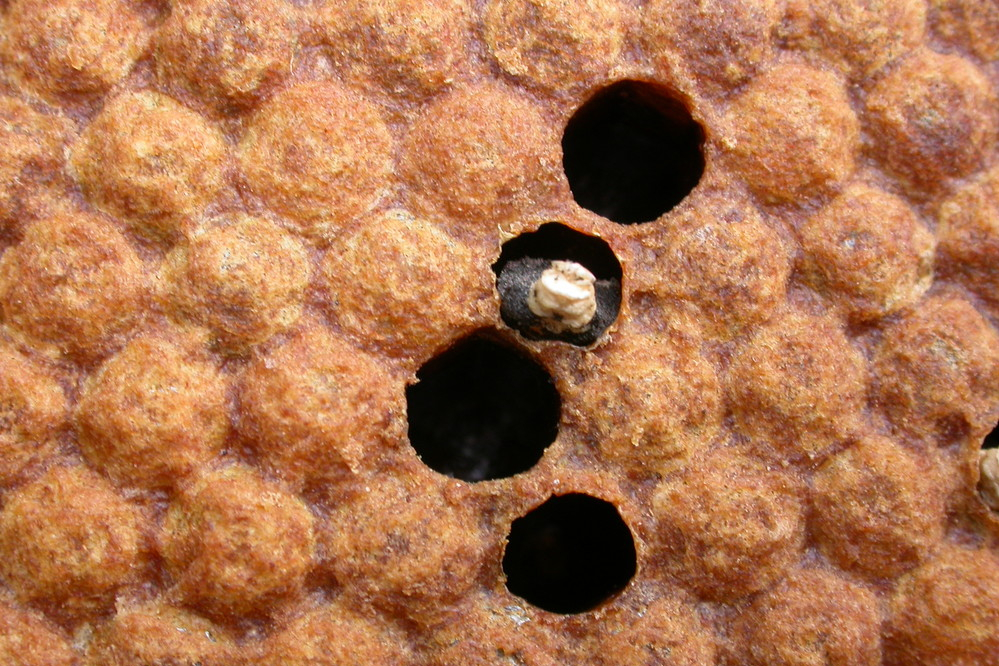
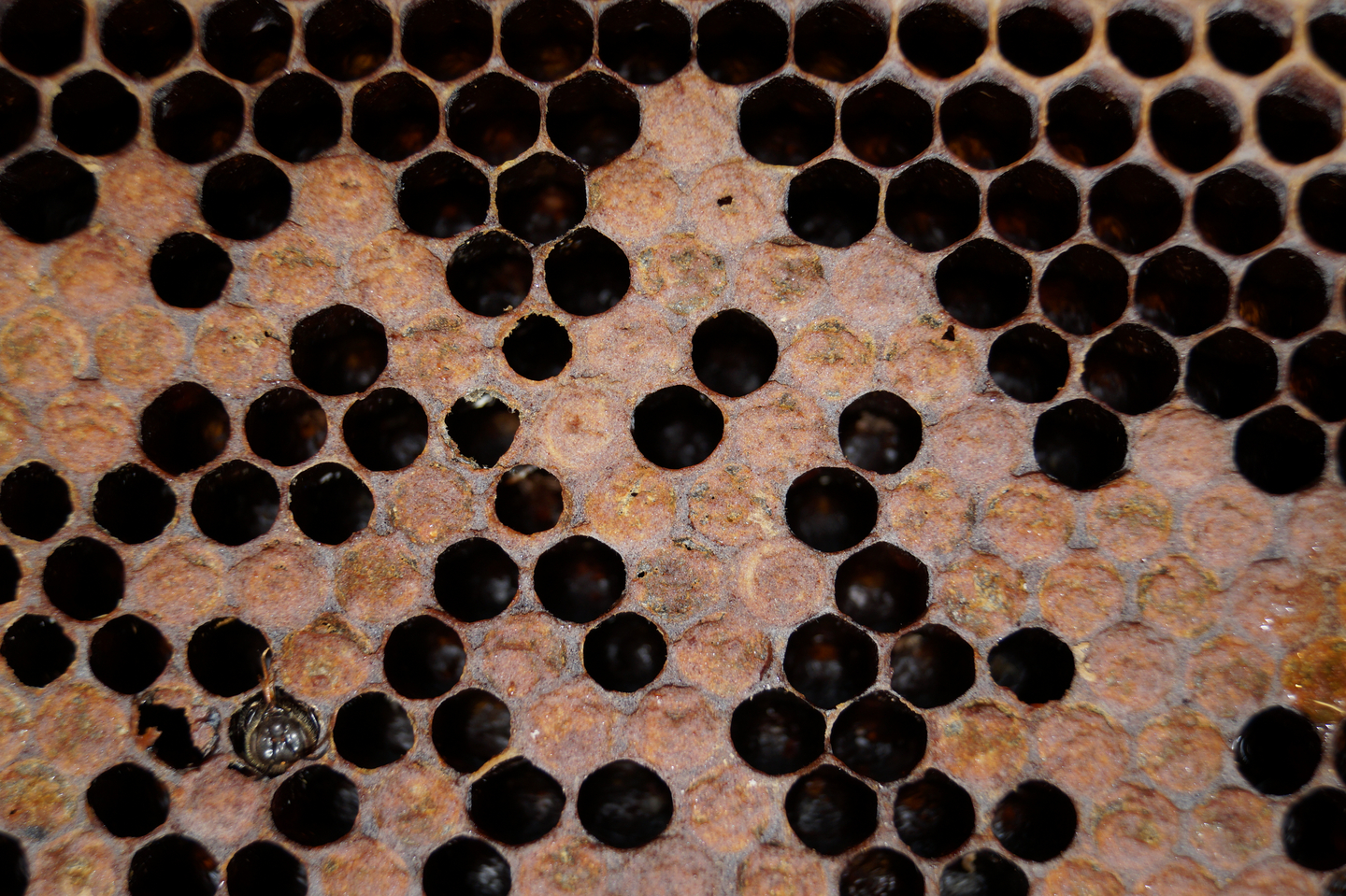
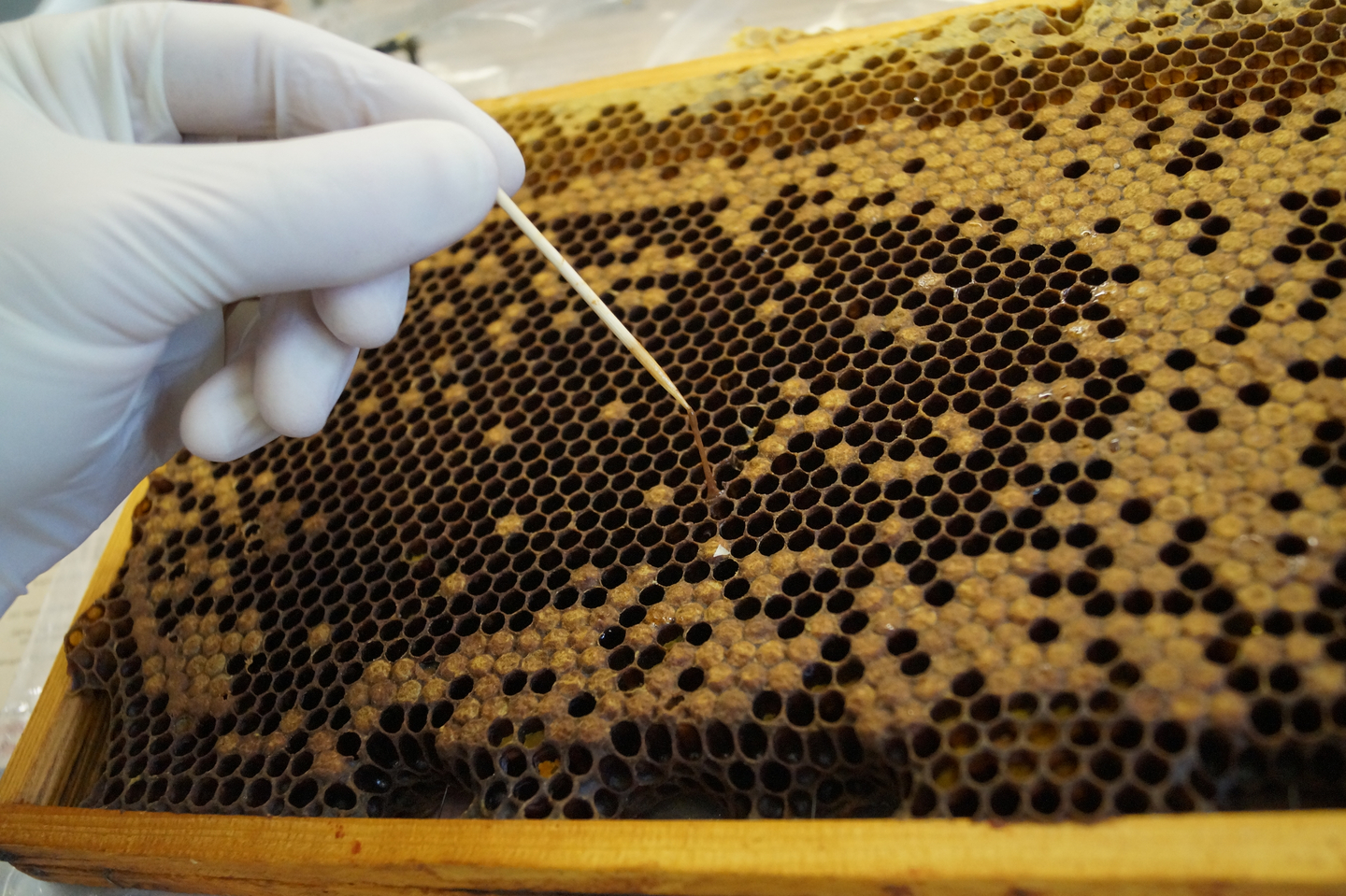
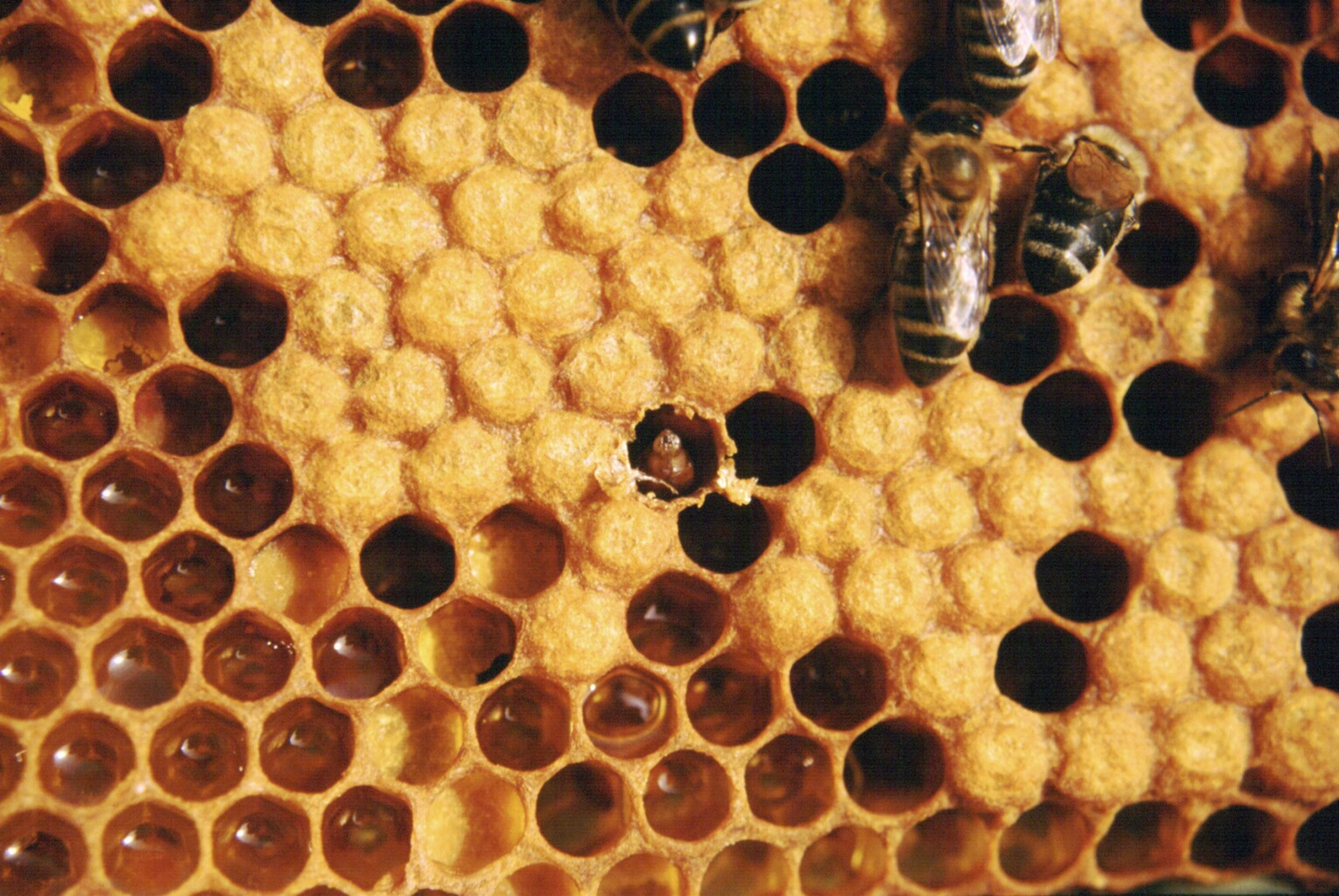
Bee brood with suspected disease -. Signs of disease: Brood surface patchy; cell cover discolored, sunken, holey; cell contents decomposed, stringy, hardened, scabs, maggot, pupa, bee remains in brood cells; altered comb odor. A precise control is necessary here!
American (malignant) foulbrood - fixed scabs
American (malignant) foulbrood - recognizable by the sunken cell covers.
Faulbrut / Tote Brut
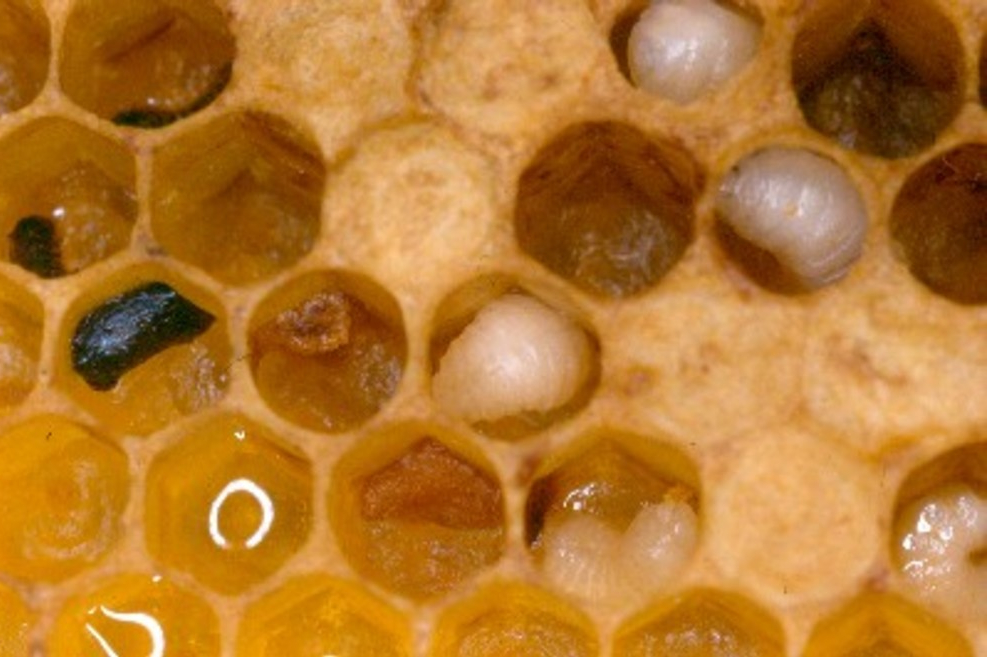
European foulbrood - Gapped brood nest, bee maggots dead before capping, twisted, collapsed and discolored lying in cell.
Sackbrut
Bag brood - brood nest patchy, cell covers may be holey, dead, discolored bee maggot in cell with discernible body segmentation and slightly bent anterior end.
Kalkbrut
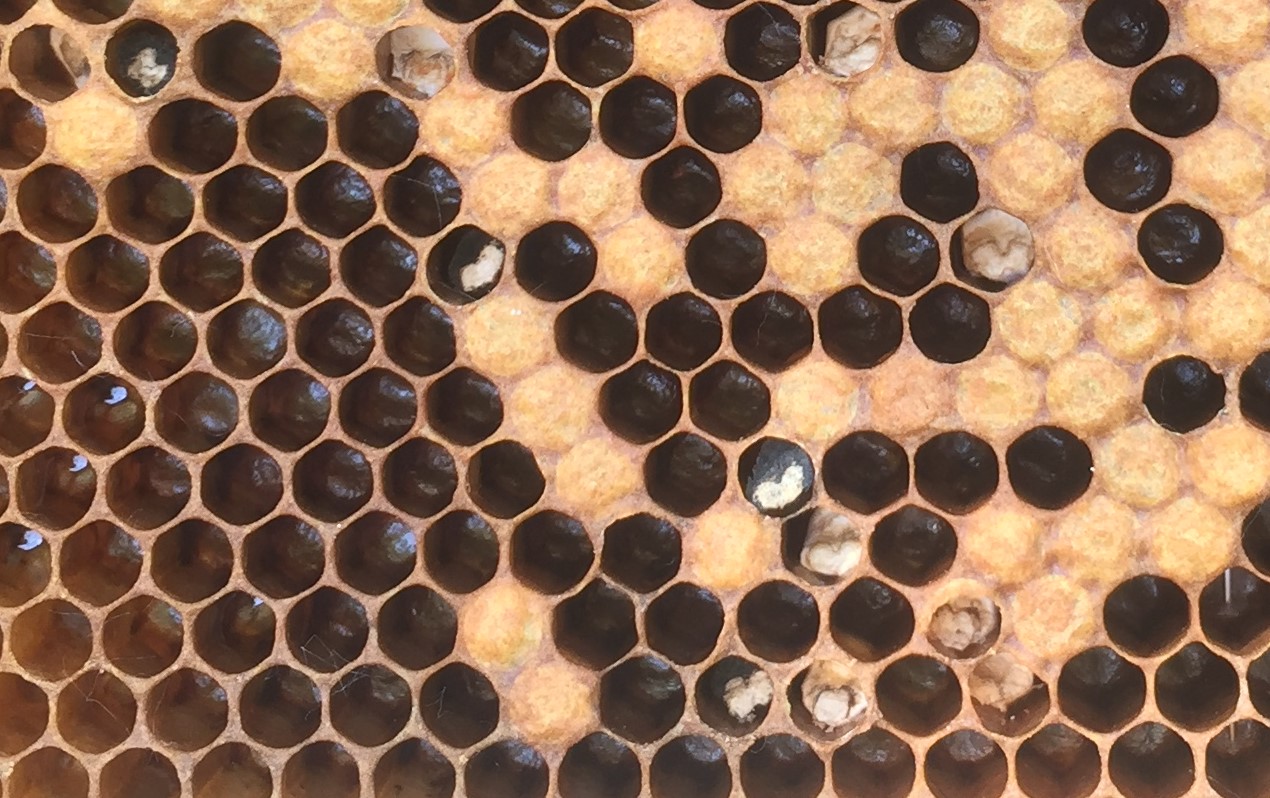
Lime brood - Individual cell covers patchy, brood mummies (white, black) visible in cells.
Varroosis - Heavy varroa infestation, in combination with viruses, leads to damaged brood stages. Here the signs are patchy brood pattern and holey cell covers.

Contents of the brood cells: Larvae and pupae

In this gallery you will find a picture overview of diseases and pests that can occur in the contents of the brood cells or on the larvae and pupae.

Bienen auf Wabe
Healthy brood; Open brood: bee maggots plump and shiny, well supplied with food sap, body shape clearly recognisable; capped brood: pupae with body appendages intact, no brood stages decomposed, typical brood odour
Fadenziehen
American foulbrood is suspected if symptoms such as decomposed, stringy cell contents or stuck brood scabs are observed.
American (malignant) foulbrood - sessile scabs
If symptoms such as cotton wool-like or hard brood cell contents or white or grey-black coloured mummies are observed, lime brood is suspected.
The inspection of the drone brood shows a high varroa infestation.
Tote Vorpuppe
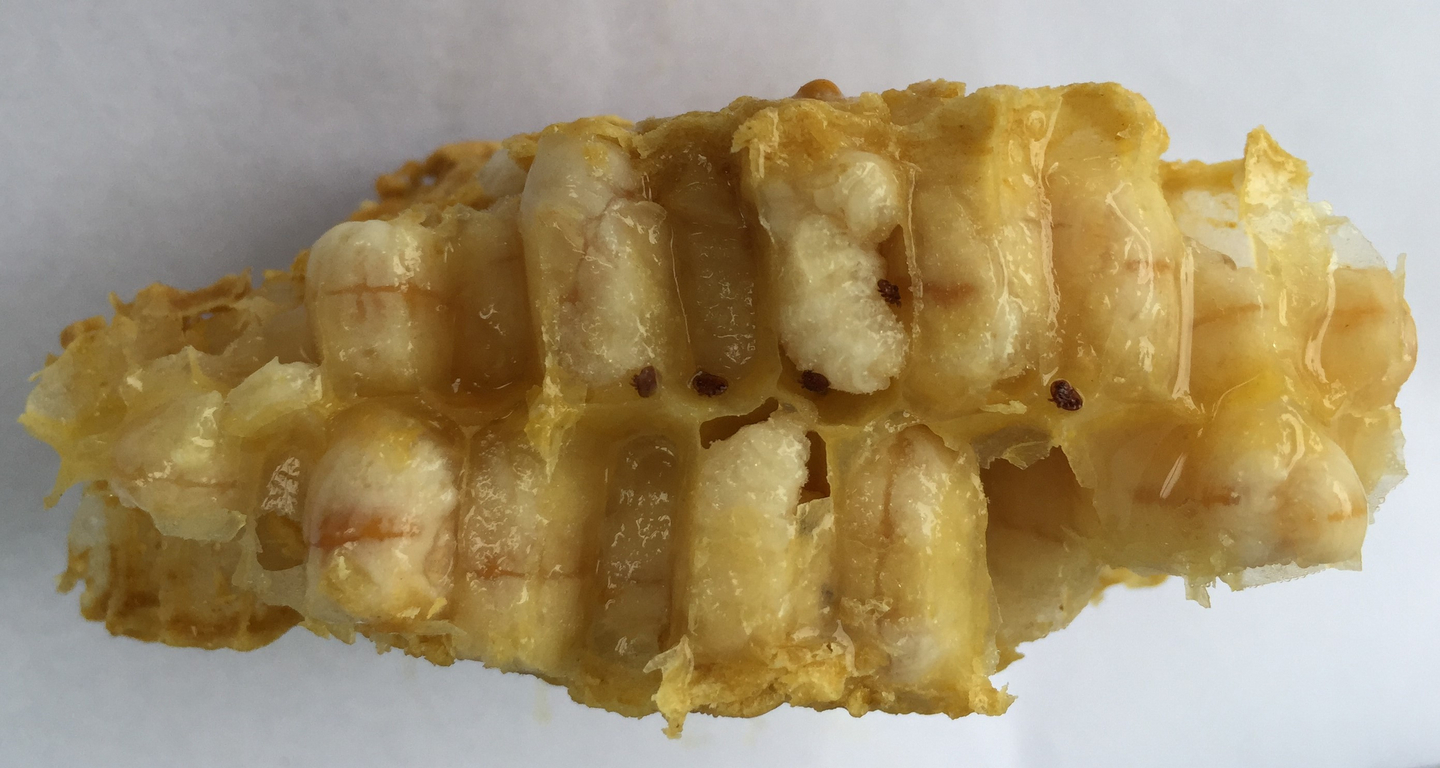
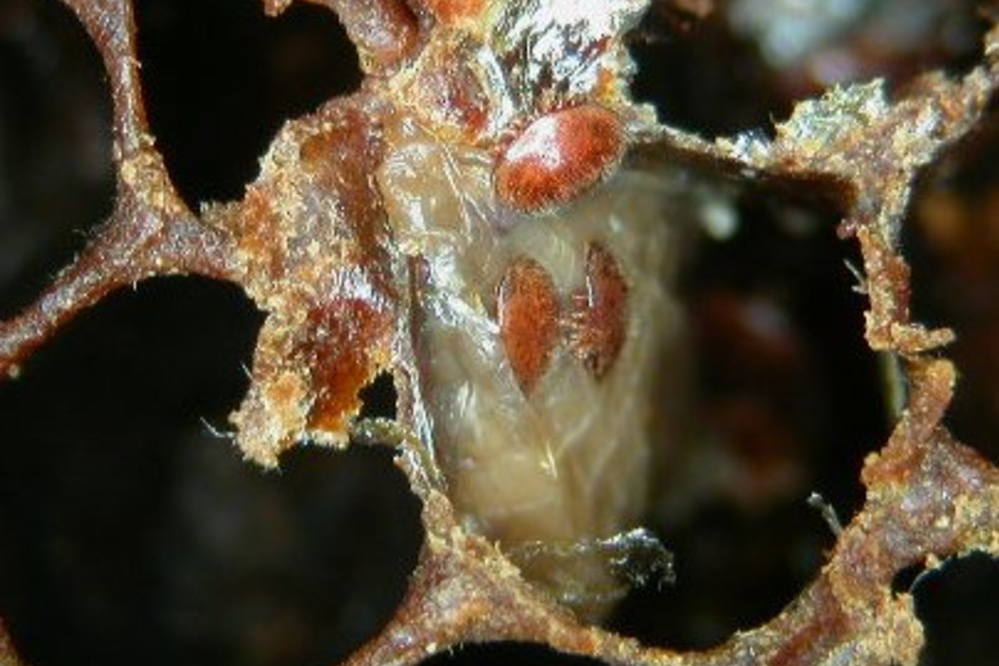
The occurrence of numerous varroa mites on brood stages in capped brood cells is typical for the clinical picture of varroosis.
Varroabefall Brutzelle Puppe
The occurrence of numerous varroa mites on brood stages in capped brood cells is typical for the clinical picture of varroosis.
If there are symptoms such as stagnant brood cells with cracked, sunken cell caps and a dead pre-pupa with a protruding head, there is a suspicion of sac brood.

Bees

In this gallery you will find an overview of pictures of bee diseases.

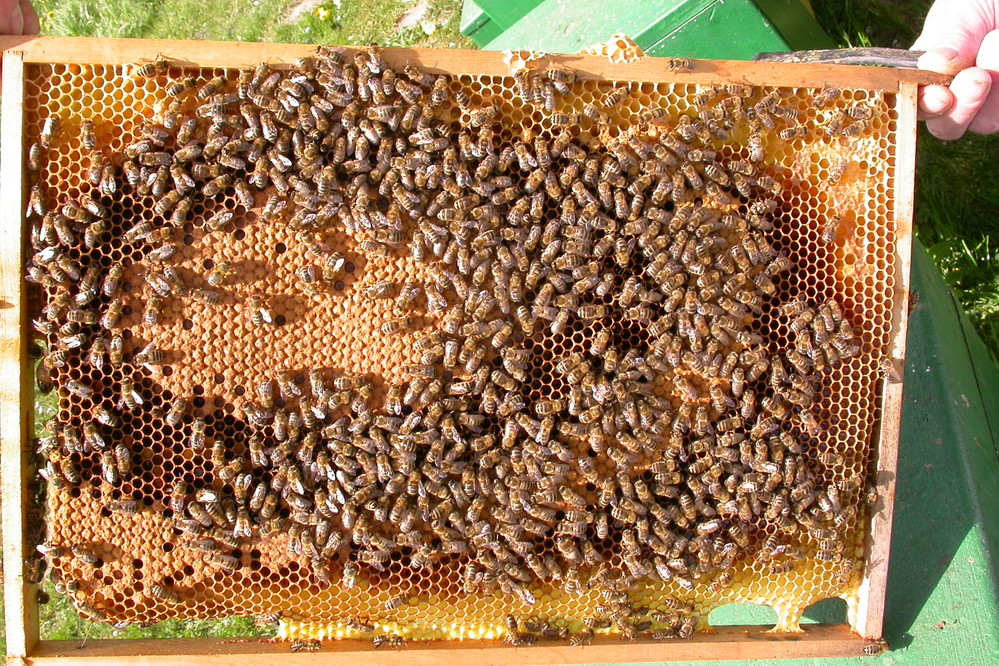
Healthy bees on a brood comb
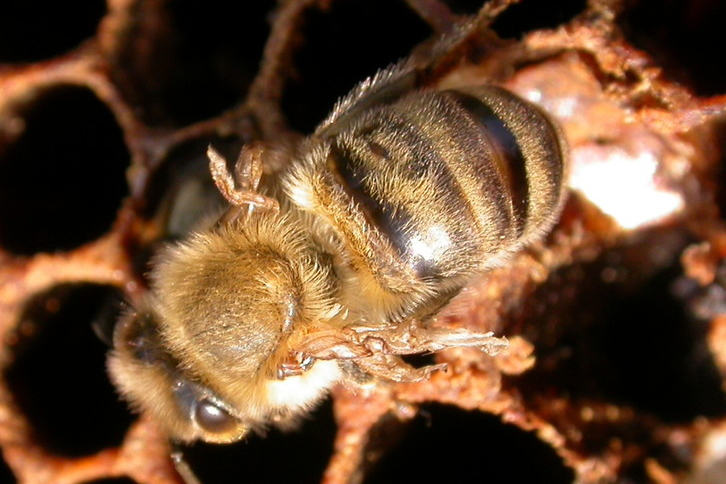
Flügelkrüppelbiene
Infection with the deformed wing virus (DWV)
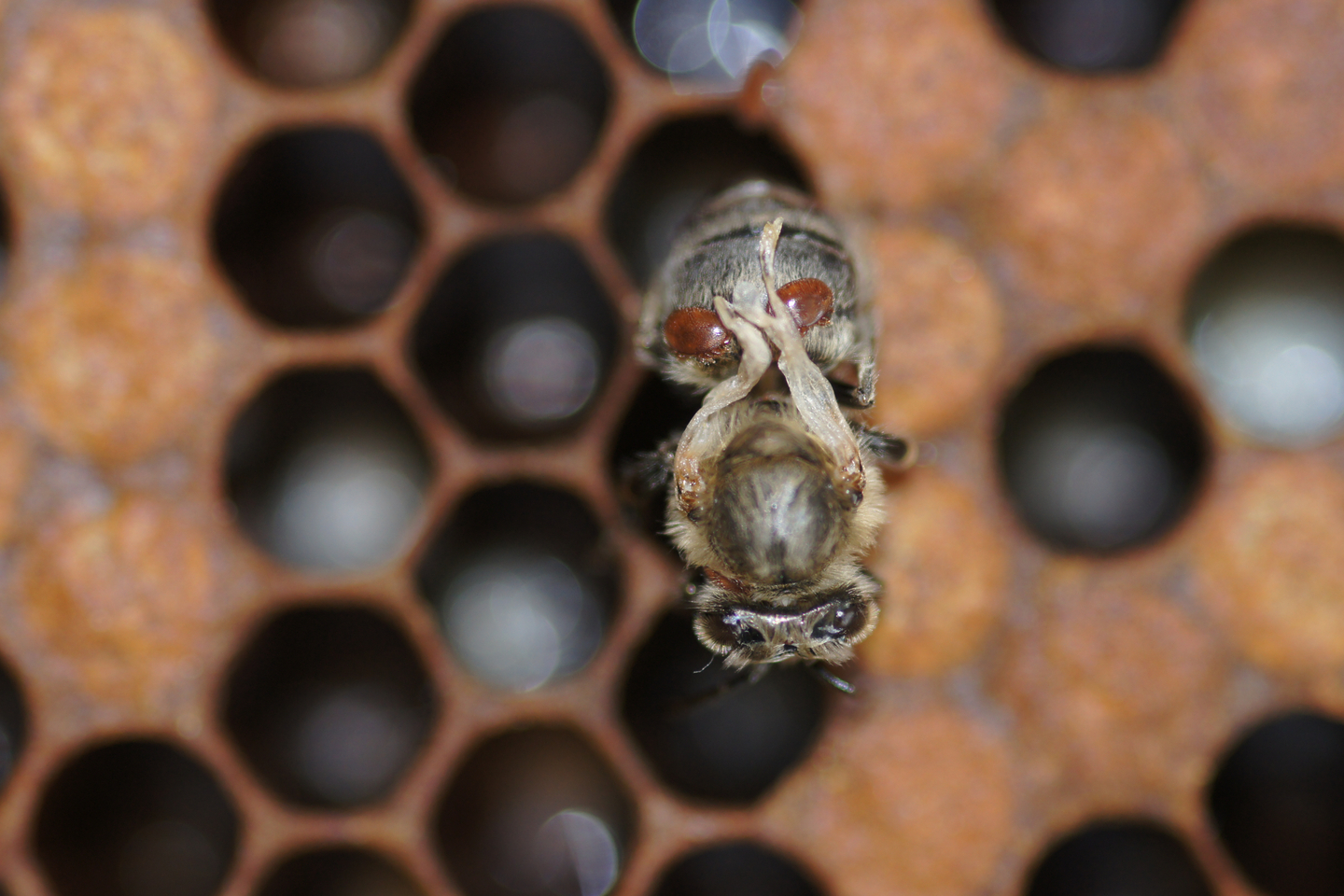
Krueppelbiene
Bee with varroa mite and crippled wings
Bienen / Schittenhelm
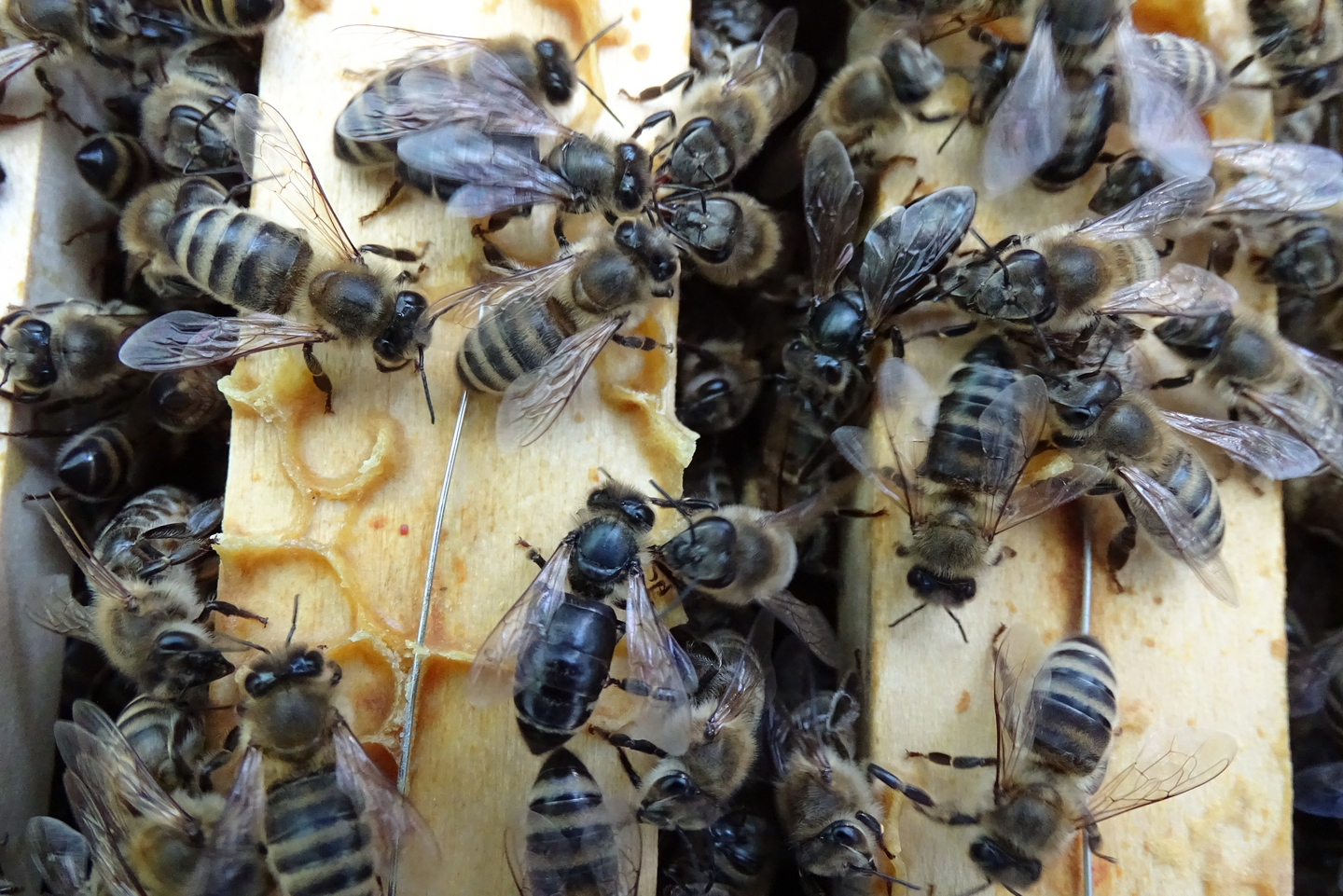
Shiny black bee with spread wings due to movement disorders, suffers from chronic bee paralysis
If a colony is suffering from chronic bee paralysis, there is often an increased death rate. The typical shiny black bees can also be recognised here
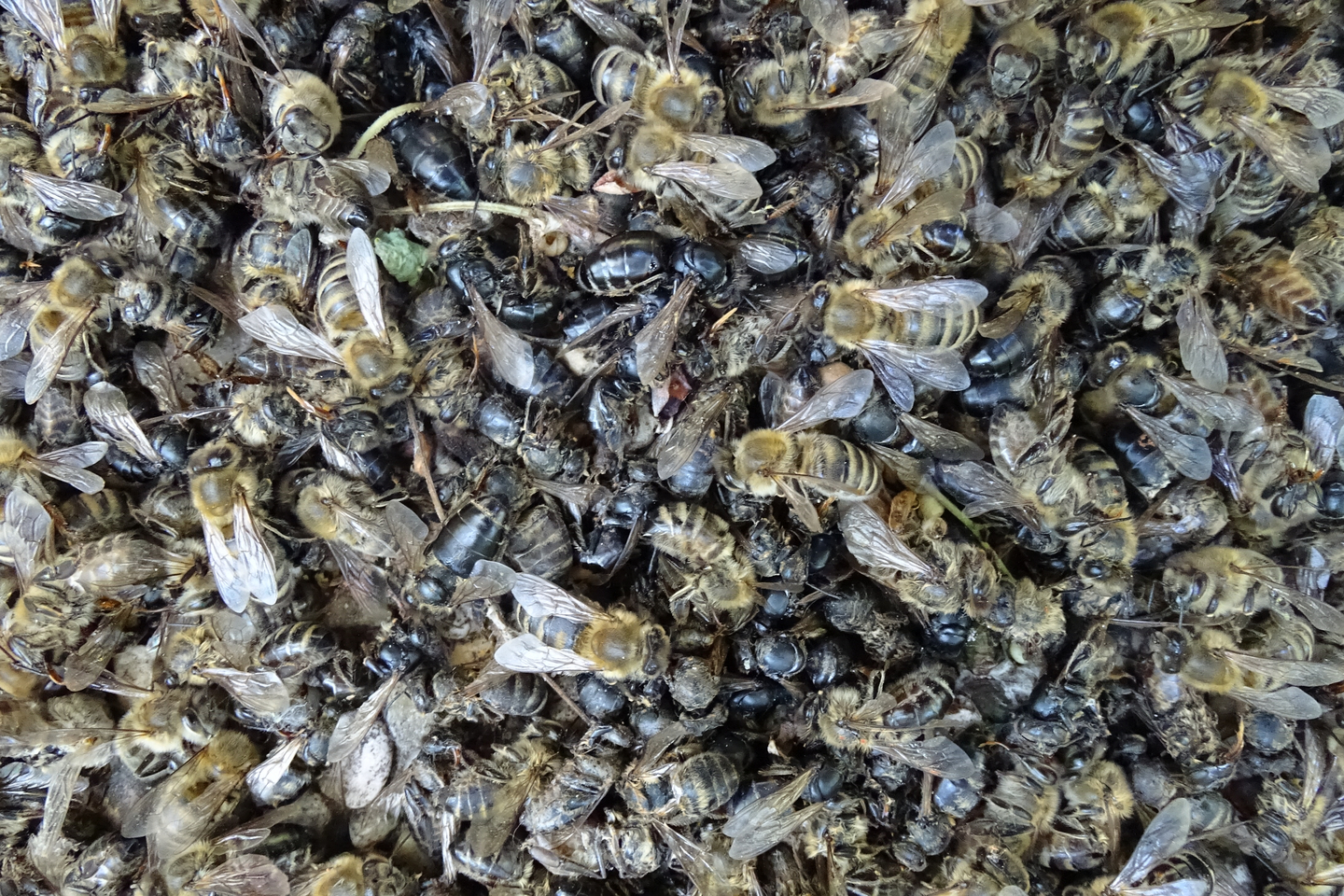
Tote Bienen am Gitterboden
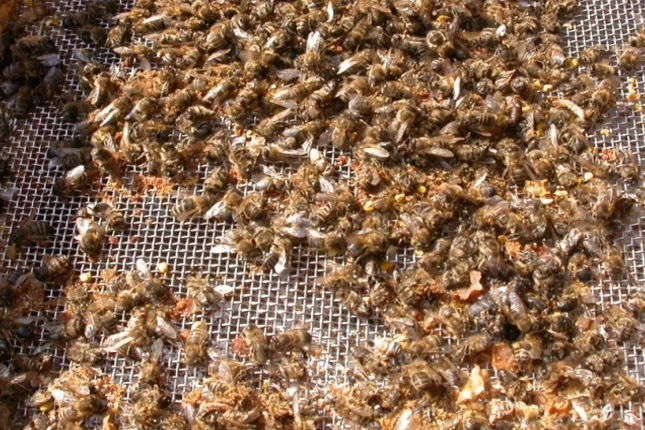
Massive mortality in summer, as here on the grid floor, is an indication of possible exposure to pesticides.
Bienen mit Pollenhöschen
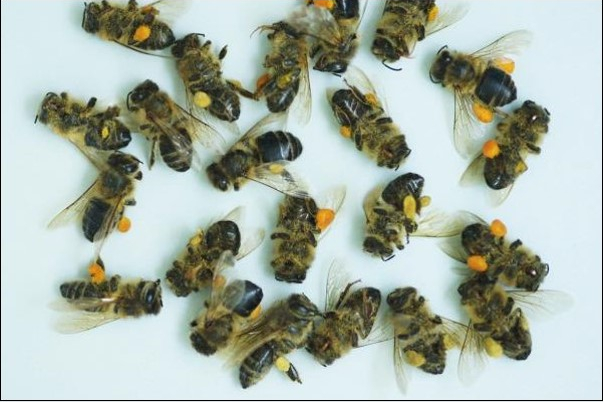
Dead pollen collectors in front of the flight hole are an indication of pesticide poisoning. In this case, clothianidin and imidacloprid were detected in the bees.

Manure

In this gallery you will find an overview of images of abnormalities in the mixture and possible causes.

Gemuellebienen
Varroa mites in the manure
Varroa Gemuelle
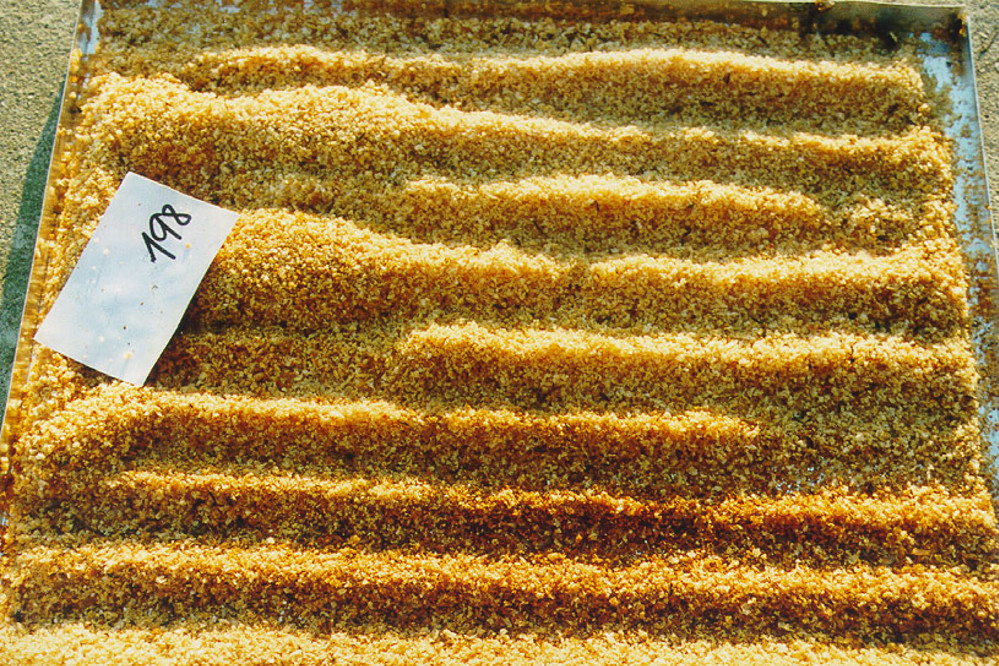
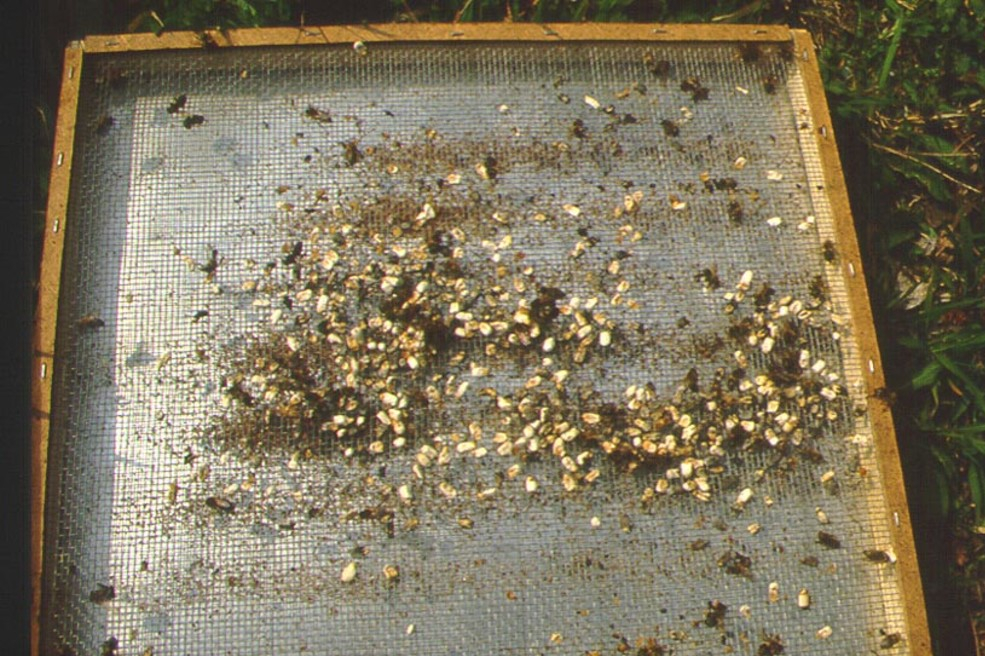
In case of heavy varroa infestation, masses of dead, red-brown mites are found in the manure.
Kalkbrutmumien
Lime brood mummies in the manure -. Brood stages affected by lime brood emerge in the manure.
Räuberei
Predation leaves a characteristic muck in the bottom board and traces on the combs as well as the flight board.
Große Wachsmottenarve
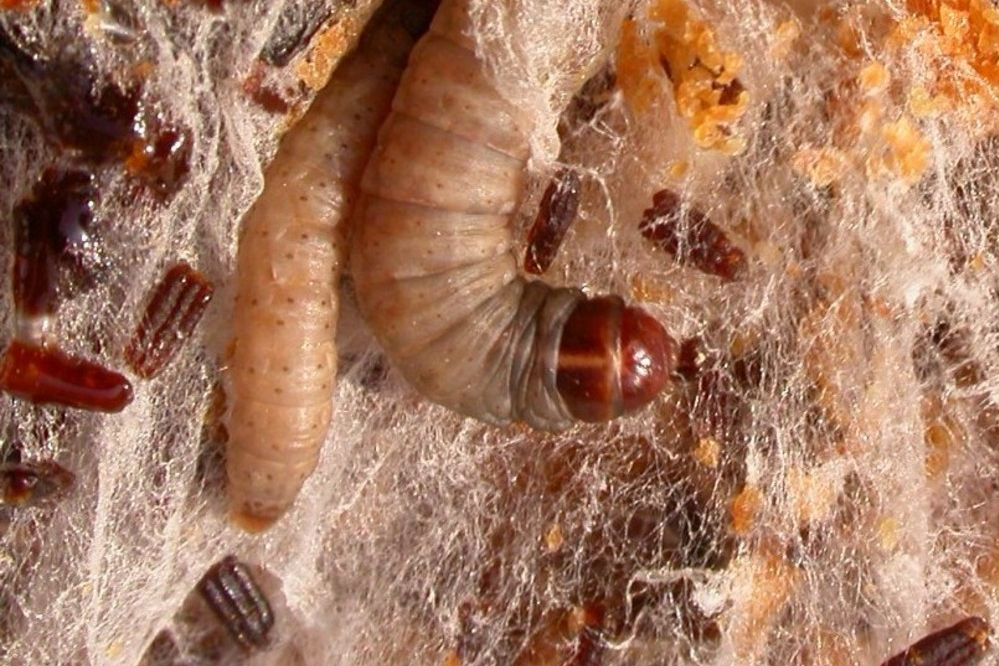
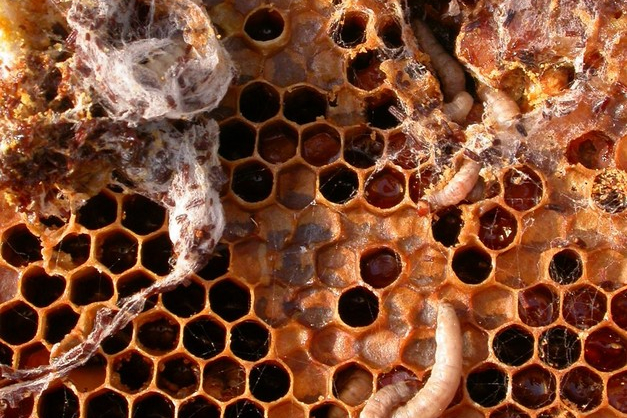
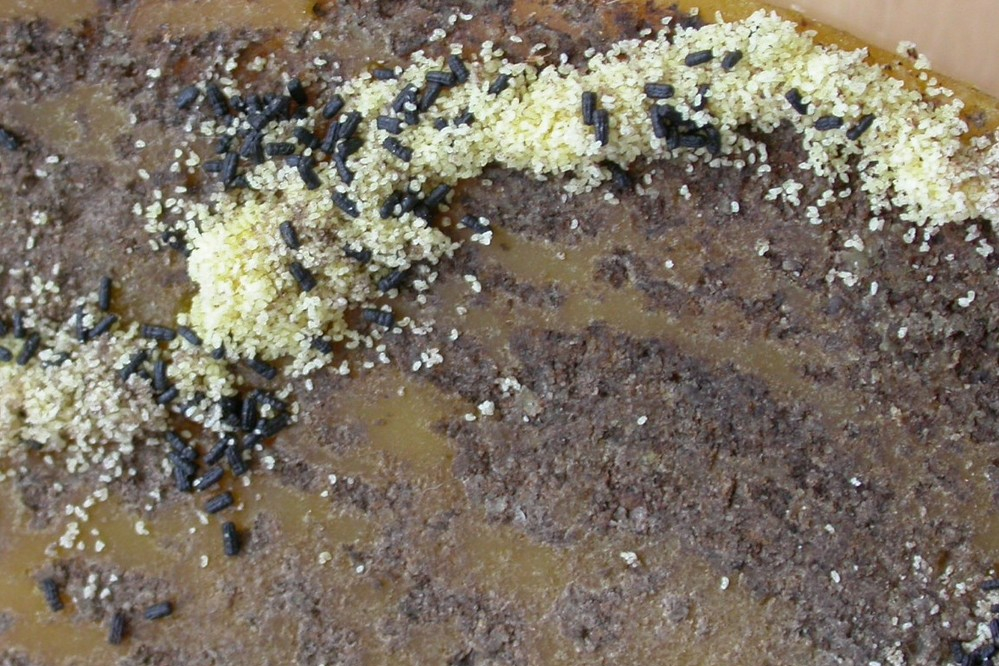
Larvae of wax moths live on honeycombs, in comb stores and in wax muck on the bottom board of the hive, leaving a characteristic web and droppings crumbs.
Weißwasser / Bienenteile von Wespen
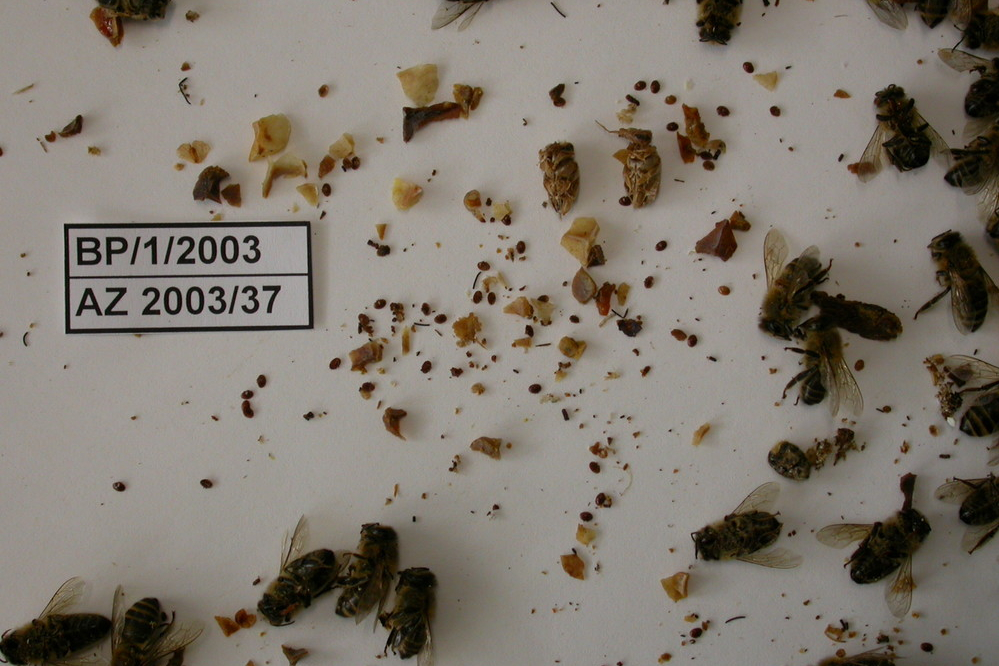
Wasp damage - wasps disassemble dead bees into parts.
Mäuseschaden
Mice damage - Dismantled bees after shrew feeding.

Honeycomb stock

In this gallery you will find a picture overview of pests that can occur in the honeycomb stock.

Wachsmotten / Bienen festgesponnen
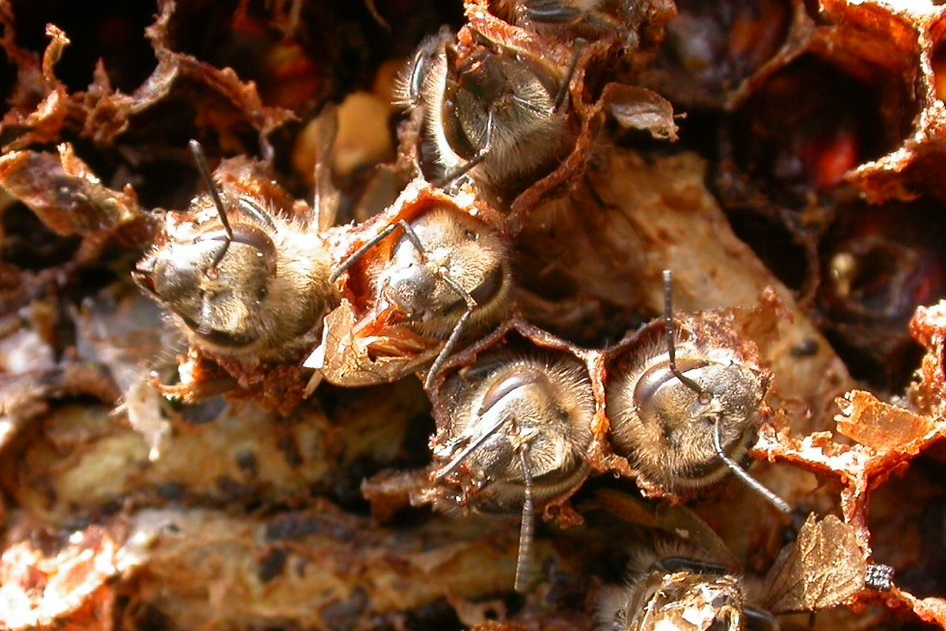
Small wax moth - In case of very severe infestation, the honeycombs can also be completely destroyed by the small wax moth. The bee pupae are spun at the bottom of the brood cell and the young bees can no longer hatch.
Wachsmottenschaden
Great wax moth
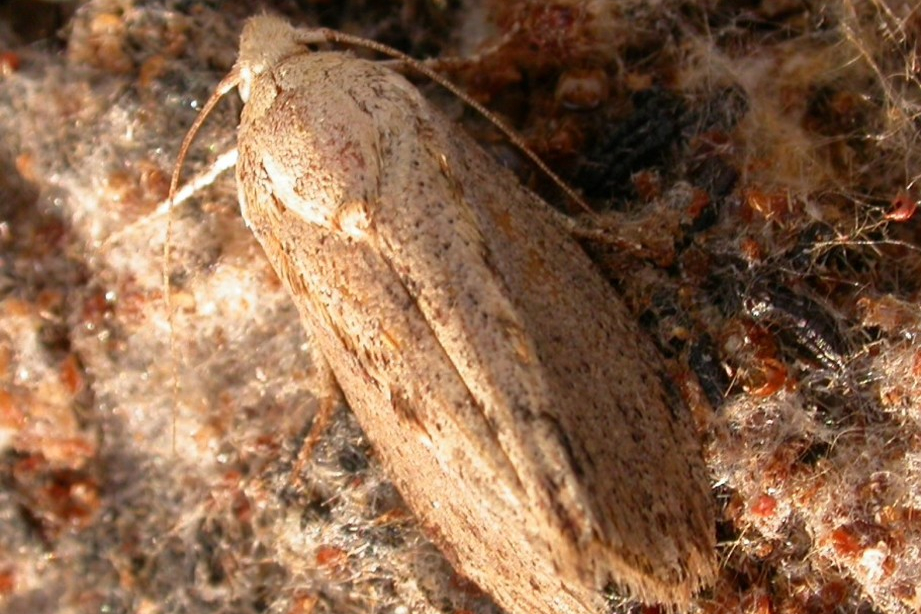
Wachsmotte Falter
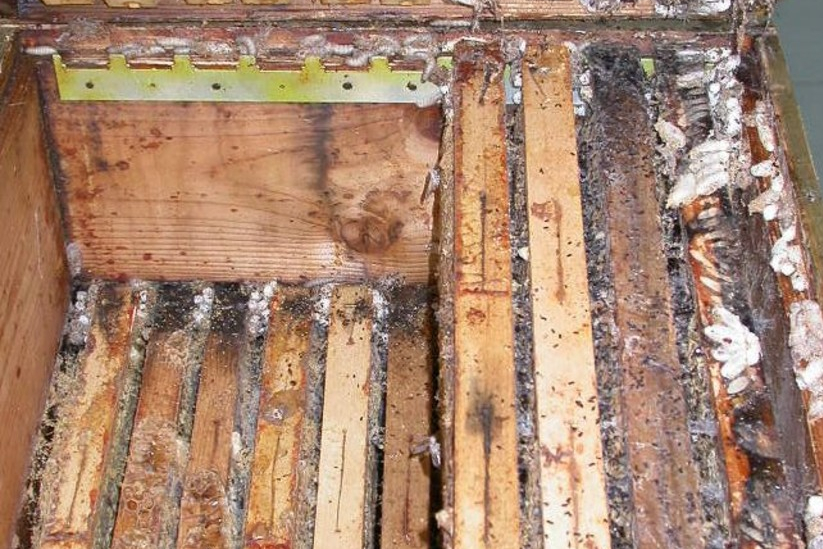
The large wax moth (Galleria mellonella) can completely destroy storage combs and food combs in a short time in warm conditions. This also applies to the comb of dead colonies that was not cleared away in time. Depending on the stage of infestation, characteristic spidery nests or honeycombs that have been spun together, the large wax moth larvae ("rank maggots") and white pupal cocoons can be found. These are often found in pupal cradles gnawed from the wood. When wax moth infestation is severe, a characteristic odor is noticeable in the storeroom.
Wachsmotte Groß
Great wax moth - Dense webs are typical for an infestation of honeycombs with larvae of the great wax moth. Since the eggs are partly laid on the combs already in the hive, honeycombs that are not rapidly centrifuged are also at risk.
Kleine Wachsmotte
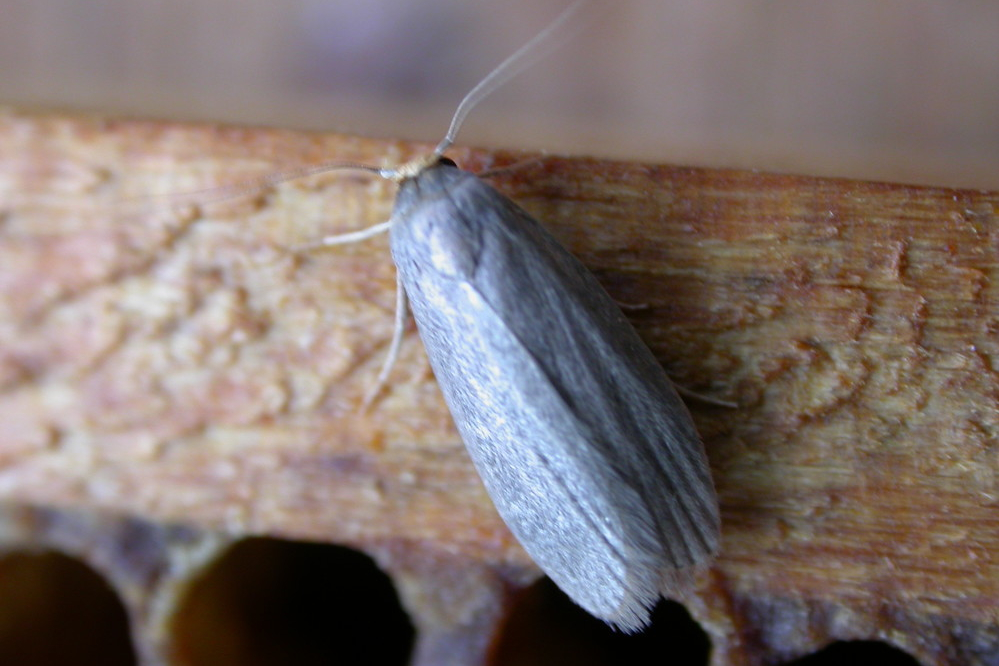
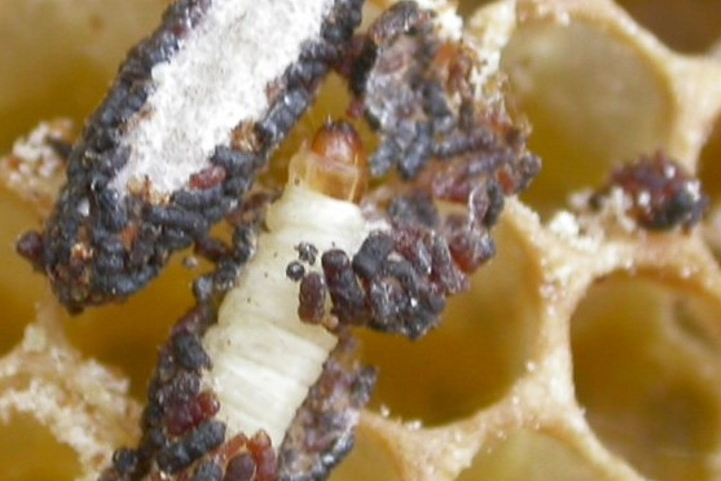
Adult small wax moth - The larvae of the small wax moth (Achroia grisella) eat individual tunnels through the combs. In the process, tunnels lined with webs are formed. The underside of poorly cleaned wax blocks can also be eaten by the climbing maggots.
Wachsmottenkokons
Small wax moth - Doll cocoons with dark droppings
Kahlbrut
If the larvae of the small wax moth mine in the area of the center wall of brood combs, the brood is often lifted up somewhat. The so-called "tube brood" is then formed, which usually runs in the form of tunnels. If the cell covers of these galleries are removed, a rank maggot is usually found underneath. If the bees remove the cell covers above the galleries, the image of "bare brood" is formed.
Frassgänge / Wachslaibe
Wax loaf with wax moth infestation - Here, larval galleries of the small wax moth can be seen on the underside of poorly cleaned wax loaves. This area often still contains pollen remains, which are preferentially utilized by the moth larvae.

Insects in the bee colony

Various beetles and their larvae can occur in the beehive. The native species are harmless and feed on the slurry or dead bees at the bottom of the hive, as do native mite species, for example. In contrast, the small hive beetle(Aethina tumida), which originates from Africa, can cause major damage.

You can find a small selection in this picture gallery.

Further information on the small hive beetle can be found here.
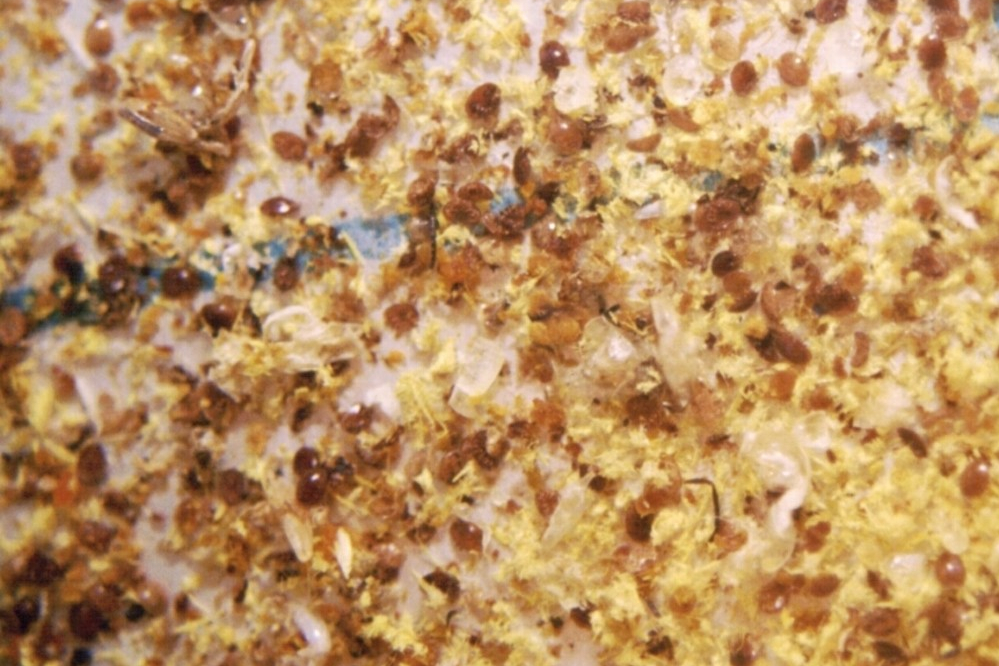
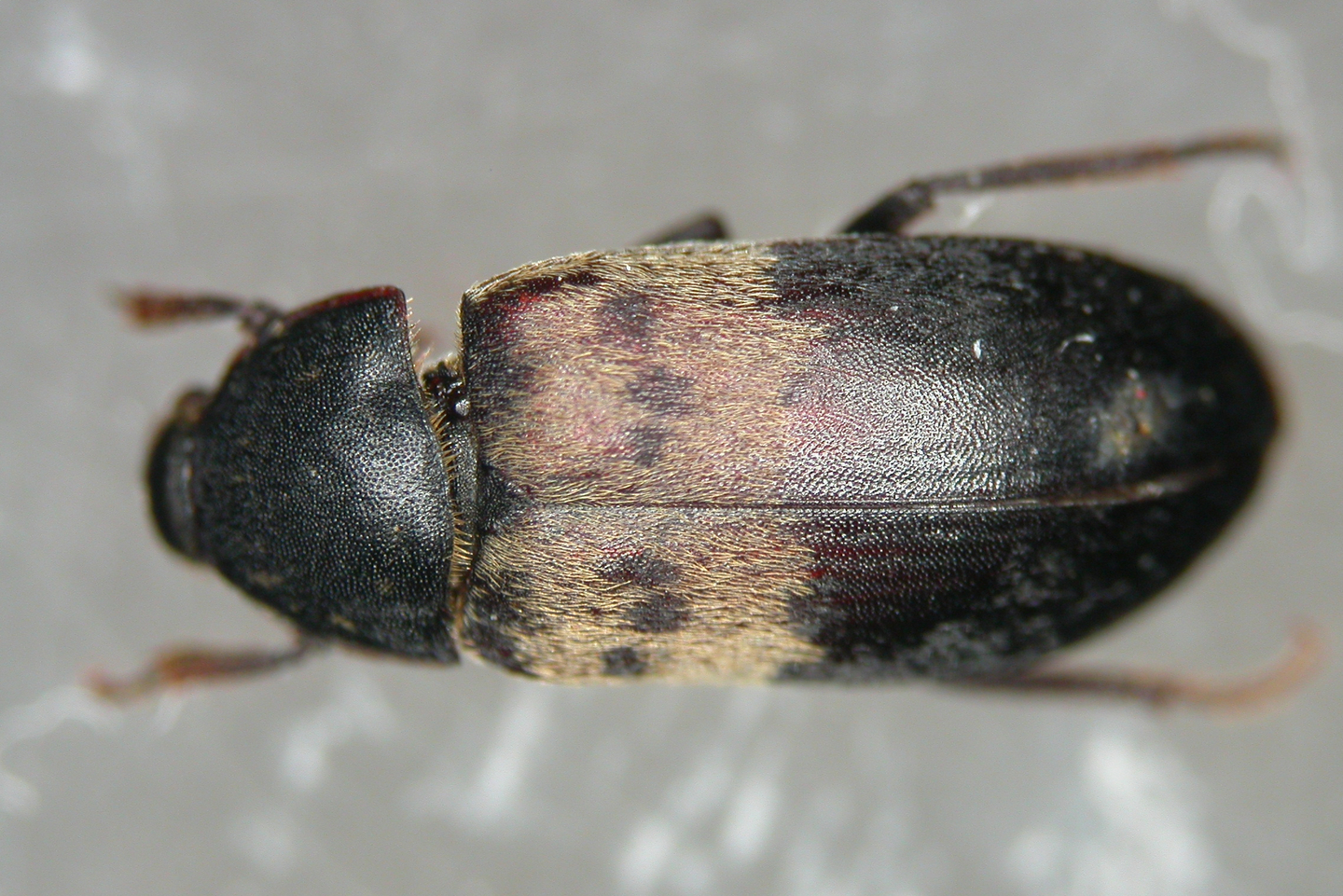
Bacon beetle - Other beetle species or their larvae (e.g. bacon beetle: Dermestes lardarius) participate in the removal of dead bees in the hive's muck.
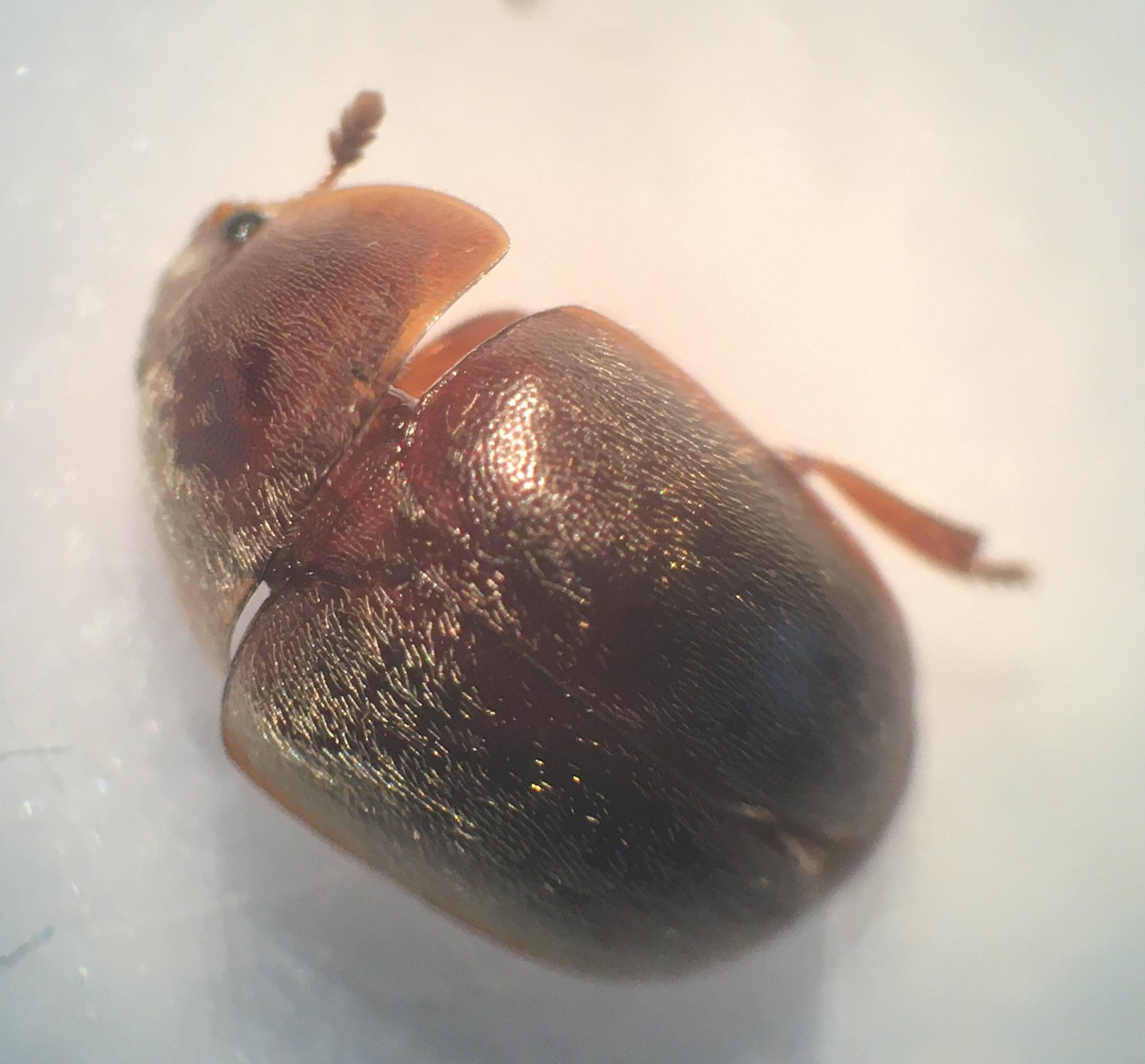
The Cychramus luteus beetle, which is native to our country, looks very similar to the small hive beetle.
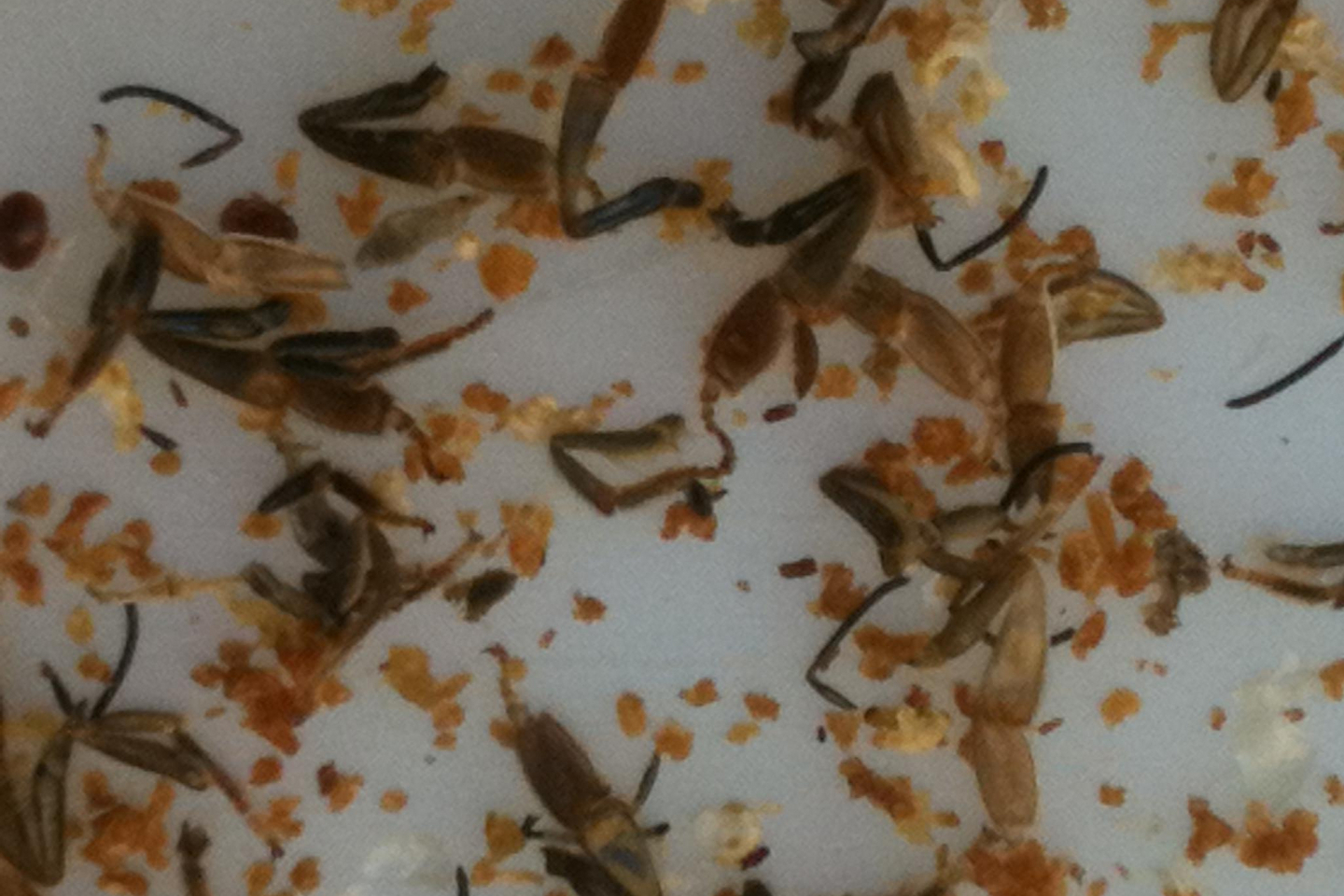
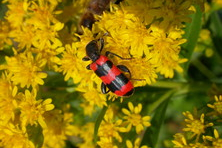
Trichodes apiarius
Bee beetles - There are also some species (e.g. bee beetles or Trichodes apiarius) whose larvae live predatorily in the nests of wild bees or in the hives of European honey bees.
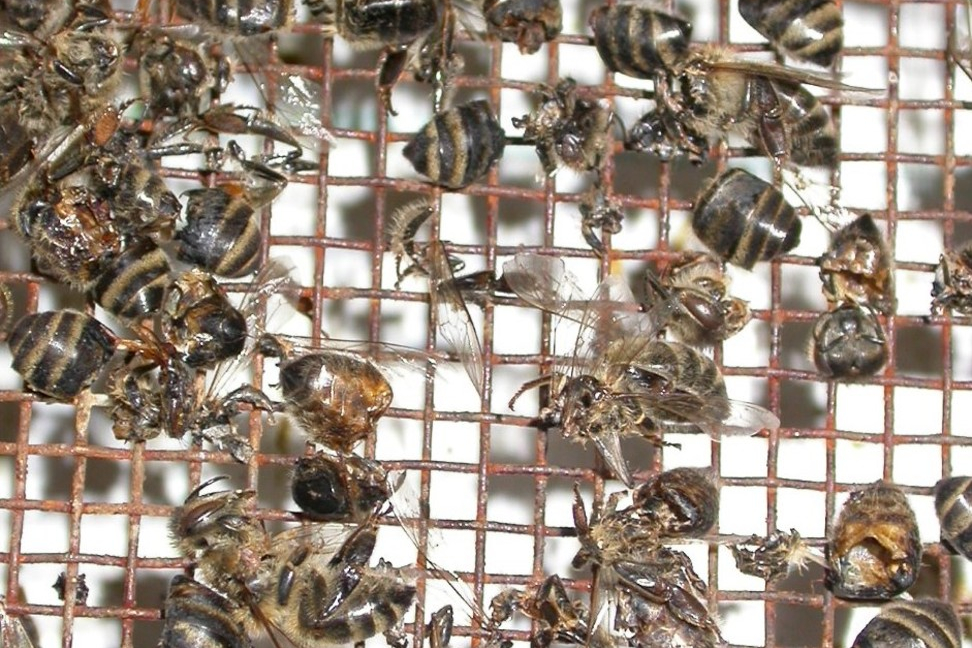
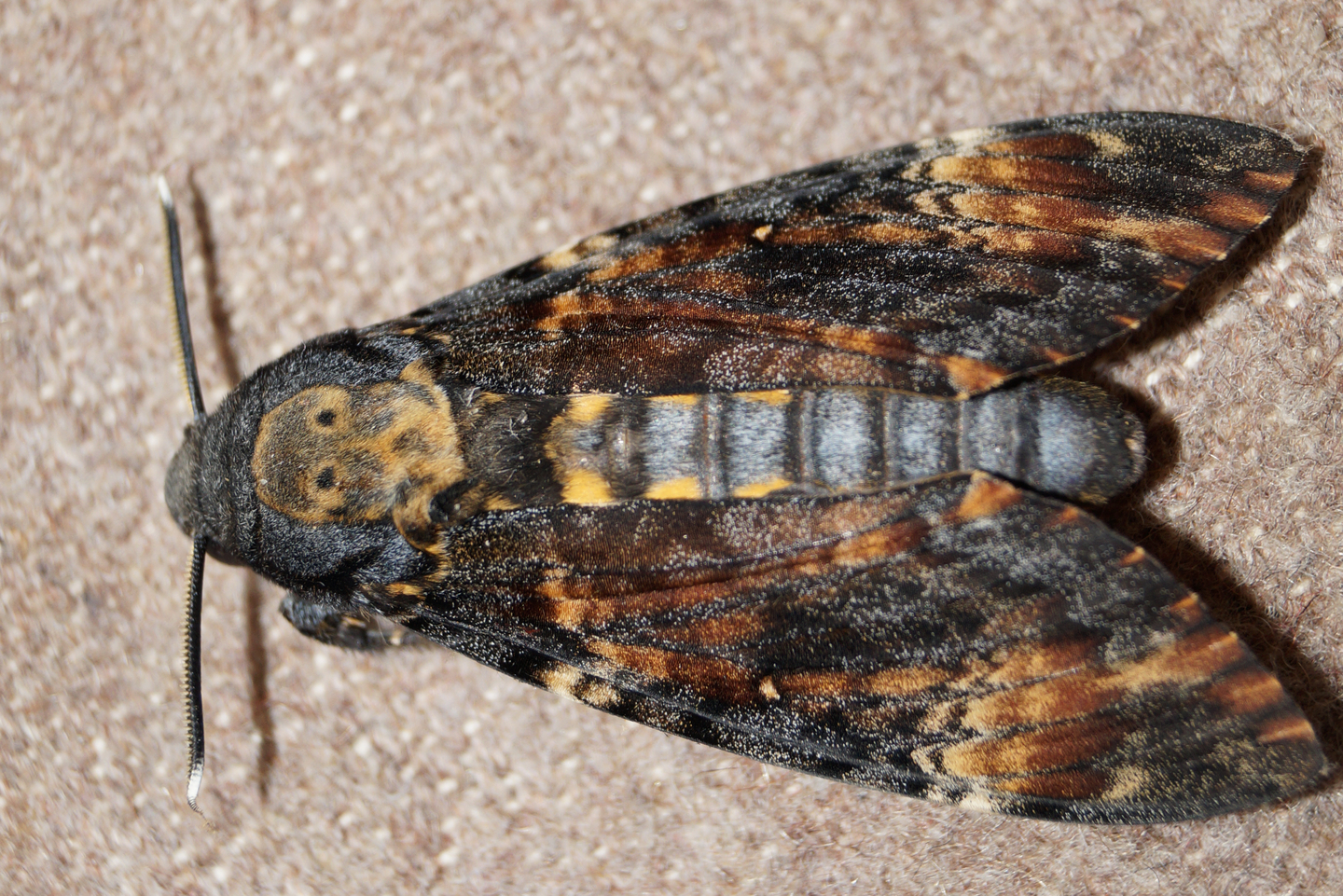
Totenkopfschwärmer
Death's-head hawkmoths - they sometimes enter the colonies as honey thieves and suck the honey directly from the combs. Otherwise they cause no further damage.

Contact

Leitung

Dr. Josef Mayr

Last updated: 13.01.2026

automatically translated