AGES Radar for Infectious Diseases – 18 June 2026
Summary
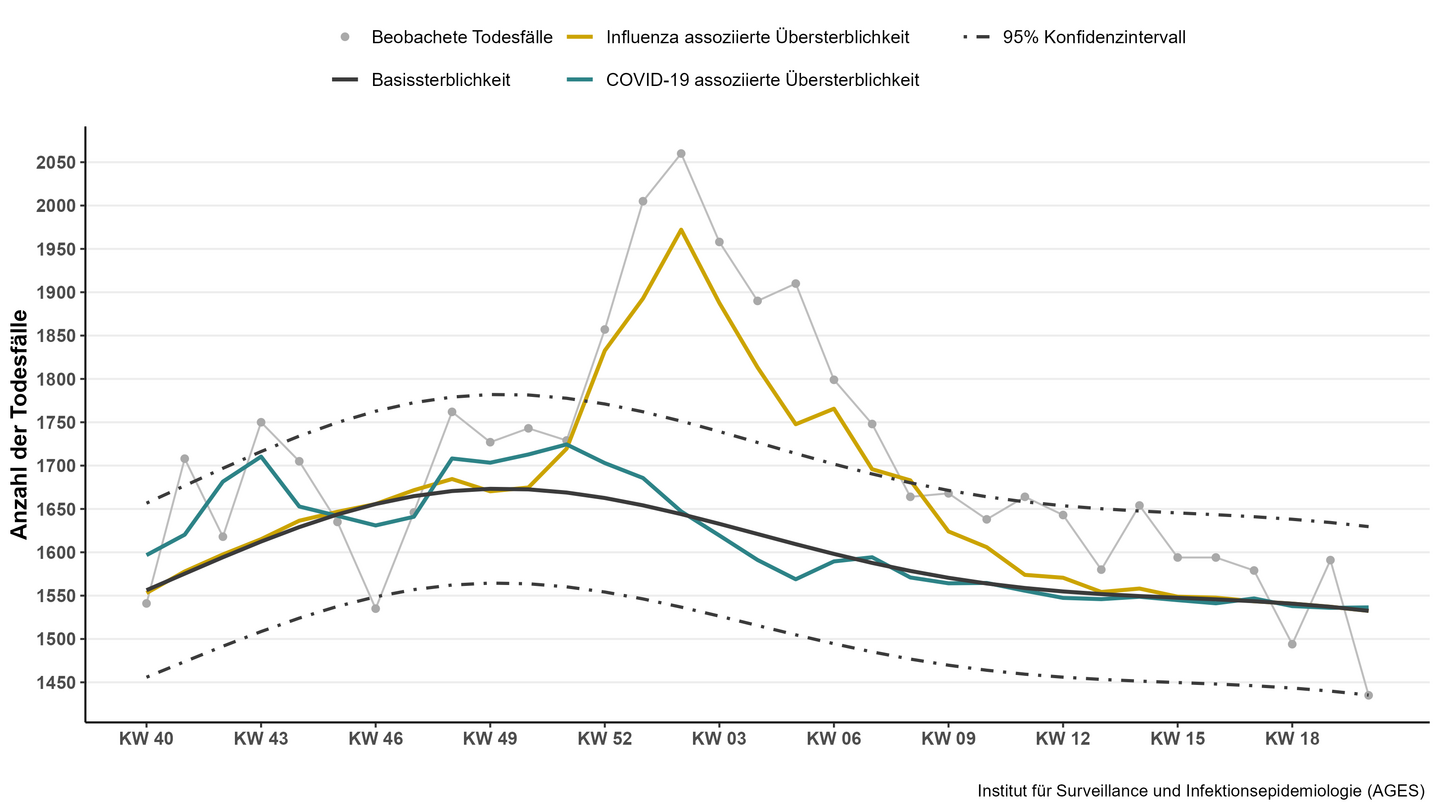
Estimates of influenza- and SARS-CoV-2-associated deaths have been published. A total of 1,929 influenza-associated deaths were estimated in Austria for the 2025/2026 season. For SARS-CoV-2, the model estimated a total of 536 associated deaths over a one-year period.
The Ebola outbreak in the Democratic Republic of the Congo and Uganda currently stands at a total of 2,031 cases and 756 deaths.
In the multinational outbreak caused by Salmonella Stanley, flavoured instant noodle products are considered the most likely source of infection.
This month’s feature explores why more cases of Shiga toxin-producing Escherichia coli infections have been reported in Austria in recent years.
In the news section, we report on the official end of the Hanta virus outbreak linked to the cruise ship M/V Hondius.
The Department of Data Science & Modelling at the National Reference Centre for Influenza Epidemiology estimates the annual number of deaths associated with the respiratory pathogens influenza and SARS-CoV-2. These infections are often not listed as the cause of death in cause-of-death statistics. Instead, complications arising from the infection are often documented, such as pneumonia or pre-existing conditions that increase the risk of a severe or fatal course of the disease. Therefore, an estimate based on a statistical model is necessary.
In order to better capture the actual impact of influenza and SARS-CoV-2 on mortality, so-called excess mortality is calculated using a model. This takes into account various indicators from the ILI (influenza-like illness) sentinel system, the virological surveillance system DINÖ (Austrian Diagnostic Influenza Network) and electronic health data on hospital admissions, as well as exceptional weather conditions, such as cold winter weeks with an average temperature below 0 °C.
For the 2025/2026 season, calendar weeks (CW) 40 to 20, a total of 1,929 (95% confidence interval: 1,842–2,016) influenza-associated deaths were estimated in Austria. The number of influenza-associated deaths was thus lower than in the previous 2024/2025 season, which saw around 3,570 deaths. The estimate for the 2023/2024 season was around 2,696 deaths. Compared with the seasons prior to the COVID-19 pandemic, the estimates for 2025/2026 were also on the low side. The total number of hospital admissions due to influenza was roughly on a par with the previous year. This suggests that, despite its early onset and higher peaks, the most recent flu wave was, overall, of similar intensity in terms of mortality and disease burden to that of previous seasons. This is also consistent with international observations for the past flu season in the European Region of the World Health Organisation (WHO).
The occurrence of COVID-19 has not yet followed any clearly defined seasonal pattern; therefore, unlike with influenza, year-round viral activity is recorded to assess excess mortality caused by SARS-CoV-2. For SARS-CoV-2, the model estimated a total of 536 associated deaths (95% confidence interval: 489–583) in Austria during the period from calendar week 21/2025 to calendar week 20/2026. Compared with previous years, there has been a further decline in SARS-CoV-2-associated deaths. This suggests an overall reduction in the burden of disease caused by COVID-19 in the population, which could be attributed, amongst other things, to improved immunity through vaccination and previous infection, as well as improved treatment methods.
A detailed explanation of the model-based estimate of excess mortality can be found in the ‘Topic of the Month’ section of the AGES-Radar issue dated 16 October 2025.
In the Ebola outbreak caused by the Bundibugyo virus in the Democratic Republic of the Congo (DRC) and Uganda, case numbers have continued to rise significantly since the last edition of AGES-Radar on 18 June 2026.
As of 15 July 2026, 2,011 cases and 754 deaths had been recorded in the DRC. To date, 366 patients confirmed to have contracted the disease have recovered. Most cases are being reported from Ituri Province in the north-east of the country. The neighbouring provinces of Haute-Uele, Tshopo, North Kivu and South Kivu are also affected.
The number of confirmed cases is the highest ever recorded in the first month of an Ebola outbreak. Within 37 days, 250 deaths were reported. By way of comparison: during the major Ebola outbreak in West Africa in 2014–2016, this figure was reached after 78 days. Due to gaps in the surveillance system, it is believed that the current outbreak is even larger than the reported case numbers suggest.
In Uganda, 20 confirmed cases of Ebola have been reported to date, including two deaths. No new cases have been recorded since 21 June 2026 (ECDC, as at 15 July 2026). The outbreak in Uganda is concentrated in the metropolitan area of the capital, Kampala, and is linked to the one in the DRC. Fifteen cases are considered to have been imported from the DRC, whilst five cases are locally acquired infections following contact with confirmed cases, mainly among healthcare workers.
At the end of June, a case of Marburg virus disease was also confirmed in Uganda. The patient was an 18-month-old child from the Kyegegwa district in the west of the country, who died as a result of the disease. No further cases have been identified to date. The Marburg virus belongs to the Filoviridae family, which also includes the Ebola virus. It can cause Marburg haemorrhagic fever, a viral disease that is often fatal.
On 24 June, the first case of Ebola in France linked to the current outbreak was confirmed. The patient was a doctor who had returned from a humanitarian mission in the DRC. At the time of reporting, the patient was clinically stable and had no fever or other symptoms. He is currently receiving treatment under special safety conditions. Comprehensive contact tracing has been initiated in the DRC and in France.
The outbreak in the DRC is unfolding in a highly complex humanitarian context; the region is characterised by conflict. Many people, some of whom have been displaced, lack basic resources such as clean water, food and healthcare, which greatly increases the risk of transmission. Trust in the measures is low, and rumours and misinformation are circulating. There are increasing reports of attacks on healthcare facilities and healthcare workers. All of this makes the response significantly more difficult.
There are currently no authorised vaccines available to prevent Ebola caused by the Bundibugyo virus, nor are there any specific treatments. In early July, a WHO-supported clinical trial began to evaluate potential treatment options. As part of the trial, research is being carried out directly within the outbreak in the DRC to investigate whether remdesivir or the monoclonal antibody MBP134 – as well as a combination of the two – can improve the chances of survival for those infected with the Bundibugyo virus. At the same time, work is underway on the development of vaccine candidates against the Bundibugyo virus.
The Austrian Ministry of Foreign Affairs continues to advise against travel to the DRC; a level 4 (out of 4) travel warning is in place for the entire country. The risk of infection for the general population in the European Union and the European Economic Area (EU and EEA respectively) is considered to be very low.
The AGES podcast ‘Courage to Take Risks – In Context: Ebola’ explains how a suspected case of Ebola was handled in Austria and which factors, apart from the medical aspects, play an important role.
Regular updates on the outbreak in the DRC can be found at:
BMASGPK – Ebola
WHO Disease Outbreak News – Ebola Disease
ECDC Surveillance and Updates – Ebola Disease Outbreak
Salmonella Stanley Update
On 1 July 2026, the European Centre for Disease Prevention and Control (ECDC – European Centre for Disease Control and Prevention) and the European Food Safety Authority (EFSA) published a joint ‘Rapid Outbreak Assessment’ on the current Salmonella Stanley outbreak.
This multinational outbreak involving Salmonella enterica serovar Stanley (sequence type ST2045) comprises a total of 106 confirmed cases between November 2025 and June 2026 in 13 EU/EEA countries and the United Kingdom. The isolates from the cases form part of a tight genetic cluster. In Austria, six cases of S. Stanley ST2045 were confirmed between February and March; no new cases have been recorded since then. (ECDC/EFSA; as at 1 July 2026).
Flavoured instant noodle products are considered the most likely source of infection. Microbiological tests detected the outbreak strain in, amongst other things, chicken noodle products of the same brand in Germany and Lithuania. The products could be traced back to a common manufacturer in Ukraine. The fact that, in addition to S. Stanley ST2045, other Salmonella strains were also detected in the products suggests multiple sources of contamination.
Those affected are mainly children and young adults; 33 cases are under the age of 10. 49 people had to be hospitalised, which suggests that the infections were particularly severe.
The products have been recalled and removed from sale in the affected countries, thereby reducing the risk of future infections. Consumers are advised to follow the preparation instructions on the packaging, maintain good kitchen hygiene and, in general, ensure that chicken products are thoroughly cooked.
Shiga toxin (STX)-producing Escherichia coli (STEC) are among the most significant foodborne pathogens in Europe and can cause both mild diarrhoea and serious complications such as haemolytic uraemic syndrome (HUS).
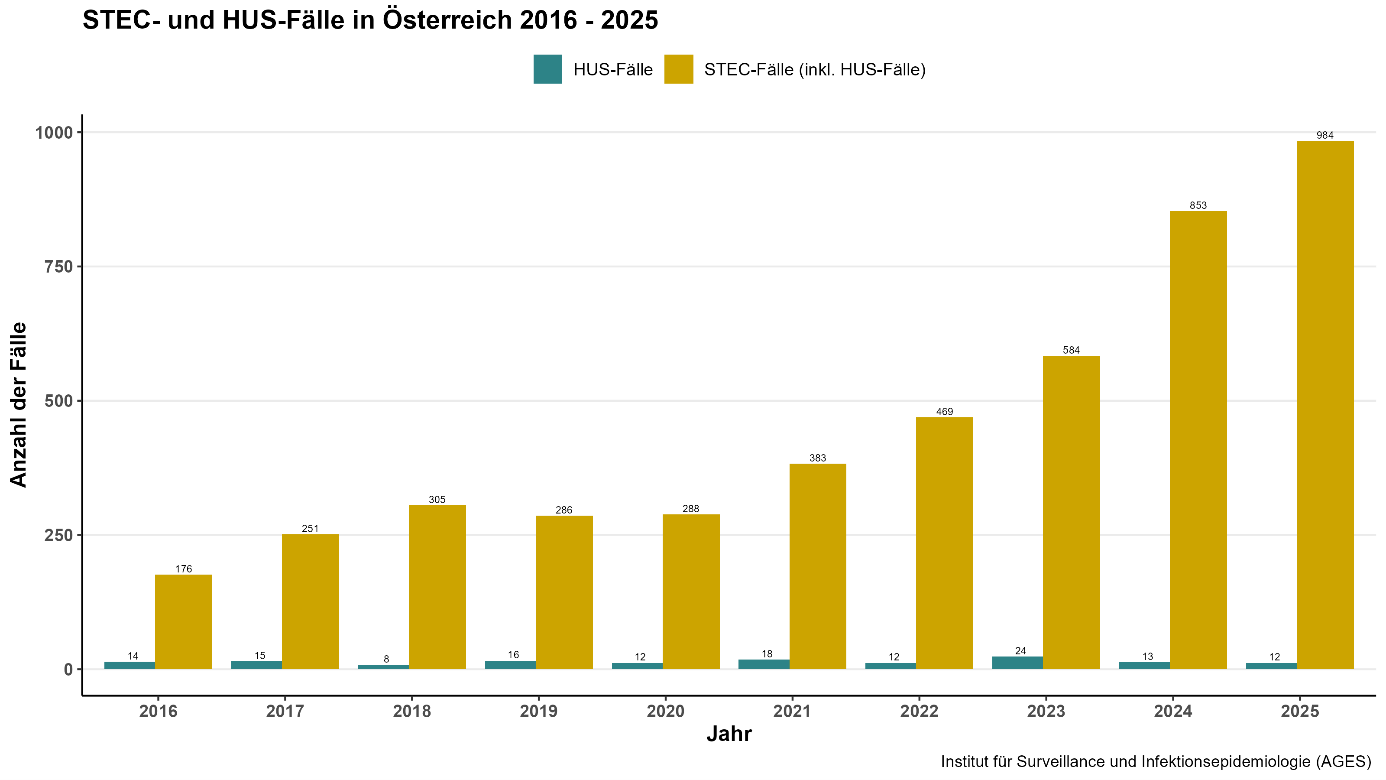
In recent years, a marked increase in reported cases of STEC has been observed in Austria. The trend between 2023 and 2024 was particularly striking, with a 46.1 % rise in reported cases (see Figure 2). A similar rise has already been observed in Germany and England. There, the increase was primarily attributable to the introduction of culture-independent detection methods, in particular multiplex PCR.
Laboratory survey on STEC diagnostics 2026
In order to investigate whether the rising case numbers in Austria were due to an actual increase in the incidence of the disease or, as in Germany and England, to changes in diagnostic methods, a laboratory survey of the largest submitters to the National Reference Laboratory for STEC was carried out in early 2026. Six out of ten laboratories contacted from five federal states took part.
The results of the survey suggest that the introduction of multiplex PCR methods has had a significant impact on the rising STEC case numbers. All participating laboratories now routinely use this method for the analysis of stool samples. This enables the simultaneous detection of numerous bacterial, viral and parasitic pathogens within a few hours.
The test systems used reliably detect STEC, but in most cases do not allow for the differentiation of Shiga toxin (stx) subtypes. Certain stx2 subtypes are more frequently associated with severe disease progression and HUS; however, the lack of differentiation often makes it impossible to assess virulence potential and clinical risk at an early stage. Several laboratories reported that, prior to the introduction of these methods, STEC was not routinely tested for or was only detected to a limited extent.
Five of the six laboratories surveyed observed a significant increase in stx-positive detections following the introduction of multiplex PCR. In addition, four laboratories reported increasing demands in gastroenterological diagnostics. The systematic testing of all stool samples submitted means that even mild or previously undetected STEC infections are now being identified.
This correlation was particularly evident in Vienna. There, several laboratories introduced multiplex PCR panels for gastrointestinal diseases from 2023 onwards. During the same period, the number of reported STEC cases rose significantly.
Conclusion
The results of the laboratory survey suggest that the rise in STEC case numbers in Austria is at least partly attributable to improved diagnostic detection following the introduction of multiplex PCR. Due to the higher sensitivity of these methods, more infections are now being detected, including mild cases and less virulent STEC strains. The fact that no increase in HUS cases was observed despite rising case numbers supports this interpretation. Early molecular characterisation of STEC, in particular the differentiation of shigatoxin subtypes already in primary laboratories, could improve risk assessment and enable the more rapid identification of potentially severe cases.
A scientific publication combining the results of this laboratory survey with further epidemiological surveillance data on STEC in Austria is planned for autumn 2026.
Bibliography
Annual Report 2024: National Reference Centre for Escherichia coli, including verotoxin-producing E. coli.
Jung-Sendzik, T., et al., Rise in the number of notifications of Shiga toxin-producing Escherichia coli (STEC) infections probably linked to an increased use of multiplex PCR assays, Germany, 2023. Eurosurveillance, 2025. 30(48): p. 2500268.
World Health Organisation & Food and Agriculture Organisation of the United Nations (2018). Shiga toxin-producing Escherichia coli (STEC) and food: attribution, characterisation, and monitoring: report. World Health Organisation. https://iris.who.int/handle/10665/272871
On 2 July 2026, the WHO officially declared the Andes hantavirus outbreak linked to the cruise ship M/V Hondius to be over.
A total of 13 cases were recorded, including three deaths. Of the ten patients who were admitted to hospital, two are currently still receiving treatment. All those affected were on board the cruise ship. As no further cases have emerged during the 42-day follow-up period for all contacts, the chain of transmission is considered to have been broken, and no further infections are expected. The outbreak has been successfully contained.
Investigations suggest that the first case was infected whilst still on land in South America. There was subsequently limited person-to-person transmission on board. The exact source of the infection is still being investigated.
Case figures for notifiable diseases under the Epidemic Diseases Act; the figures shown are for the previous month and, for the period from the start of the year to the end of the previous month, the figures for the current year, the previous year, and the median for the last five years for comparison (Epidemiological Reporting System, as at 15 July 2026).
a Diseases are assessed in accordance with the case definition. Only diseases for which a case definition exists are shown, with the exception of transmissible spongiform encephalopathies. As a rule, confirmed and probable cases are counted. Changes may still occur as a result of late reports or subsequent entries.
b Bacterial and viral food poisoning, in accordance with the Epidemics Act.
c Invasive bacterial disease, in accordance with the Epidemics Act.
d Includes only cases of pneumonia.
e Due to the lack of a case definition prior to 2025, only cases from 2025 onwards are shown; the median is also calculated only from 2025 onwards.
f Mpox has been a notifiable disease since 2022; the median is calculated only for those years in which it is a notifiable disease.
Related News

Last updated: 22.05.2026
automatically translated