Summary
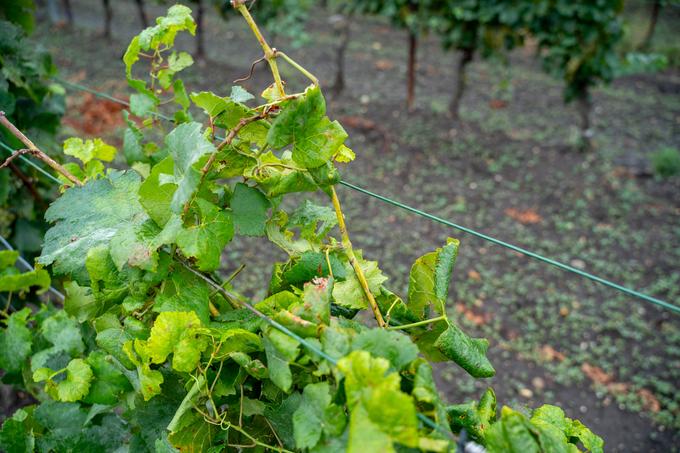
Flavescence dorée (FD) is a quarantine disease of grapevines with significant economic implications, which is increasingly leading to epidemic outbreaks in Europe and is currently spreading rapidly in Austria as well. The invasive American grapevine leafhopper (ARZ) is the main vector – a kind of ‘super-spreader’ that transmits the disease from vine to vine. Given the limited options for controlling the disease itself, precise, early detection and vector control are of paramount importance for the protection of Austrian viticulture. The aim of the project is to provide AI-based detection tools for FD and the ARZ, in order to effectively support plant protection services and winegrowers in surveillance, monitoring and control.
Project description
Due to the increased incidence of both flavescence dorée (golden yellowing) and its vector in 2025, the burden of monitoring has risen significantly. During vineyard inspections, regional plant protection services take official samples from symptomatic vines. Monitoring of adult American grapevine leafhoppers is currently carried out using yellow sticky traps, the catches from which are examined under a microscope by experts. Both forms of monitoring are extremely time-consuming and resource-intensive. For winegrowers, too, controlling the disease (marking and grubbing up symptomatic vines) and its vector is very labour-intensive.
The aim of the project is to evaluate existing AI-based detection tools and to develop new ones, as well as to implement them in a practical manner, in order to provide effective support to plant protection services and winegrowers in surveillance, monitoring and control.
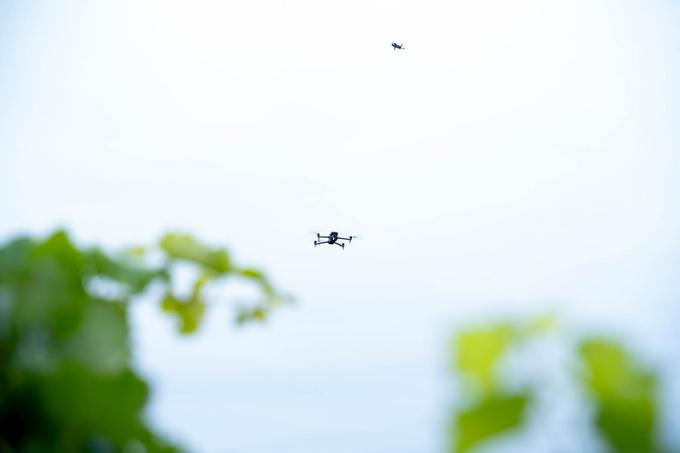
Aerial drone imagery from high-risk areas is used to compare existing AI-based analysis systems in terms of operational capability, robustness, and localisation and detection accuracy under different topographical conditions. The basis for targeted monitoring is provided by statistical risk modelling of Austrian wine-growing regions, which identifies particularly vulnerable areas and thus supports the efficient deployment of monitoring measures. In addition, a team of drone pilots is to be established and trained in Lower Austria, Burgenland and Styria for long-term deployment. This method is to be used for the early detection of infestation hotspots within a region or a vineyard plot.
For practical application directly in the vineyard, a ground-based, tractor-mounted imaging system with AI-supported open-source software is being developed, enabling real-time detection during regular cultivation runs. A further AI application for the automated detection of adult American grapevine leafhoppers on sticky traps significantly reduces the analytical workload and extends monitoring to the farm level.
Another key focus is on transferring knowledge into practice. Through training courses, information materials and digital communication formats, winegrowers, advisory services and authorities are supported in recognising symptoms and implementing effective control measures.
Benefits of the project
Through the combined use of AI-supported detection, risk modelling and practical applications, monitoring resources can be deployed in a targeted manner and monitoring measures can be organised more efficiently. At the same time, plant protection services are supported in the early detection of infection foci, and winegrowers are provided with new tools for monitoring and controlling the disease and its vector. Through close collaboration with authorities, research institutions and the wine-growing sector, the solutions developed are made available for long-term use and put directly into practice. The project thus makes a significant contribution to the sustainable control of FD in Austria.
Project details
Project title: Development of risk-based strategies to curb the epidemic spread of Flavescence dorée (FD) in grapevines and its vector, the American grapevine leafhopper (Scaphoideus titanus)
Project acronym: RISAF
Project leader: AGES, Helga Reisenzein
Project partners: Regional plant protection authorities (Lower Austria, Burgenland, Styria and Vienna); Joanneum Research – Graz; Wiener Neustadt University of Applied Sciences in cooperation with Josephinum Research – Wieselburg; LK Technik Mold; HBLA-Klosterneuburg; Experimental Station for Crop Production of the Styrian Agricultural Colleges; University of Salzburg, Department of Geoinformatics
Funding: Dafne-BBK project: Federal Ministry of Agriculture, Forestry, Climate and Environmental Protection, Regions and Water Management (BMLUK) in collaboration with the federal states of Lower Austria, Burgenland and Styria.
Project duration: July 2026 – July 2029
This project was financed as part of the departmental research programme via dafne.at with funds from the Federal Ministry of Agriculture, Forestry, Climate and Environmental Protection, Regions and Water Management. The BMLUK supports applied, problem-orientated and practical research in the department's area of competence.
Last updated: 18.09.2026
automatically translated