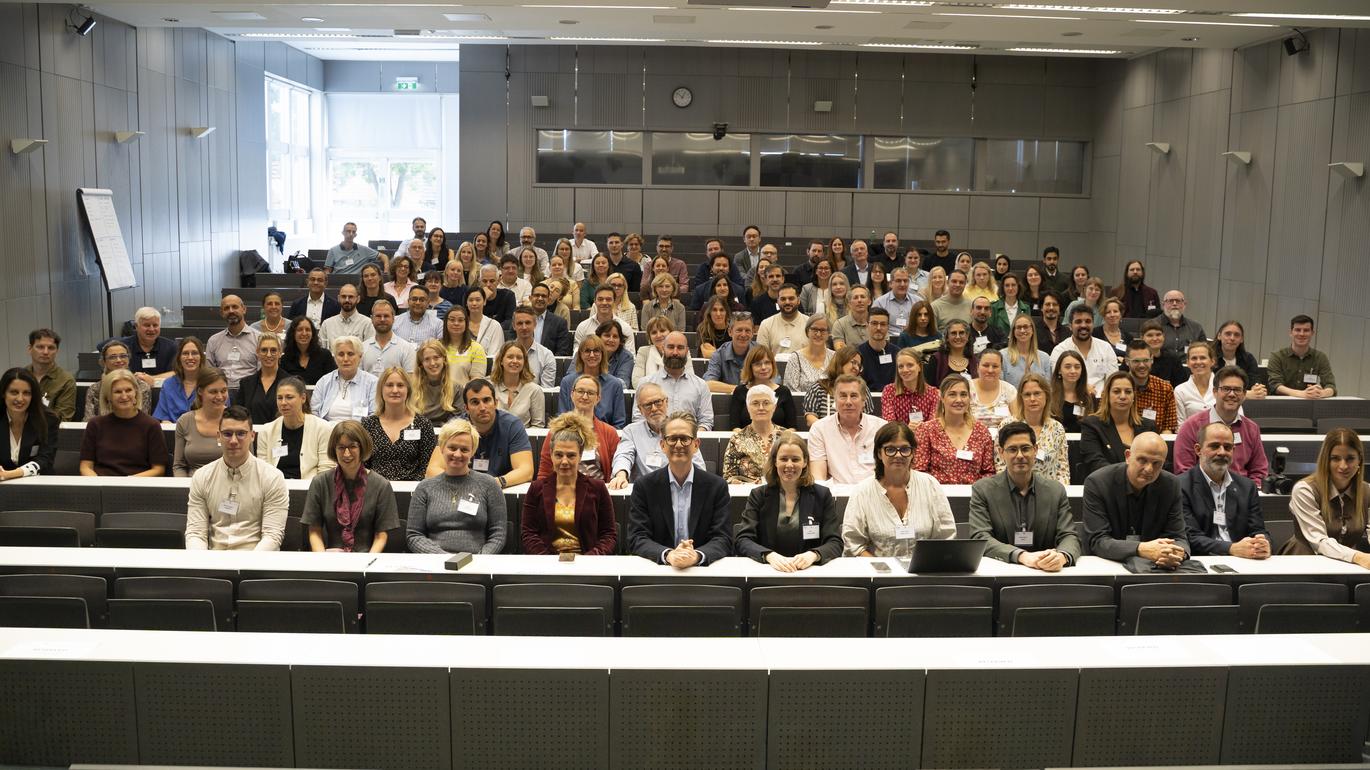
Three days of EU-WISH in Vienna: working together on the future of wastewater monitoring. Over the past few days, we have welcomed over 100 participants from 26 European countries to the EU-WISH International Workshop & Consortium Meeting here at AGES.
EU-WISH is investigating how wastewater monitoring can contribute to public health. Wastewater can be used to detect pathogens, antimicrobial resistance and chemical substances. The aim of the project, which forms part of the EU4Health programme, is to bring together knowledge and experience from across Europe, improve the comparability of data and strengthen preparedness for future health threats.
As Steen Ethelberg from the Statens Serum Institut in Denmark – and project leader of EU-WISH – emphasises, analysing wastewater samples is a smart and efficient way of monitoring infectious diseases in the population. Furthermore, chemical substances can also be monitored. Monitoring pathogens in wastewater is a new method that is still under development. However, it is expected to provide an important means of obtaining information cost-effectively, rapidly and continuously in the future.
Hans Peter Stüger, the Austrian project lead for the EU-WISH project and Head of the Department of Statistics and Analytical Epidemiology at AGES, also believes that wastewater monitoring is a promising tool for the future. Europe has only just begun to explore the possibilities of gaining useful insights from wastewater, not only on health issues but also on environmental matters.
The focus was on the project’s findings to date and the next steps for the fourth and final year of the project. In plenary presentations, breakout sessions, poster exhibitions and panel discussions, experts from health authorities, research institutions, laboratories and international organisations exchanged views on the future of wastewater monitoring in Europe.
Topics discussed included sampling strategies, data analysis, antibiotic resistance, the integration of wastewater monitoring into public health practice, and the long-term establishment of such systems at European level.
Representatives from the European Centre for Disease Prevention and Control (ECDC), the World Health Organisation, DG HERA, the European Union Drugs Agency (EUDA) and the European Commission’s Joint Research Centre (JRC) contributed to the programme by sharing their perspectives on the further development of wastewater monitoring in Europe.
After three years of the project, many of the planned deliverables have already been completed. The focus is now on putting these findings into practice, further strengthening collaboration and creating the conditions for the sustainable use of wastewater monitoring in Europe.
A heartfelt thank you to all project partners, speakers and participants for the professional exchange and the lively discussions.