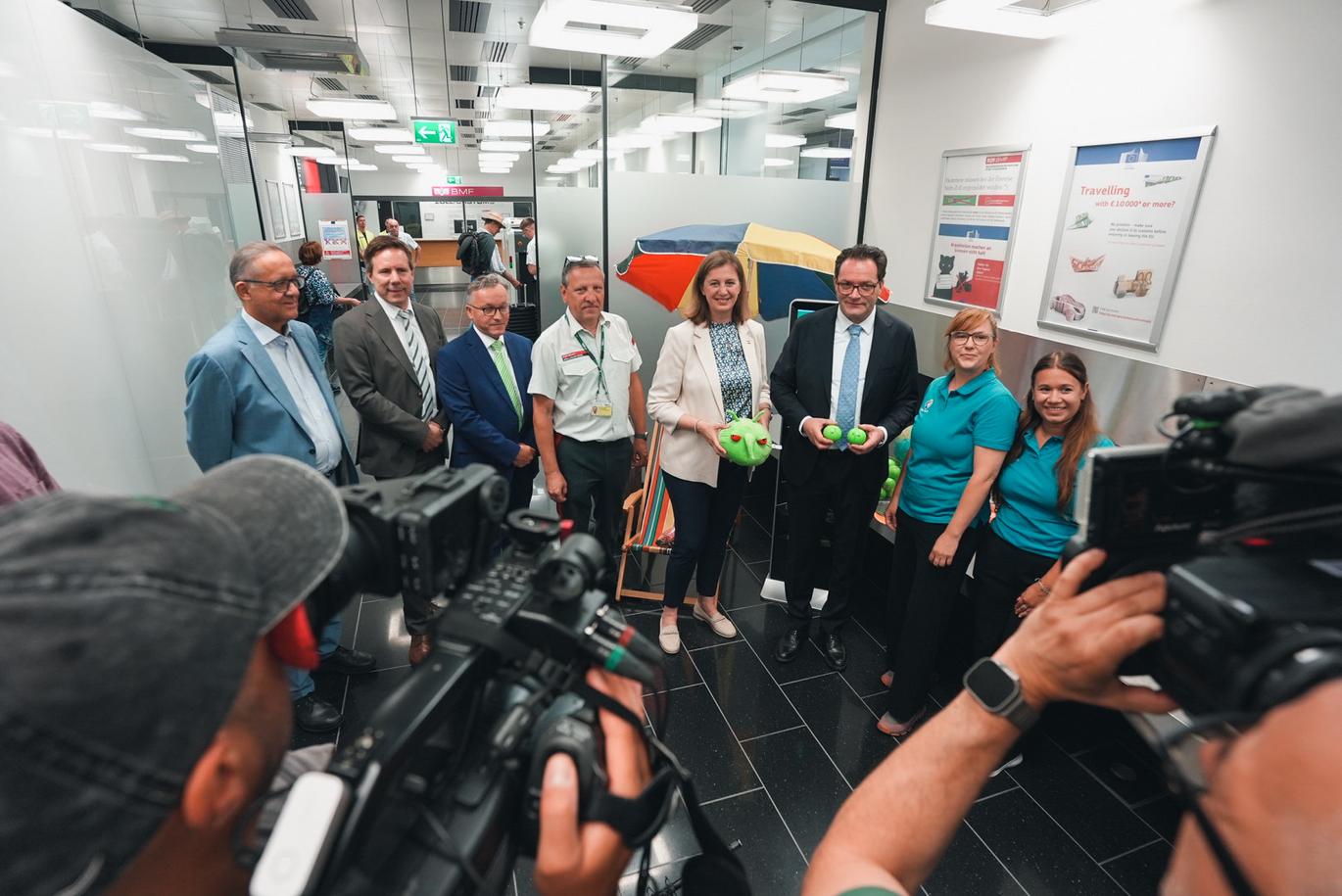
Since the start of 2026, customs authorities have seized around 3 tonnes of fruit, vegetables, cut flowers and live plants that lacked the necessary phytosanitary certificates. Strict regulations apply to plants entering the EU. A phytosanitary certificate is required for almost all plants and plant products; certain plants and parts of plants may not be imported at all. Federal Minister Norbert Totschnig, State Secretary for Finance Barbara Eibinger-Miedl, Airport CEO Günther Ofner, and AGES Managing Directors Johannes Pleiner-Duxneuner and Anton Reinl provided information on this as part of the EU-wide #PlantHealth4Life campaign.
Checks on goods are carried out by inspectors from the Official Plant Protection Service upon initial arrival in the EU; in Austria, these take place at Vienna, Graz and Linz airports. Johannes Pleiner-Duxneuner, Managing Director of AGES and Head of the Federal Office for Food Safety (BAES), regards plant health as an essential component of the One Health approach. “Healthy plants form the basis for functioning ecosystems, biodiversity and a secure food supply. Prevention and raising awareness are therefore key tools for minimising risks to plant health at an early stage.” In the first half of 2026 alone, 486 complaints were recorded regarding plant imports. Mangoes and citrus fruits were particularly frequently seized this year. Aubergines, cucumbers and apples were also regularly intercepted.
As well as plants, border controls also cover foodstuffs and live animals. This is where the border veterinary officers from the Federal Office for Consumer Health (BAVG) come into play. “Close and well-coordinated cooperation between Customs and the BAVG is of central importance for food safety in Austria and for protection against transmissible animal diseases,” said AGES Managing Director and BAVG Director Anton Reinl. A total of 839 seizures were recorded involving animals and animal products. In total, just under 9.5 tonnes of meat, fish, milk, eggs and honey were confiscated.
The number of non-compliances highlights the importance of information and awareness-raising for the protection of plant health. This is precisely where the EU-wide information campaign #PlantHealth4Life comes in. The aim of the initiative, supported by the European Food Safety Authority (EFSA), is to raise awareness of the risks posed by introduced pests and plant diseases. In Austria, the campaign is coordinated by AGES in collaboration with the Official Plant Protection Service. Travellers in particular can make an important contribution to the protection of agriculture, biodiversity and food security by handling plants and plant products responsibly.