Summary
The aim of the KNODIV project was to expand the range of garlic varieties available for cultivation in Austria. As a number of viral and Fusarium diseases cause significant crop losses in vegetatively propagated garlic, ten selected varieties were cleared of pathogens and used to establish a domestic seed production programme. The project successfully demonstrated that biotechnological methods such as meristem culture are highly effective for virus elimination in garlic varieties.
Project description
Garlic production in Austria has quadrupled over the last ten years and has stabilised at a self-sufficiency level of around 25%. The expansion and intensification of cultivation in various regions of Austria are presenting new challenges for the sector. Austria relies on purchasing garlic seed stock from Spanish and French propagation farms, and it is difficult or impossible to source regional varieties. Furthermore, studies have shown that imported garlic seed stock is heavily infected with phytopathogenic pathogens.
Yield losses due to viral infection amount to up to 50% and may be higher in the case of mixed infections with other viruses. Yield losses due to fusarium wilt can also be significant. Direct control of garlic viruses is not possible, and fusarium wilt can only be controlled to a limited extent. The only effective measure is the use of healthy planting stock.
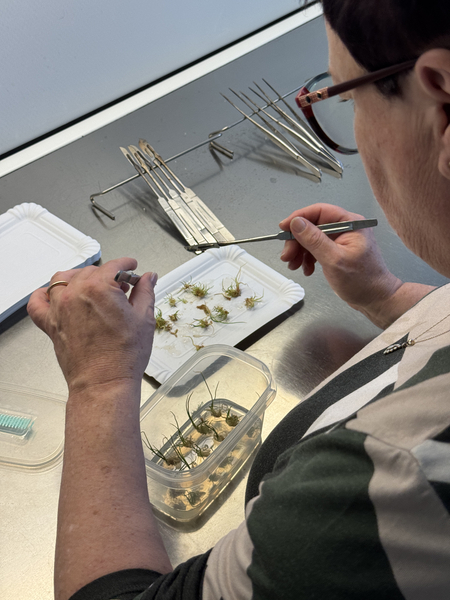
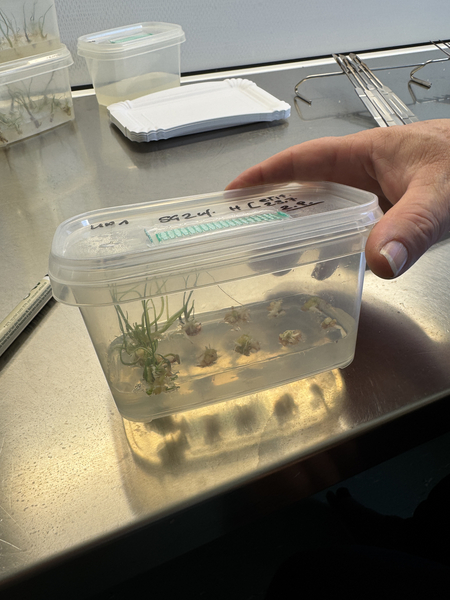
The aim of the KNODIV project was to expand the range of garlic varieties available for cultivation in Austria. To this end, ten varieties were initially selected with the help of genetic resource conservators and garlic producers according to various criteria (production conditions, climate adaptation, susceptibility to disease, marketability). The ten selected varieties were then tested for viral and fungal infection and, using an in vitro method optimised by AGES, cleared of pathogens and propagated.
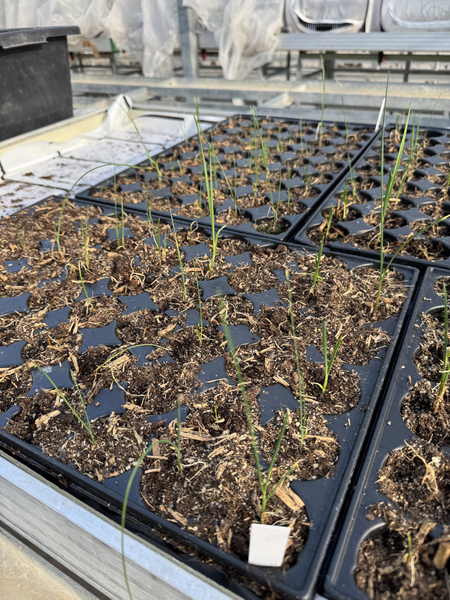
A very important step in the production of healthy planting stock is the transition from in vitro material to propagation in the field. Therefore, the project aimed to develop a practical method for the optimal acclimatisation of in vitro plants in the greenhouse and their subsequent planting out. As an alternative to acclimatisation in the greenhouse, in vitro-produced seed bulbs were also planted directly in the field.
This work laid the groundwork for establishing local seedling production. The pathogen-free varieties can be maintained in vitro and, where required, made available for the production of new starting material for the propagation of healthy seedlings of regionally adapted garlic varieties.
Benefits of the project
As with all plant species propagated vegetatively, the quality of the planting stock is the foundation for producing healthy garlic plants. In particular, the use of virus-free planting stock is the only strategy for controlling the occurrence of viral diseases, as infection with various viruses takes place in the field and is subsequently spread via the planting stock. Virus-free plants produced via tissue culture showed an increase in bulb weight of 30–200% in several varieties compared to infected plants. For these reasons, the production of pathogen-free planting stock of varieties adapted to Austrian production conditions is of high practical relevance for maintaining the competitiveness of domestic garlic production.
The aim of the KNODIV project was to provide Austrian garlic producers with regionally adapted, high-yielding garlic varieties for domestic seed production, which can also be maintained in vitro and, if necessary, provide further pathogen-free material.
Results
The project successfully demonstrated that biotechnological methods such as meristem culture are highly effective for virus elimination in garlic varieties. Meristem culture proved to be an effective method for virus elimination, although success rates varied significantly between varieties. Acclimatisation to the open field remains a challenge: varieties such as Red Toch showed good propagation but low survival rates. Spring planting in raised beds or tunnels with insect netting proved particularly suitable for in vitro material. The varieties Deutscher Porzellan, Waldviertler and Eibesbrunner vineyard garlic, and Striped Glacer showed very good results in all phases – from pathogen clearance through in vitro propagation to acclimatisation. Planting out in spring under protected conditions (raised beds, tunnels with insect netting) resulted in vigorous plants and marketable bulbs. The failure rate was reduced to 20–30% through targeted measures. The multi-year acclimatisation process also showed progress and lays the foundation for stable crop development. The virus-free plants produced provide a valuable basis for sustainable, regional seed production in Austria. The project demonstrates that innovative propagation techniques offer promising prospects for domestic garlic production.

Last updated: 15.04.2026
automatically translated