Reinforcing Austrian Integrated Surveillance and Epidemiology


Project description
AGES is responsible for the epidemiological recording and monitoring of communicable diseases in Austria and acts in accordance with the One Health concept. The COVID-19 pandemic has highlighted the need for improvement in many countries, including Austria. The RAISE project stands for the strengthening of integrated surveillance and epidemiology in Austria and aims to identify and utilise electronic data more effectively. In addition, current methods are to be evaluated, surveillance gaps closed and new sustainable tools introduced. Important cornerstones are improved data collection, linkage and analysis. Capacities for public health staff and within AGES are being developed and continuously expanded.
Better data quality in the area of public health requires uniformly good training for all those involved. AGES will provide a targeted training programme to enable all stakeholders to collect and document data in a quality-assured and standardised manner. This includes further training, teaching materials and tools for ongoing collaboration. At the same time, the necessary IT systems and platforms are being further developed (user interface, epidemiological parameters, AI).
A citizen science pilot project, comparable to GrippeWeb in Germany, is to be developed as a roadmap to collect data directly from the population and supplement existing surveillance data.
In this way, the project will help to improve preparation for pandemics, track trends effectively and identify and present the epidemiological situation quickly and validly. Additionally measures can be taken in good time to protect public health. With funding totalling 4.66 million euros, RAISE is AGES' largest EU co-funded project to date.
Project goals
The main objectives of the project are:
- Capacity development for public health personnel at national, regional, local level and within AGES
- Establishment and expansion of integrated surveillance in all care areas, in particular for respiratory infections and vector-borne infectious diseases;
- Digitalisation within AGES and the interfaces to European agencies and other partners;
- Design of a platform for networking health databases.
Project activities
The core activities of our project are
- Analysing and evaluating the existing reporting system for infectious diseases in Austria
- Development and implementation of a training programme for public health professionals
- Development of a digital knowledge platform for training and knowledge transfer
- Introduction of digital tools and AI-supported systems to improve surveillance and data analysis
- Conducting field studies to collect and analyse vectors (e.g. mosquitoes, ticks) and sero-epidemiological studies with blood donors
- Development of a national vector database for centralised collection and analysis of vector data
- Development of a One Health platform for integrating and analysing data from human, animal, environmental and food surveillance
- Training of specialists for One Health surveillance through a structured training programme
- Implementation of a communication and dissemination strategy for the targeted dissemination of project results.
Benefits of the project
AGES has set itself the goal of taking on a leading role in the area of One Health surveillance. The project will enable AGES to implement its statutory tasks more efficiently, more precisely and in a standardised and digitalised form. Risk assessment and early warning are to be improved through optimised data collection and analysis. This will allow health risks to be recognised earlier and more precise forecasts to be made, enabling targeted preventative measures and faster intervention in the event of outbreaks. International networking will also be strengthened: the regular exchange of findings and best practices between international partners will enable surveillance systems to be constantly harmonised, which in turn will ensure a faster response to health risks.
With this project, AGES is making a significant contribution to public health and crisis prevention both nationally and internationally.
Project details
| Project title | Reinforcing Austrian Integrated Surveillance and Epidemiology |
| Project acronym | RAISE |
| Project No101183314 | |
| Project management | AGES, Univ.-Doz. DI Dr. Klemens Fuchs |
| Project beneficiary | AGES |
| Funding | Co-funded by the European Union (EU4Health Work Programme) |
| Project duration | 01.2025 -12.2028 |
For questions about the project please contact raise@ages.at

Project No. 101183314
The new ‘Short & Sweet’ information sheet summarises the key facts about Newcastle Disease.
As a Category A animal disease, even a suspected case of Newcastle disease in birds must be reported. In Austria, cases are detected in pigeons every year. Domestic or commercial poultry have not been affected to date. However, there are currently outbreaks of Newcastle Disease in neighbouring countries close to the Austrian border. This increases the risk of an outbreak here too.
Through close contact with infected birds and their excreta, the pathogens can also be transmitted to humans (zoonosis!).
It is therefore important for bird owners to protect both their birds and themselves from infection.
The new information sheet, ‘Animal (Sample) Material – Categorisation, Packaging and Labelling’, helps senders to comply with legal requirements and ensure the safe transport of samples.
The diagnosis and monitoring of animal diseases require veterinary samples to be dispatched and transported to laboratories and testing centres. If the samples contain pathogens, they pose a potential risk of disease spread. If packaging is damaged, leaks or is transported incorrectly, people, animals or the environment may come into contact with infectious material. To minimise this risk, correct categorisation, secure packaging and clear labelling are particularly important and are therefore required by law.
The correct categorisation of the sample determines which legal requirements must be complied with. Suitable packaging protects against damage during transport and the leakage of sample material. Clear labelling of the consignment informs all parties involved of potential hazards and the necessary protective measures.
On 11 June 2026, the AGES Epimap went live – an interactive tool that provides a transparent overview of the situation regarding animal diseases in Austria. The Epimap is freely accessible to everyone at Animal Disease Maps – AGES.
The data is sourced from the official European animal disease reporting system (ADIS) and is updated every morning on working days. The Epimap displays current outbreaks and contains data dating back to 2014, making it possible to visualise longer-term trends. Reports and maps can be generated and saved as required. An explanatory video on how to use the interface can be found at: https://www.youtube.com/watch?v=vLTJeISPJSw
You will also find the Epimap featured in several fact sheets on the AGES website.
Epimap was developed as part of the RAISE project and makes an important contribution to integrated One Health surveillance by making animal health data transparently accessible and facilitating links to issues in human medicine. It serves as a prototype application for the One Health Surveillance Platform currently under development, into which the visualisations shown here will also be incorporated. In addition to this visualisation, the platform will utilise further visualisations and data links to improve the health of humans, animals, plants and the environment.
As temperatures rise, it is once again coming under increased scrutiny: the Asian tiger mosquito (Aedes albopictus). It is a prime example of a growing public health challenge – the spread of new, potentially disease-carrying vectors in Europe.
In an interview with Jetzt on 21 May 2026, Georg Duscher explains the key developments. In addition to the tiger mosquito, certain invasive tick species, in particular the tropical giant tick (Hyalomma spp.), are also among the relevant vectors in Austria. Whilst the tiger mosquito has already become established regionally, the tropical tick has so far mainly been introduced.
New vectors can serve as gateways for pathogens that occur in their original ranges. The close adaptation of pathogens to their vectors plays a central role in this. There is still a need for research into how efficiently newly established or native species can transmit these pathogens.
The tiger mosquito is particularly relevant as a so-called bridge vector, as it can transmit pathogens between different host species (e.g. animals and humans). Furthermore, unlike many native species, it is also active during the day.
The basic protective measures, such as the use of repellents and mosquito nets against mosquitoes, wearing long clothing and regular body checks to protect against ticks, remain unchanged. Information on the transmission of early summer meningoencephalitis (ESME) via tick bites can be found in our fact sheet.
AGES continuously monitors the development of these vectors as part of its surveillance activities and also provides information on the disposal of ticks that have been found.
In order to drive forward the development of the One Health Surveillance Platform in a targeted manner, zoonotic diseases were systematically prioritised. The aim is to identify those diseases that are particularly well suited to an integrated analysis of anonymised health data from various sectors – such as human medicine, animal health and food. To this end, zoonotic diseases were assessed against several criteria, such as their epidemiological situation, the availability of data, existing surveillance systems and the technical feasibility of an integrated analysis. The focus was not solely on the clinical significance of the diseases, but particularly on how well existing data can be utilised for a cross-sectoral analysis.
The prioritisation was carried out in close collaboration with experts from various disciplines within AGES, including epidemiology, veterinary medicine, virology, microbiology and entomology. The results form an important basis for the further development of the One Health surveillance platform and help to define initial pilot applications. The prioritised topics include, among others, foodborne zoonoses, vector-borne diseases and viruses with pandemic potential, such as influenza or the West Nile virus. These areas are intended to serve as the first use cases to gradually build up and test the technical and organisational implementation of the platform.
Following an unusual surge in West Nile virus (WNV) infections in Austria in 2024 – with 34 locally acquired human cases, particularly in the north-east of the country – exposure to WNV was investigated serologically across various regions.
The aim was to compare the prevalence of infection across regions affected to varying degrees using blood donors. In total, samples from Carinthia (2024) and from northern and southern Lower Austria (2025) were analysed. Testing was carried out using ELISA for WNV IgG antibodies and was supplemented by serum neutralisation tests (SNT) for confirmation.
The results show a low but detectable seroprevalence in all regions studied (approx. 1–2%). It is notable that no clear differences were observed between Carinthia – where no human or animal cases have been documented – and the more severely affected regions in the north-east.
These findings should be interpreted with caution. Possible confounding factors include a lack of information on the blood donors’ travel history, as well as differing survey periods (2024 vs. 2025), particularly with regard to antibody persistence.
Overall, the results underscore the importance of standardised study designs, the consideration of mobility, and continuous serological surveillance in order to better characterise patterns of exposure to WNV in Austria.
The national tick monitoring programme systematically records the spatial and temporal occurrence of ticks, as well as the spread of pathogens transmitted by them. The aim is to identify changes at an early stage and to establish a sound basis for assessing vector-borne health risks in Austria. The monitoring programme was established in 2024 as part of the OH SURVector project and significantly expanded the following year as part of RAISE. In addition to recording the native tick fauna, there is a particular focus on investigating relevant pathogens and potential shifts caused by climate change. The increased occurrence of exotic species such as the ‘giant tick’ (Hyalomma marginatum) is also taken into account.
In 2025, a total of 8,298 ticks were collected and identified, of which 3,838 were tested in the laboratory for various pathogens. The results show that a significant proportion of the ticks are infected with pathogens potentially harmful to humans:
*24% with Borrelia
burgdorferi*12.9% with Rickettsia spp
.*9.6% with Spiroplasma
ixodetis*7.8% with Anaplasma
phagocytophilum*4.8% with Neoehrlichia mikurensis*2.
4% with Borrelia miyamotoi*0.
1% with Francisella tularensis
In addition, 5 of the 9 giant ticks reported were tested for selected pathogens. 3 of these specimens tested positive for rickettsiae; no evidence of Crimean-Congo haemorrhagic fever virus was found.
A key objective is to develop a digital web tool that complements infection surveillance through participatory approaches. Via such a platform, members of the public could voluntarily and anonymously report health information – particularly regarding respiratory symptoms – in order to identify epidemiological trends at an early stage.
The current focus is on clarifying the specific benefits as well as the functional and content-related requirements within the Austrian context. To this end, international models of participatory surveillance – including established systems in other countries – are being researched, analysed and evaluated comparatively. In addition, a needs analysis is being carried out to assess whether, and in what form, such a web tool could offer added value to the existing surveillance system.
A key foundation is provided by Milestone 11 (“Technical and Legal Framework of population-based surveillance web tool”), which will be submitted in December. This defines the technical and legal framework for the planned web tool. The focus is on data protection requirements (in particular the GDPR) as well as on initial concepts regarding IT security, system architecture and governance structures.
The aim is to develop a secure, accessible and epidemiologically robust concept that enables low-threshold participation by the population whilst meeting high standards of data protection and data quality.
A structured communication and dissemination strategy ensures that project results are presented in a targeted manner and made accessible. The aim is to reach both the specialist community and decision-makers, as well as the interested public, and to clearly demonstrate the added value of integrated infection surveillance.
Various formats and channels are used, including the project website, social media, events and scientific publications. In parallel, an internal project newsletter is used to provide regular updates on progress, results and next steps, and to ensure a consistent information base.
The current focus is on the continuous development of communication measures to specifically enhance reach, clarity and impact.
In collaboration with the Tyrolean Provincial Health Directorate, Tyrol has been reintegrated into the clinical sentinel system. The retroactive integration of data was successfully completed on 18 March 2026 and is already available on the AGES website. With Tyrol’s reintegration, the overall system gains in stability and reliability.
As part of the RAISE project, a surveillance app has been developed to support the standardised analysis and processing of surveillance data. The application is already in active use and enables users to carry out epidemiological analyses efficiently, consistently and transparently.
A key component of this development is a Shiny-based dashboard, which was designed specifically for the Institute of Infectious Disease Epidemiology. It supports epidemiologists in the analysis and visualisation of notifiable infectious diseases and provides a quick overview of key indicators as well as current trends in infection patterns.
The further development of the app is continuously strengthened through professional exchange and international networking. For instance, the dashboard was presented by Andreas Wolfsbauer (MED/INF/DMOD) in a lightning talk at the ‘Shiny in Production’ conference in Newcastle in October 2025.
In addition to the presentation, the conference provided valuable technical insights, particularly on topics such as asynchronous processing in Shiny and the efficient use of large data sets by multiple concurrent users. The exchange with international experts and the positive feedback on the application provided concrete starting points for the further development of the Surveillance App.
The Surveillance App is an internal tool and is available exclusively to authorised users within the organisation.
Notes:
Shiny is an open-source framework for the R programming language used to create interactive web applications and dashboards.
A survey of health authorities across Austria was conducted to assess the current training needs regarding the management of notifiable infectious diseases and digital reporting systems. The results show a clear need for structured training programmes and standardised materials. These findings will be incorporated into future training courses to strengthen the quality of surveillance in the long term. Based on a nationwide survey, those infectious diseases have been identified for which health authorities see the greatest need for in-depth information and training. This will enable training courses to be developed in a more targeted manner in future and will strengthen the public health system’s ability to respond.
As part of the RAISE project, the Austrian reporting system for notifiable infectious diseases is being analysed with a view to further strengthening surveillance. The aim is to understand how infectious diseases are currently recorded, reported and analysed.
At the heart of the surveillance system is the Epidemiological Reporting System (EMS). Doctors, hospitals and laboratories are legally obliged to report certain infectious diseases. The data is collected and analysed in the EMS, enabling health authorities to rapidly exchange information on cases, outbreaks and trends and to take appropriate action.
In addition, Austria uses further surveillance tools, such as genomic analyses of pathogens, wastewater monitoring, hospital and health data, sentinel networks and mortality monitoring. The data is also transmitted to European systems, such as the ECDC, to enable comparisons of developments across Europe and the early identification of risks.
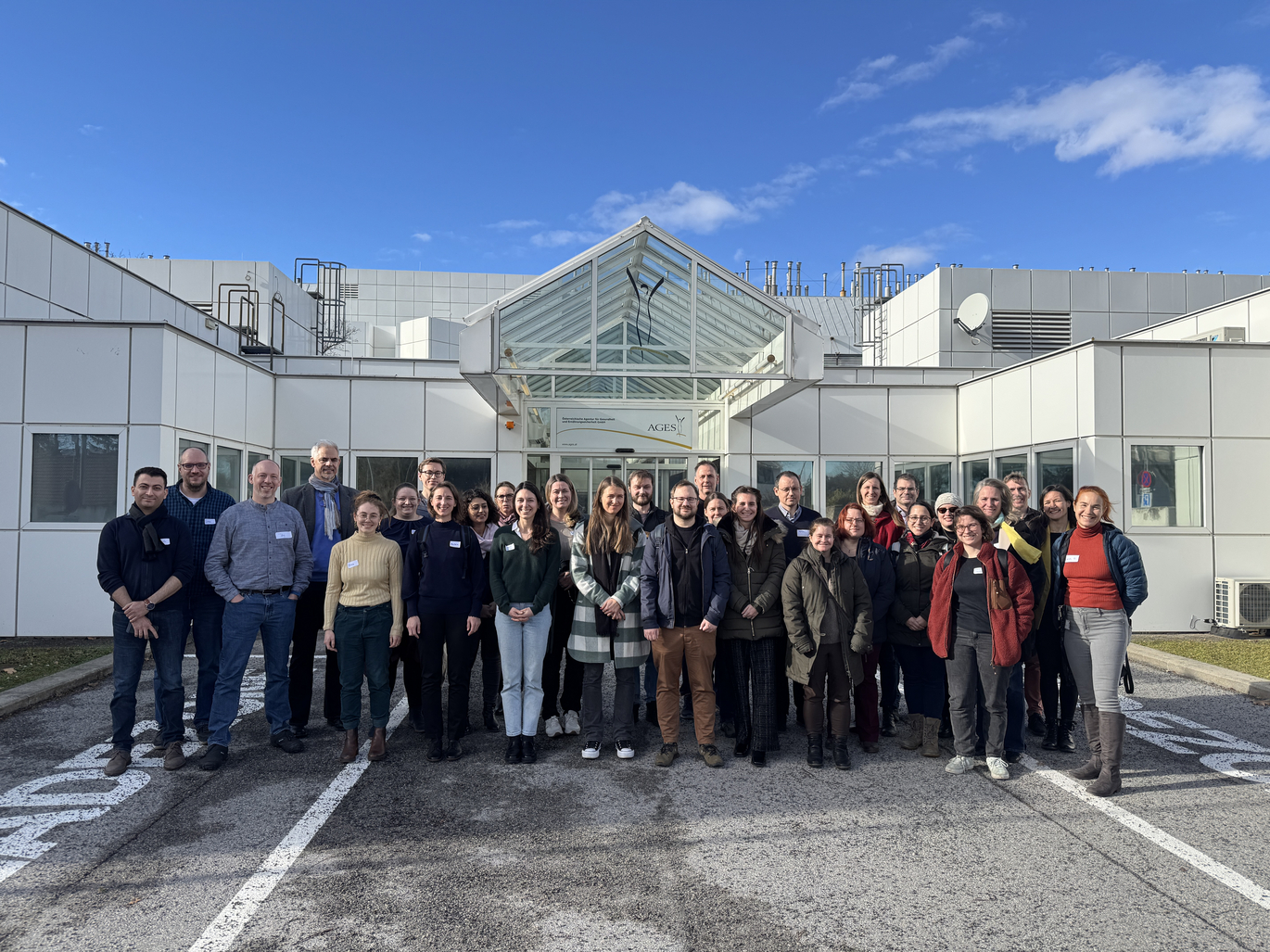
After almost a year of the project, the second on-site meeting of the RAISE core team on 3 November 2025 provided an opportunity to take stock and plan the next steps. The meeting was deliberately held on the international One Health Day , as RAISE follows the One Health concept.
RAISE consists of many very different work packages. Some of them are in constant dialogue with each other, but given the size of the project, regular updates are essential so that everyone is on the same level of knowledge and can understand what is happening in the project outside their own working group.
Therefore, all work packages gave a short presentation on what they have achieved in the first year, what their next steps are, what has gone well and where challenges have arisen. A few examples:
- The Austrian surveillance system for infectious diseases is comprehensively described in a work package - a key step towards better networking existing structures in the future.
- Health authorities and public health officers were asked about their training needs in the area of notifiable infectious diseases. Based on this, a nationwide training platform is to be created to strengthen the development of expertise in the long term.
- The project is also making progress in the area of digitalisation and data analysis: the first improved data displays are already in use and new collaborations are intended to facilitate the use of health data.
- Vector monitoring was expanded in 2025 - around 6,000 tick samples were analysed by AGES and the tests were expanded to include other pathogens. Seroprevalence tests for Francisella tularensis(tularaemia) are already being planned.
- Another milestone is the development of the One Health Surveillance Platform, which links data from human, animal and environmental areas across sectors.
This progress is accompanied by an active communication and dissemination strategy - a website, logo and newsletter have been established and further measures will follow. RAISE is a large-scale, highly interdisciplinary project - the administrative effort involved is correspondingly enormous . It is therefore all the more pleasing that the co-operation between the numerous specialist and support areas works extremely well. The dialogue with HaDEA is also constructive and solution-oriented, particularly with regard to the adjustments that have already been made to the original funding application.
Following the presentations, the resource planning and future prospects were discussed. The meeting showed once again how valuable personal dialogue is for an interdisciplinary project of this size.
The kick-off meeting for RAISE took place on 29th January. With funding totalling € 4.66 million, it is the largest grant that AGES has ever received.
After welcoming words from Managing Director Johannes Pleiner-Duxneuner, the first personal exchange between project leader (Bernhard Benka), project management (Karin Rainer) and representatives of the various work packages took place. RAISE is made up of the interdisciplinary team and draws on the diverse expertise of AGES.
Due to the size and variety of activities of the project, an additional coordination level was introduced for the thematic areas of surveillance and One Health. The meeting was chaired by Dirk Werber and Barbara Kovács.
The main topics of the meeting were the introduction and objectives of the project, the administration and coordination of activities and the survey of the current state of surveillance in Austria. They also discussed how to support healthcare stakeholders with specialised content, improve current data management and expand vector surveillance. The establishment of a sentinel system and the development of a joint One Health platform were also discussed, as were the most important communication and dissemination strategies.
Last updated: 31.07.2026
automatically translated