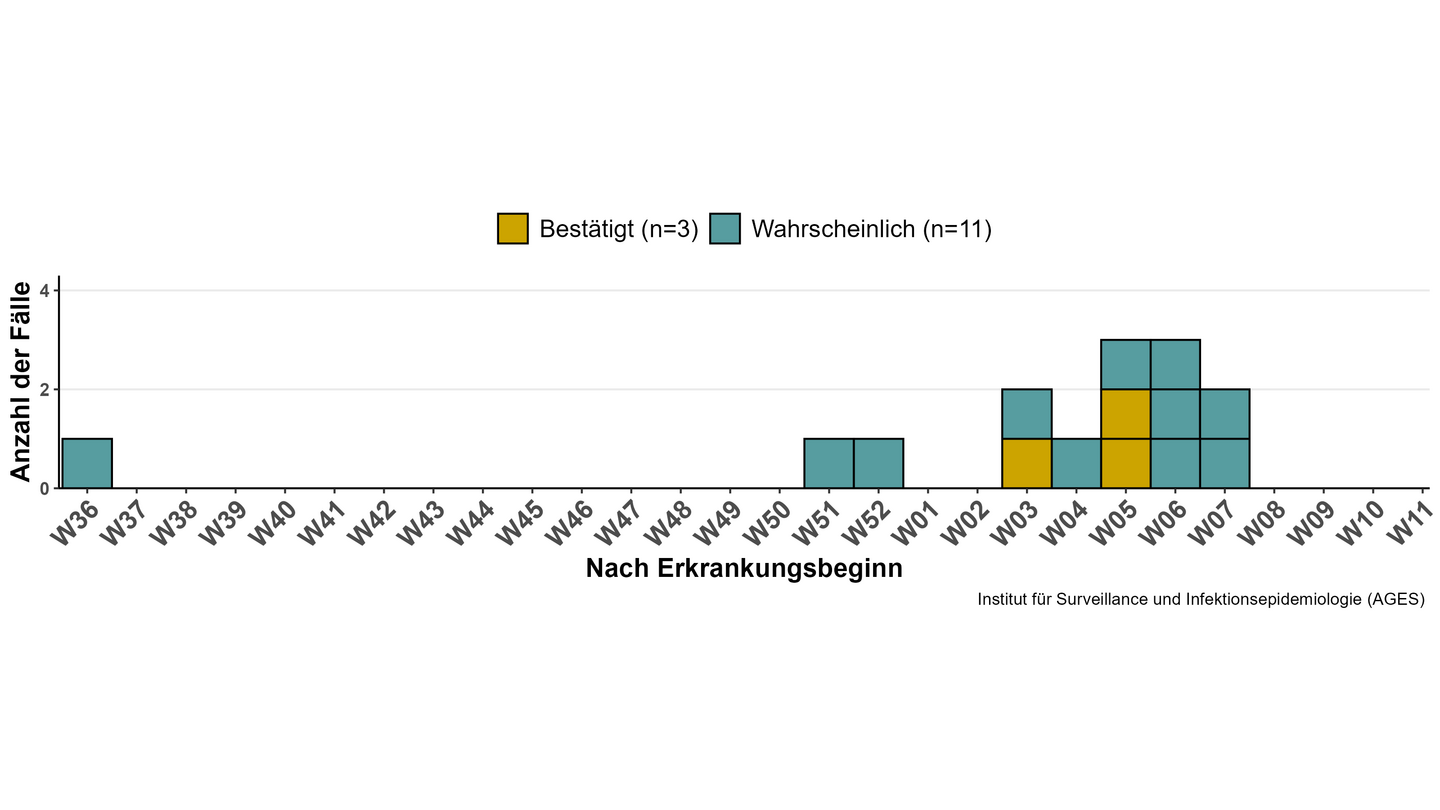
Three cases are considered confirmed, eleven cases probable. The children are between two weeks and three years old. Three children had to be treated in hospital. All children have since recovered.
The reported cases come from the federal states of Burgenland, Carinthia, Lower Austria, Upper Austria, Salzburg, Styria, Tyrol and Vienna. The most recent case occurred on 10 February 2026.
If a child shows typical symptoms – especially vomiting – within six hours of consuming infant formula, please contact your local food safety authority, stating the product name. The authority will then initiate further investigations. If symptoms persist or are severe, please contact your paediatrician immediately.
In addition to Austria, Belgium, Denmark, France, Luxembourg, Spain and the United Kingdom have also reported cases that are currently being investigated. The joint assessment by the European Centre for Disease Prevention and Control (ECDC) and the European Food Safety Authority (EFSA) shows that most of the reported cases had mild gastrointestinal symptoms. However, some hospitalisations due to dehydration have also been reported.
Case definitions
Confirmed case: A confirmed case of intoxication by the emetic Bacillus cereus toxin (cereulide) is defined as a child under 36 months of age with gastrointestinal symptoms, particularly vomiting, in which the onset of illness occurs within 6 hours of consuming infant formula and in which cereulide has been detected in a stool sample or in the batch of infant formula consumed at a concentration exceeding the EFSA reference value and the corresponding food sample has been classified as "unsafe for human consumption" according to expert opinion.
Probable case: A probable case of intoxication by the emetic Bacillus cereus toxin (cereulide) is defined as a child under 36 months of age with gastrointestinal symptoms, especially vomiting, where the onset of illness occurs within 6 hours of consuming infant formula from a batch known to contain cereulide, or where cereulide has been detected in a batch of the infant formula consumed at a concentration below the EFSA reference value.
Please note: The case definition is used for epidemiological recording and clarification of the outbreak. Detection of cereulide in human samples is often difficult. Evidence of the toxin in products is also used for case classification. Recording as a confirmed case does not necessarily mean that the symptoms are causally related to cereulide intoxication.
Investigations Infant formula
As of 12 March 2026, AGES has tested 162 samples of infant formula from 15 different manufacturers for cereulide as part of the priority actions and other official controls commissioned by the Ministry of Health:
- 130 samples contained no detectable amounts of cereulide
- Cereulide was detected in 28 samples. Most of the values are well below the level determined by the EFSA at which health effects cannot be ruled out. In all cases, these are products from manufacturers who have already recalled their products.
- The results for 4 samples are still pending
Further samples are currently being tested.