The term "One Health" probably doesn't mean much to most people. What does this "one health" mean? Put simply, human health always depends on how healthy animals, plants and the environment around them are.
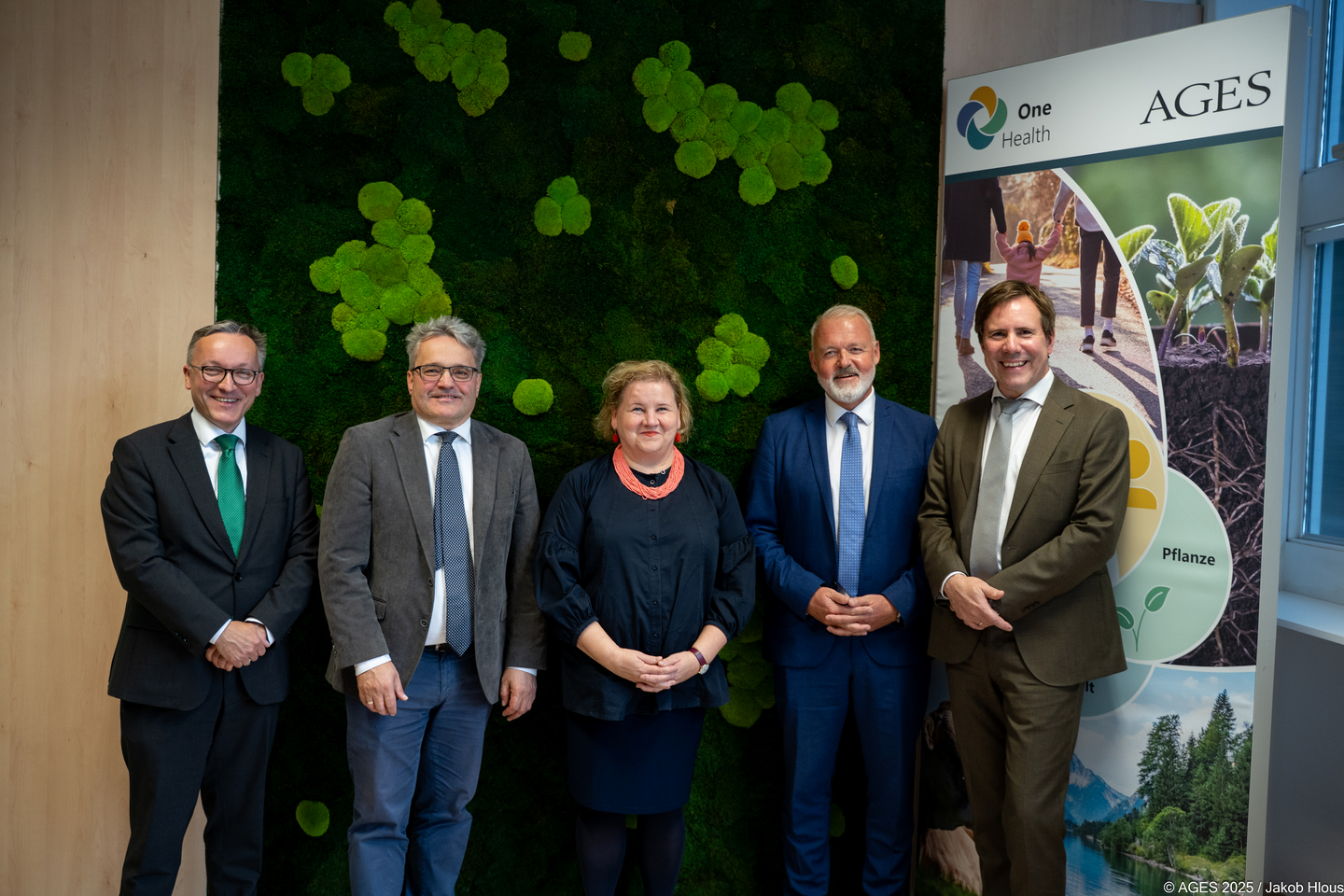
"Although this insight is not new, it is becoming increasingly important and is therefore also anchored in Austria's health policy goals," said Health Minister Korinna Schumann at the opening of the AGES One Health Day on 3 November. However, social factors should not be neglected, especially when it comes to health issues. Jakob Zinsstag, Swiss Tropical and Public Health Institute, echoed this sentiment: decision-makers, scientists and the population must develop One Health together - this is the only way to achieve regionally adapted solutions.
"With our event, we want to be a platform for networking and collaboration," said Johannes Pleiner-Duxneuner, Managing Director of AGES. Networking and cooperation at EU level are also key factors for Nikolaus Kriz, Director of the European Food Safety Authority EFSA. We need to work with scientific facts and not impressions, so we need to continue investing in this concept. A joint approach also plays an important role for Johannes Fankhauser, representative of the Ministry of Agriculture. Agriculture is central to ensuring a healthy, sustainable diet. This is why, among other things, adaptation to climate change is becoming increasingly important.
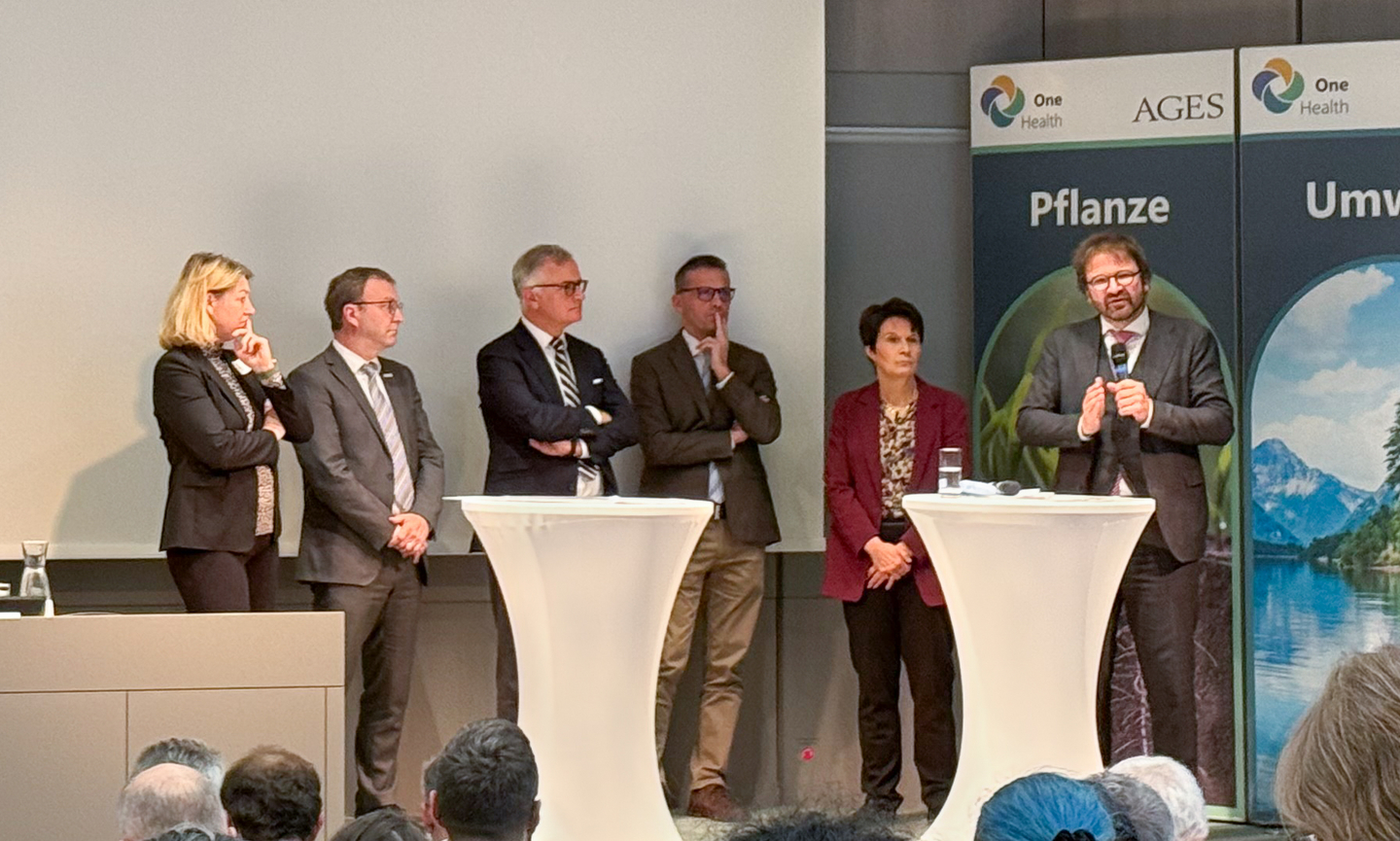
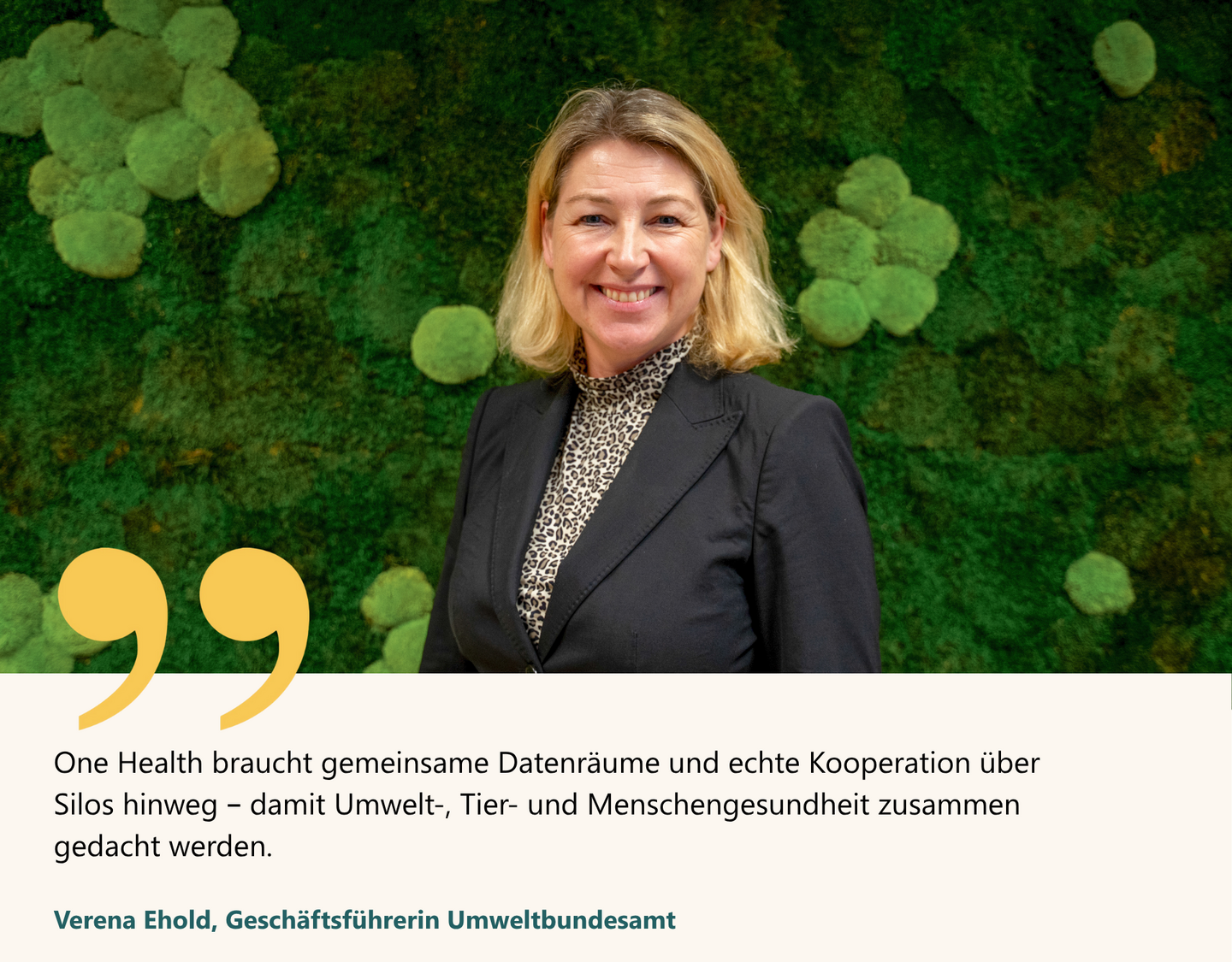
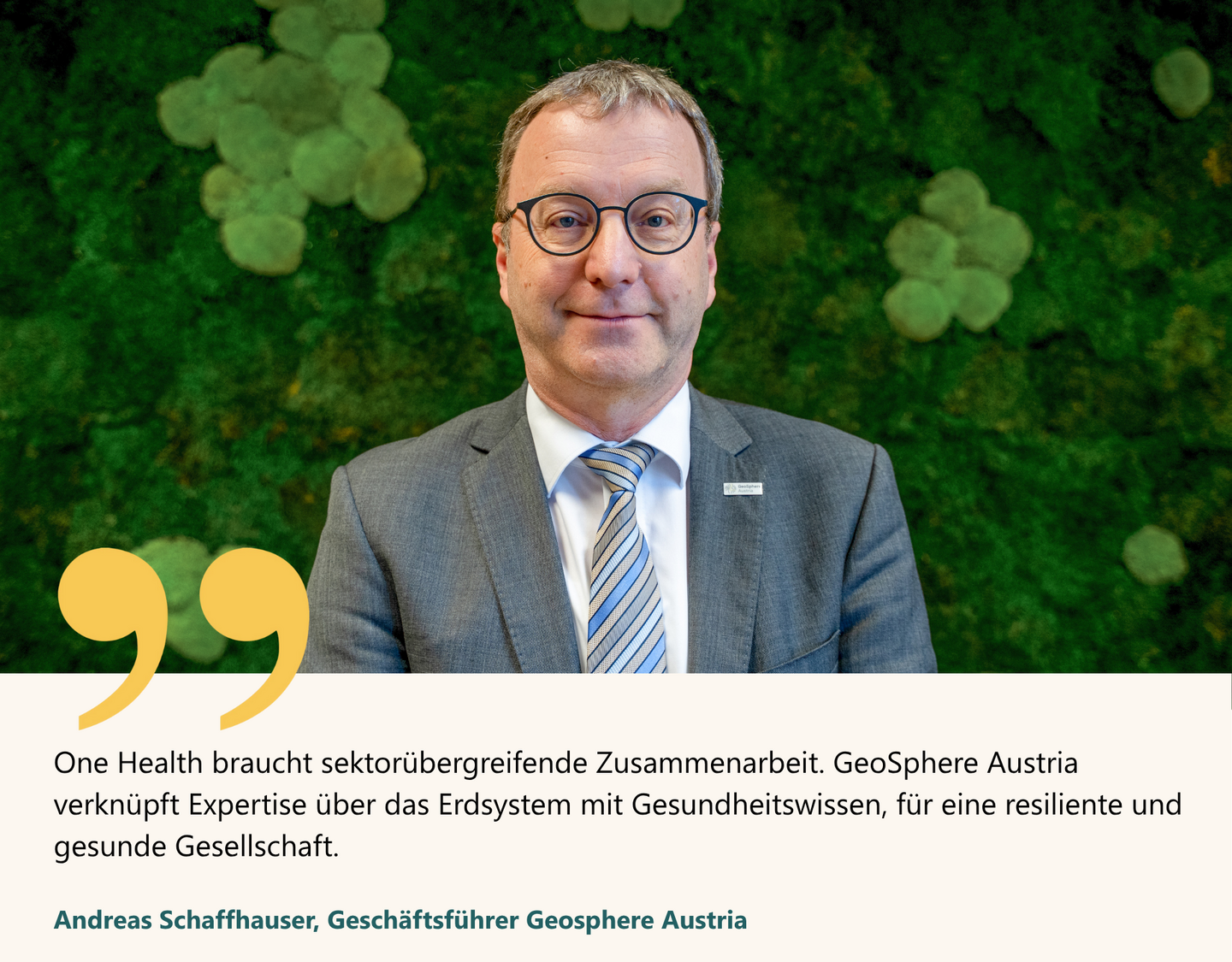
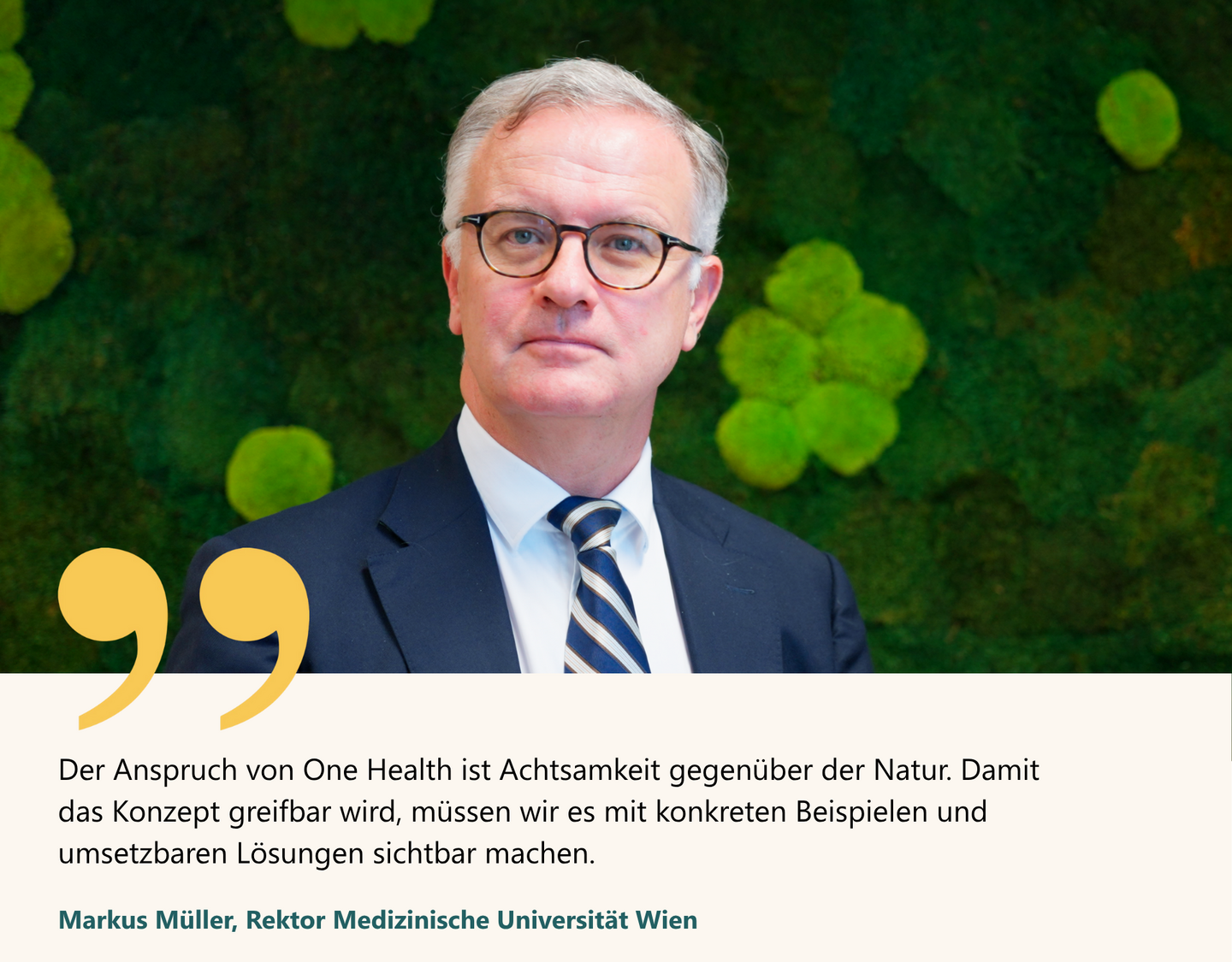
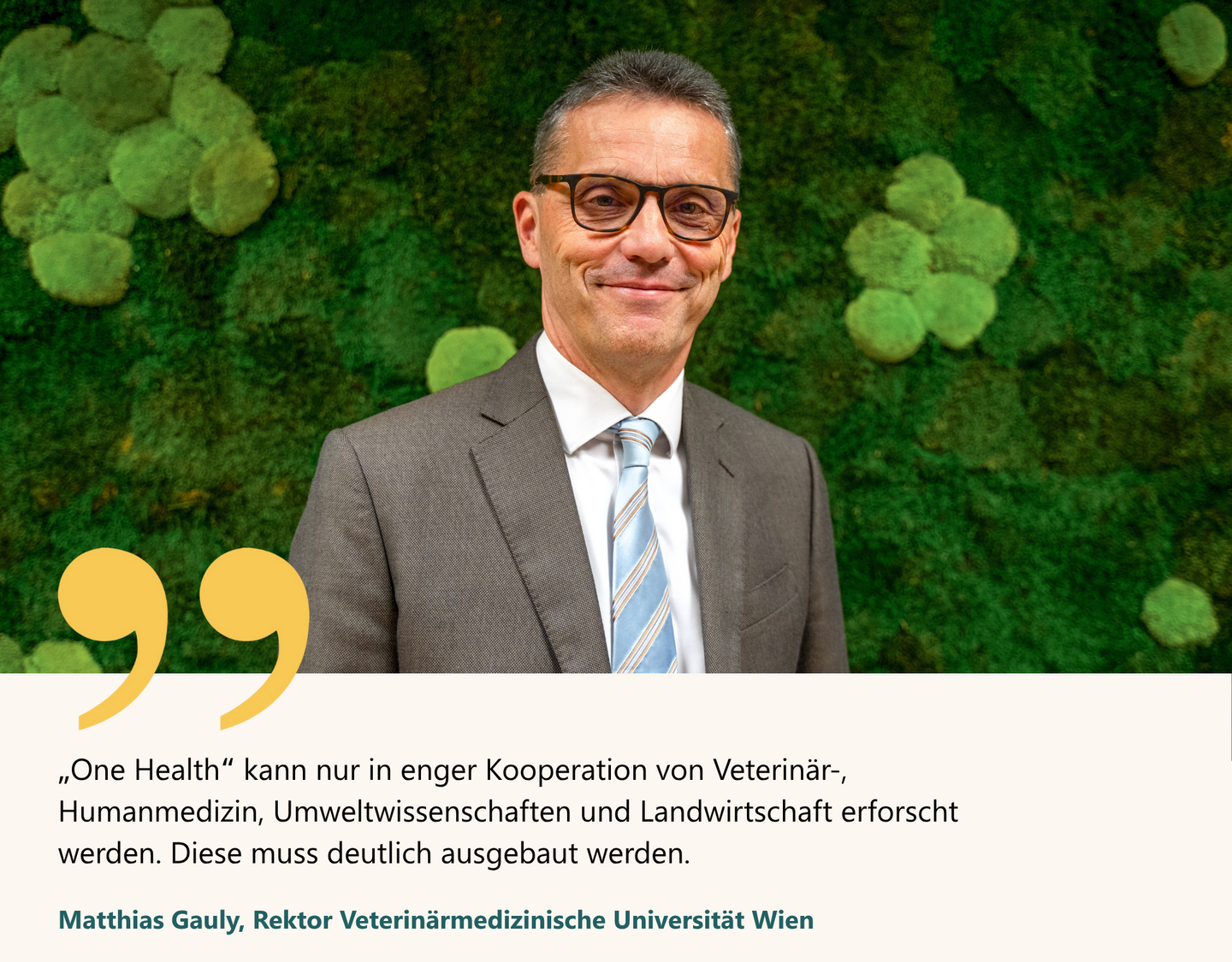
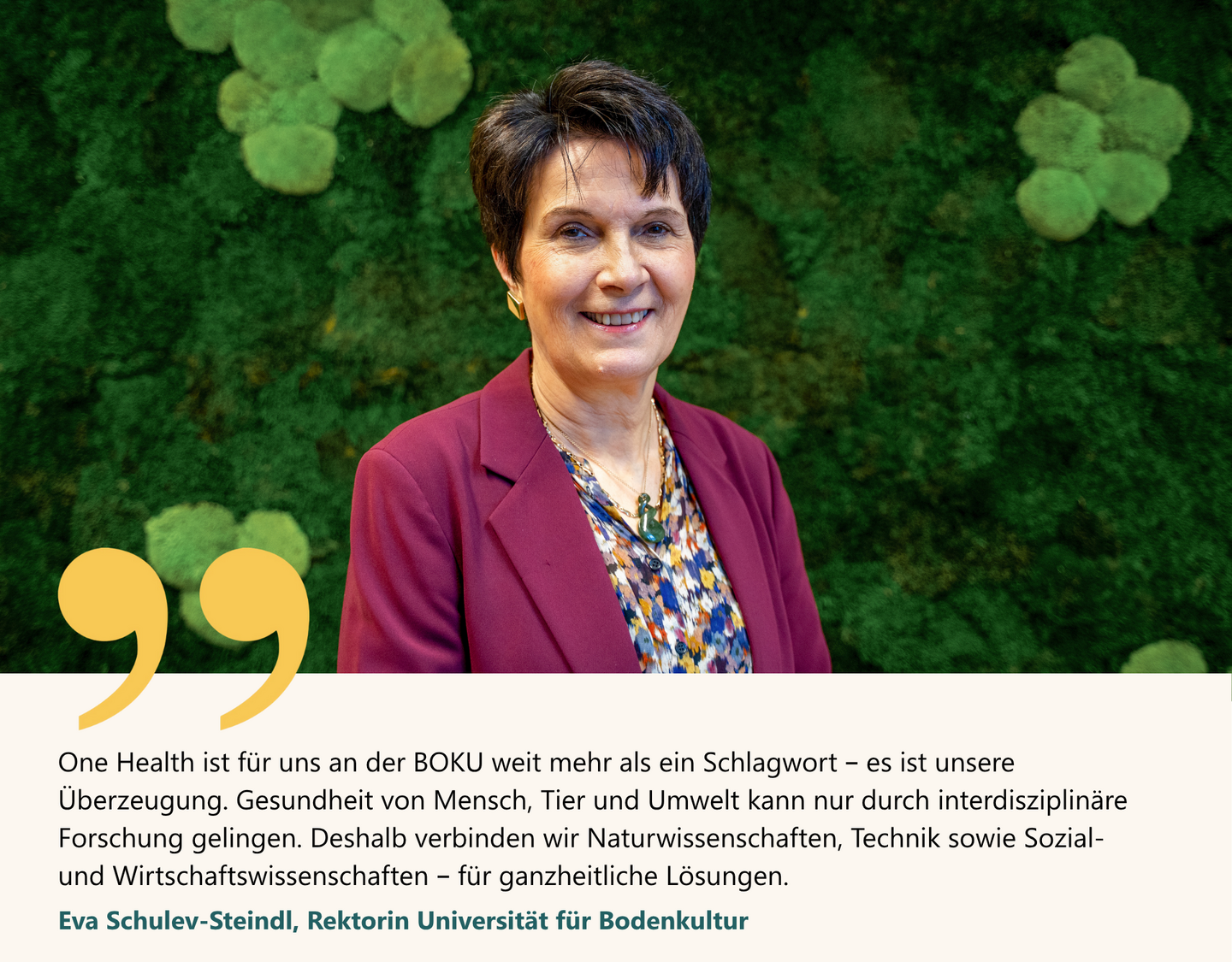
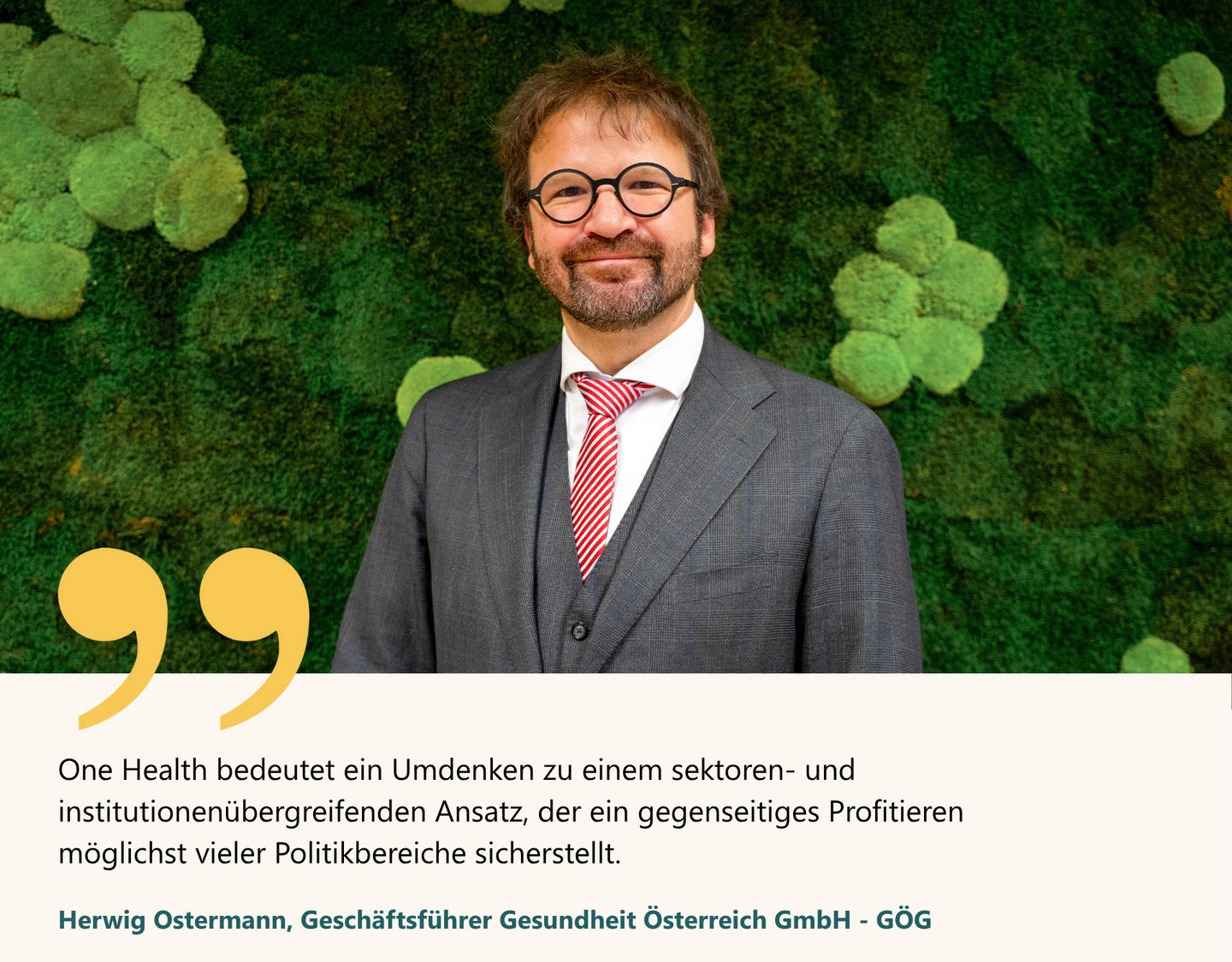
Markus Müller (Rector of the Medical University of Vienna), Matthias Gauly (Rector of the University of Veterinary Medicine Vienna), Eva Schulev-Steindl (Rector of the University of Natural Resources and Life Sciences), Verena Ehold (Managing Director of the Federal Environment Agency), Herwig Ostermann (Managing Director of Gesundheit Österreich GmbH - GÖG) and Andreas Schaffhauser (Managing Director of Geosphere Austria) discussed the challenges we face in Austria and how the One Health approach can be successfully implemented. One Health can only succeed together: Above all, the joint utilisation of data from all areas could open up new perspectives and thus form a basis for new solutions for human, animal, plant and environmental health. Concrete topics and realisable solutions are also important in order to make the concept understandable for everyone.
The different aspects of One Health were highlighted by virologist Florian Krammer on the basis of bird flu, epidemiologist Amélie Desvars on the prioritisation of climate-sensitive zoonoses and environmental chemist Thilo Hofmann on environmental pollutants: Medical anthropologist Ruth Kutalek showed why social sciences are an essential component of One Health, ecologist Franz Essl emphasised the importance of planetary health and pulmonologist Arschang Valipour explained how environmental influences have a significant impact on the lung health of the population.