General
Food comes into contact with numerous objects during its production, storage, delivery, processing and preparation. These can be, for example, crockery, kitchen utensils, packaging or appliances. These items, which can be made of different materials, are referred to as food contact materials.
Materials that come into contact with food can be made of plastic, ceramic, metal or wood, among others. These materials must not release any harmful substances into the food and must not impair it with contaminants (i.e. undesirable substances), odours or flavours.
In addition, the labelling and presentation of the items must not be misleading for consumers.
Further information on contaminants can be found here.
Material groups
Plastics
Many food contact items are made of plastic these days. These include bottles (often made of PET), storage jars, cling film, kitchen utensils and many more.
Plastic-like materials
Not everything that looks like plastic actually is plastic. Plastic-like materials include epoxy resins, varnishes and coatings that are used as surface coatings for objects that come into contact with food. Cellophane films are also used as packaging material for food. Elastomers, i.e. rubber or rubber-like materials such as silicone, are used for bottle teats and soothers, but also for seals, hoses and in baking moulds.
Ceramics and enamel
Due to their composition and the high firing and processing temperature, ceramic, enamel and glass items are mainly contaminated by metals. These usually originate from the glazes, colours or coatings used and can migrate into the food under certain conditions, such as contact with acidic foods.
Active and intelligent materials
Active materials and articles are designed to extend the shelf life of a packaged food product or to maintain or improve its condition. Intelligent materials and articles can monitor the condition of a packaged food and the environment in which it is located. Examples of active materials are oxygen absorbers or moisture regulators in packaging. Intelligent materials can indicate whether a product is spoiled or whether the cold chain has been interrupted by changing colour.
Glass, metals and alloys
Metals and alloys are widely used in food contact: from cutlery, pots and pans to cans and aluminium foil, a wide range of metallic objects come into contact with food. Under certain conditions, such as contact with acidic foods, heavy metals such as lead, arsenic or nickel can leach out and pass into the food.
In addition, regular focus campaigns are also carried out:
- Inorganic materials and articles for food contact
- Food contact materials made of polystyrene and copolymers of styrene
- Harmful substances in uncoated paper and cardboard with direct food contact
- Metallicity of decorated souvenir, handicraft or manufactured ceramic goods
- Primary aromatic amines in kitchen utensils made of polyamide (nylon)
- Primary aromatic amines in nylon kitchenware
- Analysis of ceramic, glass and crystal crockery
- Document control of empty, fillable packaging materials made of plastic and coated cardboard and testing for specific migration of metals
- Metal leakage from uncoated pots, pans and other metal crockery
- Aluminium trays from communal catering and other food fillers including gastronomy
- Suitability of party accessories for food contact
- Plastic identification and document control for packaging made of/with plastic
- Utility articles for food contact made of melamine-formaldehyde resin

Tips
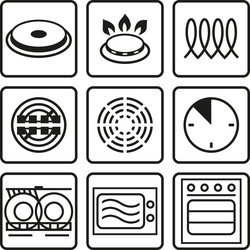
- Pay attention to the manufacturer's warnings and instructions for use (e.g. not suitable for dishwashers or microwave ovens, limited temperature or acid resistance, cleaning instructions) and keep any existing labels.
- Do not buy any products for food contact that have a strong odour.
- Before first use, clean products thoroughly with water and household detergent or in accordance with the instructions for use.
- Do not use kitchen utensils that are badly worn or no longer cleanable. This also applies to crockery.
- Be careful with materials and objects that are sold as antiques: these do not have to meet today's food safety requirements.
- A food suitability symbol (glass and fork) on an item guarantees that it is intended and suitable for contact with food. However, this does not automatically cover all conceivable applications. For example, packaging such as PET bottles or aluminium cans are only intended for single use. Products should therefore only be used as intended and the empty packaging should be disposed of in the waste collection systems provided for this purpose. However, objects that are clearly intended to come into contact with food (e.g. drinking glasses, cooking pots, etc.) or that are already in contact with food (e.g. packaged food) do not have to be labelled with this symbol.

Fachinformation
Information for manufacturers and retailers
Legal requirements for food contact materials in Austria are regulated in the Food Safety and Consumer Protection Act(LMSVG). EU Regulations (EC) No. 1935/2004 and (EC) No. 2023/2006 also apply, and there are also specific EU-wide regulations for individual material groups.
Manufacturers and distributors must find out whether the materials and articles they use are subject to individual measures in accordance with Art. 5 of Regulation (EC) No. 1935/2004. If this is the case, manufacturers and distributors may be obliged as a company to issue a declaration of compliance confirming that the materials or articles comply with the applicable regulations. The details of the required content can be found in the corresponding individual measures (e.g. for plastics in Annex IV of Regulation (EC) No. 10/2011).
If the material or article is not additionally regulated by an individual measure, conformity does not necessarily have to be certified by a declaration of conformity, but the requirements of Regulation (EC) No. 1935/2004 still apply to all food contact materials. In addition, according to Regulation (EC) No. 2023/2006, appropriate documentation for the conformity and safety of the finished material or article must be prepared and maintained. This documentation must be made available to the competent authorities at their request.
Legal basis
Plastics
In the EU, plastic food contact materials are regulated by Regulation (EC) No. 10/2011. Only substances listed in the Union list of this regulation may be used as starting materials. This list contains monomers and other starting materials, as well as additives and auxiliary substances to improve processability. A declaration of conformity issued by the company confirming compliance with the legal requirements is required for plastic articles within the supply chain.
Regulation (EU) 2022/1616 applies to recycled plastic .
For imports of polyamide and melamine plastic kitchenware originating from China or Hong Kong, Regulation (EC) No. 284/2011 applies with special conditions and detailed procedures.
Plastic-like materials
Not everything that looks like plastic is covered by Regulation (EC) No. 10/2011. There are separate regulations for the following materials:
- Epoxy resins: Regulation (EC) No 1895/2005 on the restriction of the use of certain epoxy derivatives in materials and articles intended to come into contact with foodstuffs
- Bisphenol A: Regulation (EU) 2024/3190 on the use of bisphenol A (BPA) and other bisphenols and bisphenol derivatives which have been assigned a harmonised classification on the basis of specific hazardous properties in certain materials and articles intended to come into contact with foodstuffs
- Cellophane films: Federal Law Gazette No. 128/1994 on articles made of cellophane film (Cellophane Film Ordinance)
- Elastomers/rubber (for bottle teats and soothers): Federal Law Gazette No. 104/1995 on the release of N-nitrosamines and N-nitrosatable substances from bottle teats and soothers made of elastomers or rubber
Ceramics and enamel
In the EU, Directive 84/500/EEC applies to ceramic articles, which was implemented nationally in Austria as the Ceramics Ordinance (Federal Law Gazette No. 893/1993). This ordinance also regulates enamel. In contrast to the EU Directive, it not only specifies limit values for lead and cadmium, but also for antimony, barium and zinc. A declaration of conformity issued by the company is required for these items within the supply chain up to the retail level.
Active and intelligent materials
Regulation (EC) No. 450/2009 applies to them.
Materials not specifically regulated
For all materials not explicitly listed, there are currently no specific regulations at EU level. However, they must comply with Regulation ( EC) No. 1935/2004 and Regulation (EC) No. 2023/2006. These materials include, for example, paper, cardboard, glass, wood and metals.
A declaration of conformity issued by the company is not mandatory for these materials, but conformity must nevertheless be proven with appropriate documentation. In these cases, Council of Europe recommendations, recommendations of the Federal Institute for Risk Assessment (BfR), standards or scientific publications must be used to verify conformity.
Glass
As there is no specific measure for glass according to Art. 5 of Regulation (EC) No. 1935/2004, the same requirements for the release of lead and cadmium as for ceramics in the Ceramics Ordinance(Federal Law Gazette No. 893/1993) can be used for assessment due to the similar composition and processing conditions.
Metals and alloys
As there is no individual measure for metals and alloys in accordance with Art. 5 of Regulation (EC) No. 1935/2004, other documents must be used for their assessment. The requirements of the Council of Europe guideline "Metals and alloys used in food contact materials and articles", which contains test methods and scientific assessments of the most important metals, are used for this purpose.
Paper and cardboard
As there is no specific measure for paper and cardboard in accordance with Article 5 of Regulation (EC) No 1935/2004, other documents must be used for their assessment. The requirements of the Council of Europe guideline "Paper and Board used in food contact materials and articles", which contains test methods and scientific criteria for compliance assessment, are used for this purpose.
Further information
Austrian Food Codex - B 36 Utility articles
European Commission brochure on food contact materials
European Commission: Overview page on food contact materials (EN)
Last updated: 11.12.2025
automatically translated