Strawberry mite
Phytonemus pallidus fragariae
Appearance
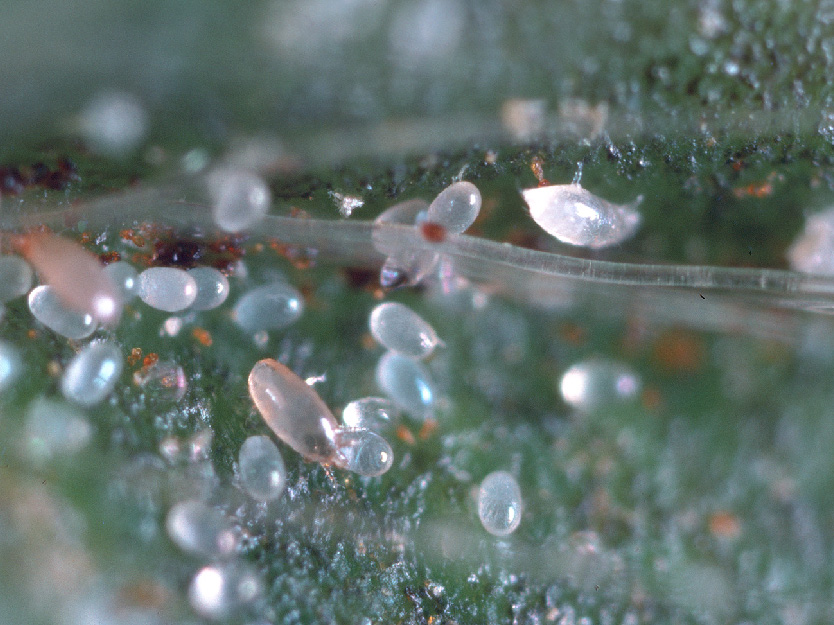
The white-yellow soft-skinned mites (Tarsonemidae), which include the strawberry mite(Phytonemus pallidus fragariae, syn.: Tarsonemus pallidus fragariae), are barely recognisable to the naked eye and are only 0.2-0.3 mm long. In females, the last of the four pairs of legs is thread-like, in males it is pincer-like.
An exact species identification based on morphological characteristics, which can only be carried out with a microscope, is difficult and currently under discussion.
Biology
The adult females overwinter well hidden in the folded leaves or at the base of the petioles. They leave the winter quarters in April, seek out the inner leaves and lay eggs there in large numbers. After only a few days, the six-legged larvae hatch, and in ten to 14 days they develop into adult mites. Five to seven generations emerge per year, which overlap.
Damage to cyclamen
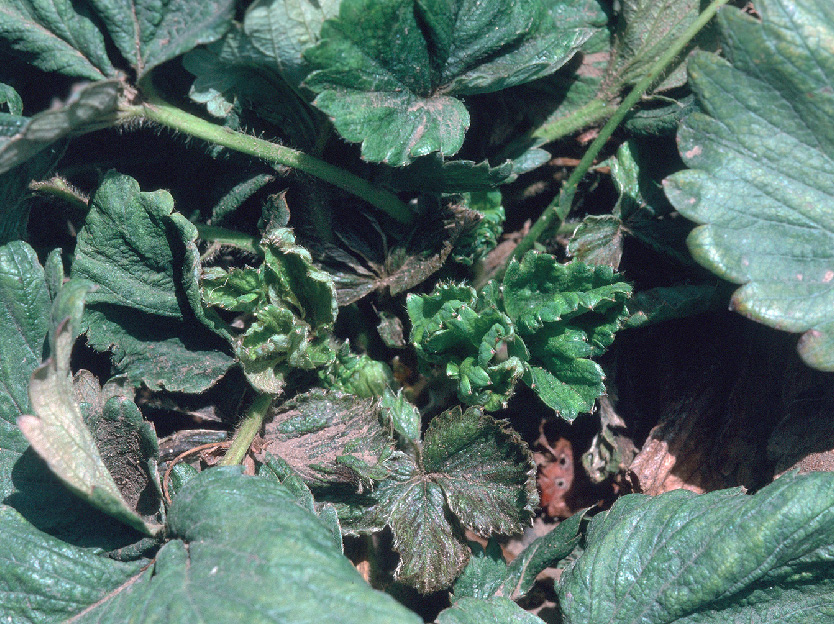
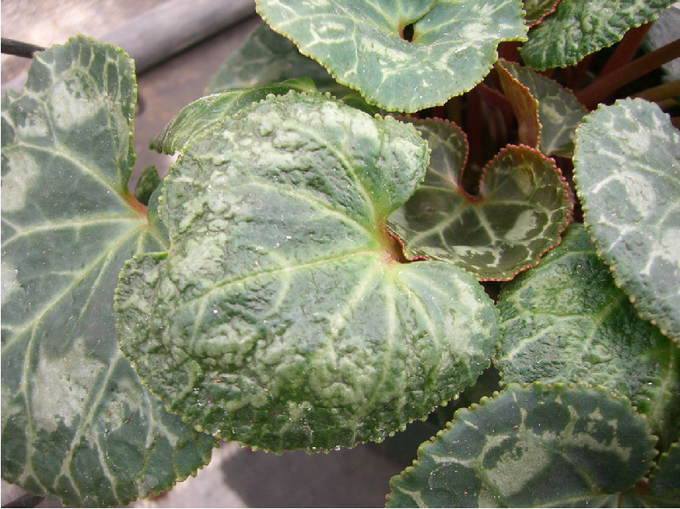
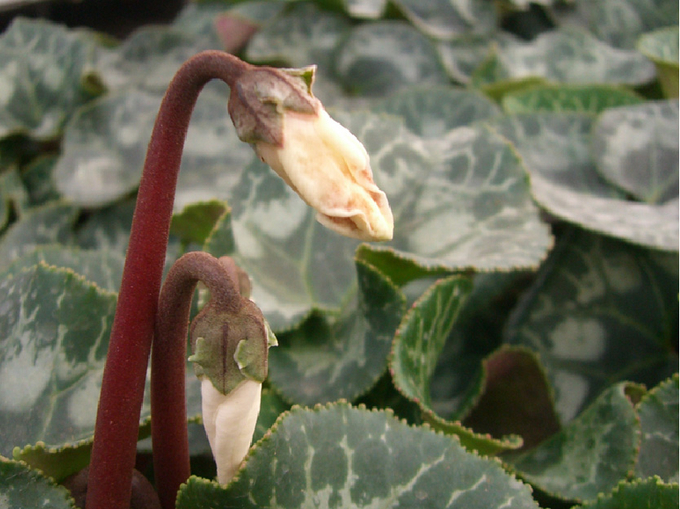
Cyclamen suffer from curling and hardening of the young leaf edges and deformation of the leaf stalks. The flowers remain compressed and are difficult to open, are deformed and discoloured or dry out and fall off.
Prevention and control
- Check young plants and purchased plants for symptoms of infestation.
- New plants should only be planted with mite-free seedlings
- For chemical control, pre-bloom or post-harvest treatments (see list of plant protection products approved in Austria) can be applied to strawberries. In this case, the plants should be well wetted, especially on the heart leaves.
- For biological control of the strawberry mite on various plants, predatory mites can be used (seelist of plant protection products approved in Austria)
Last updated: 19.12.2025
automatically translated