Hemlock
Conium maculatum
Appearance
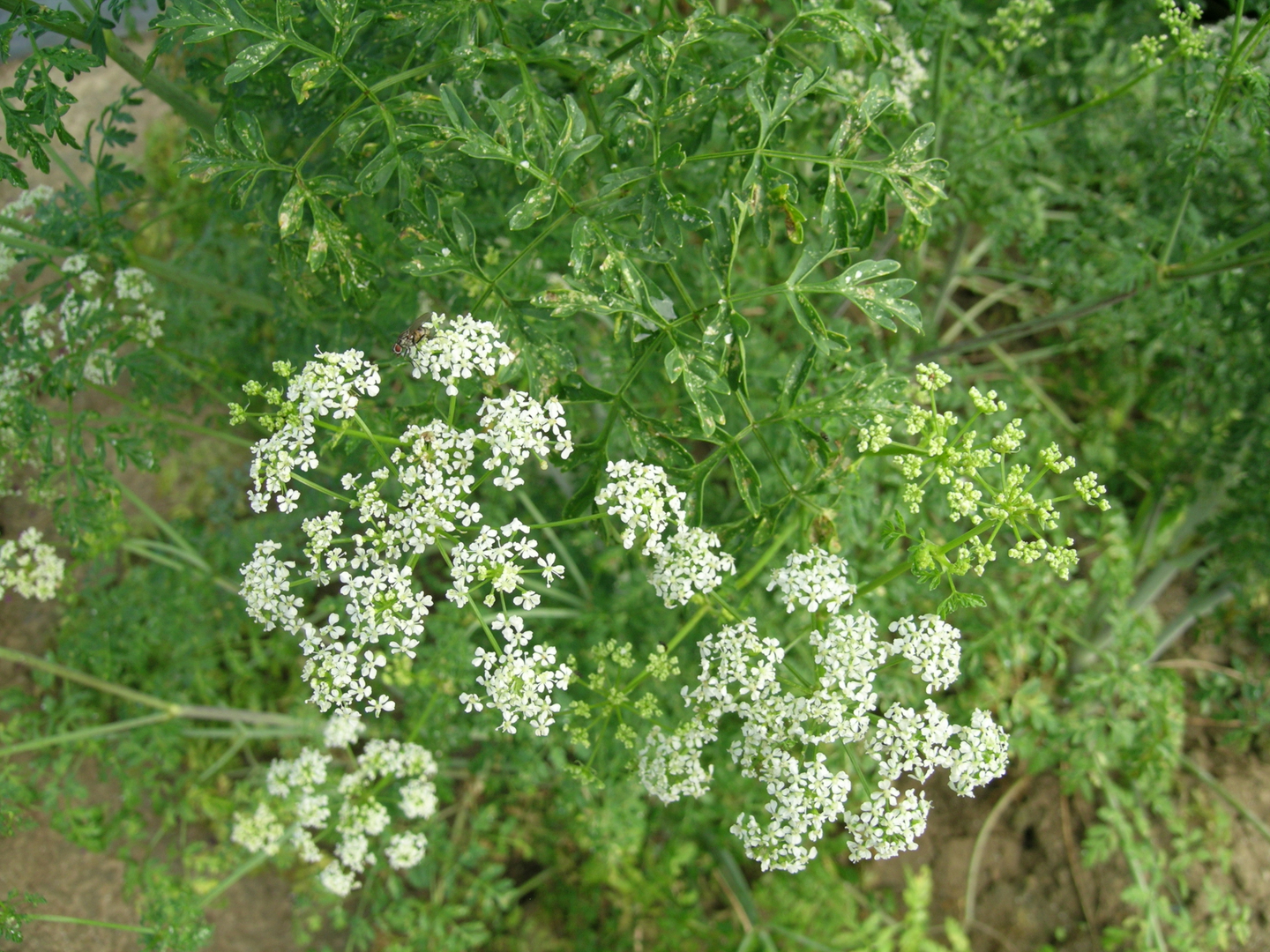
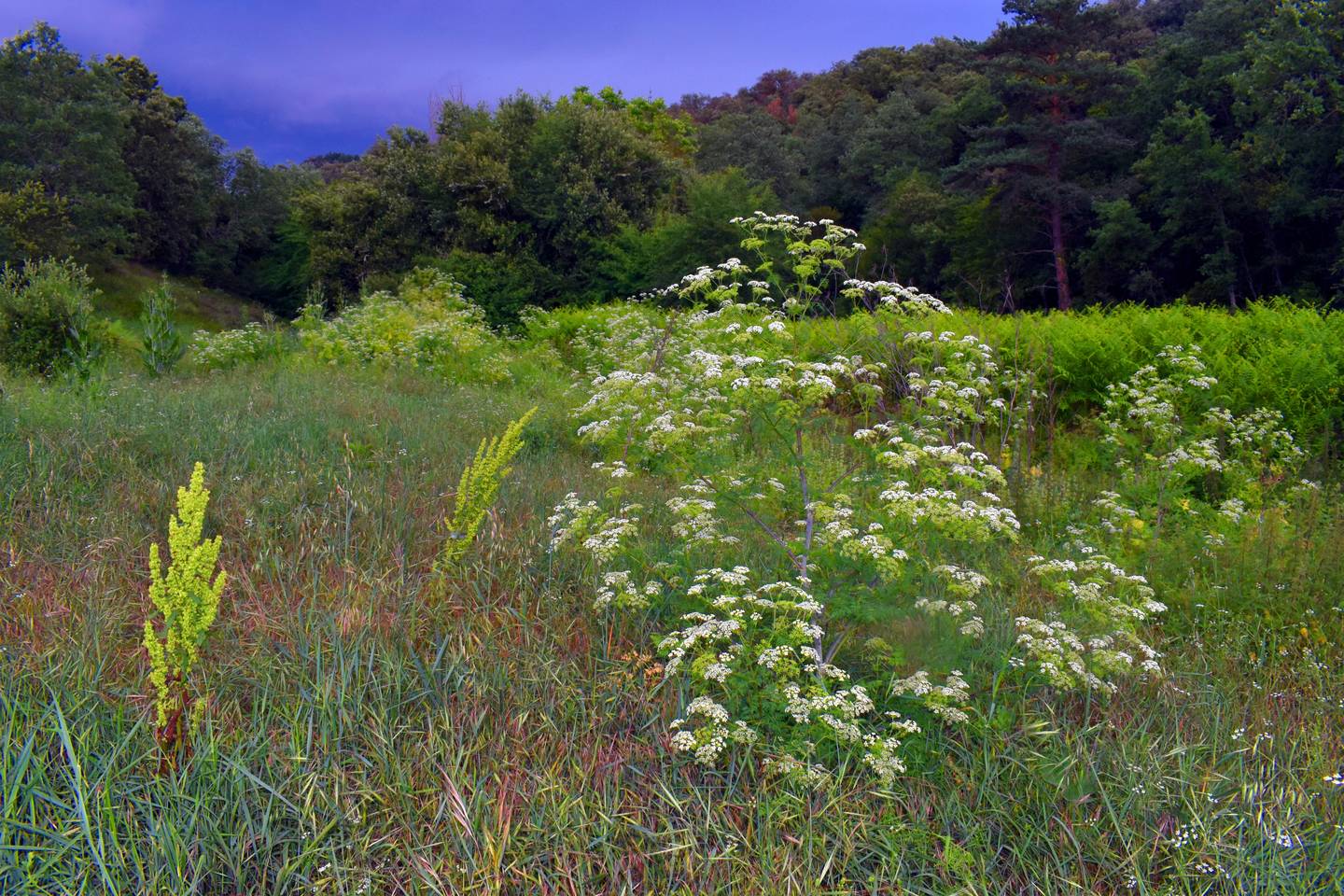
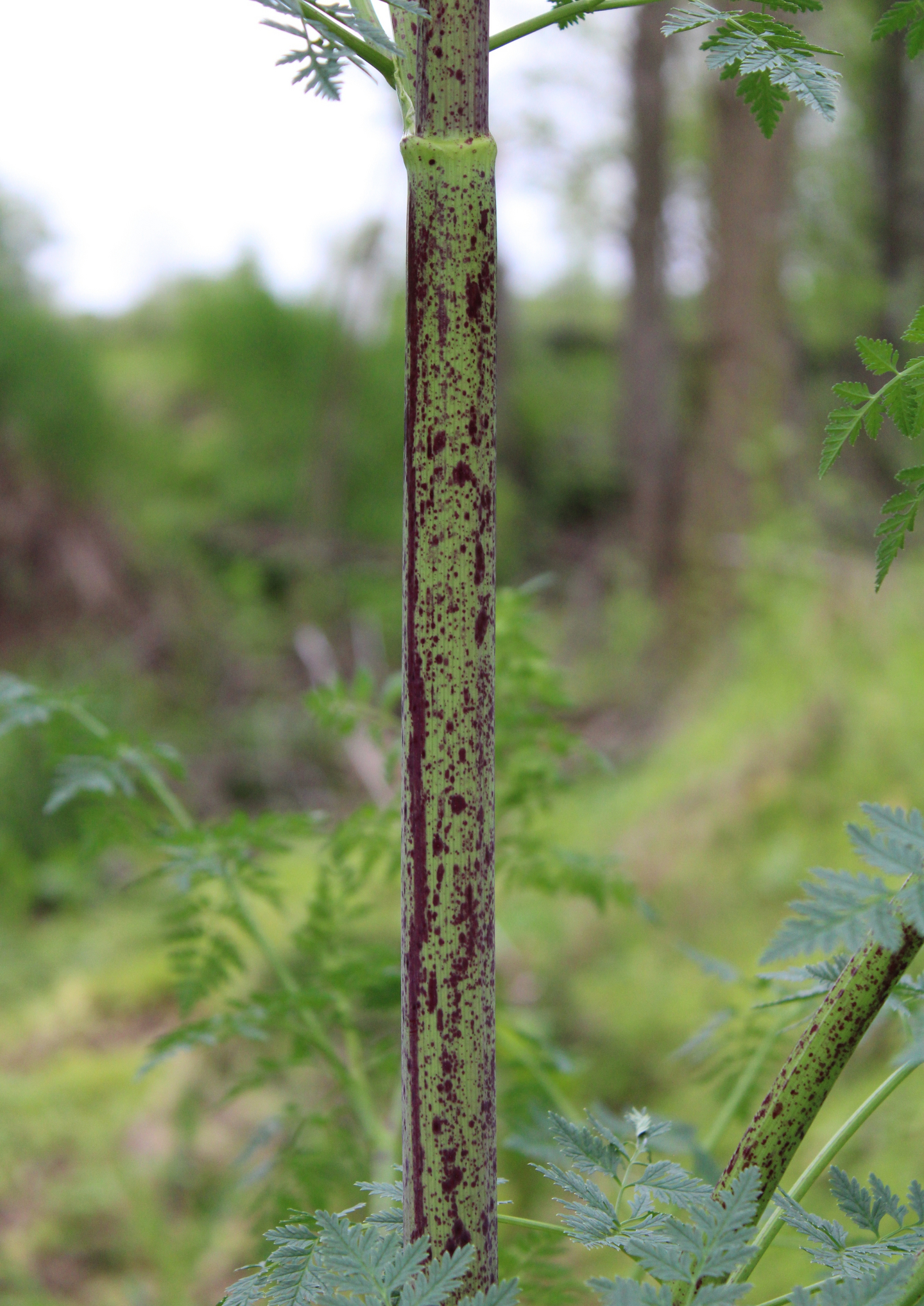
Spotted hemlock germinates both in autumn and early spring. Within the first year it forms a rosette and the inflorescence forms the following year. The plant grows to a height of 1 to 2 metres and smells unpleasantly of mouse urine. The stem of the spotted hemlock is hollow, finely grooved and has a bluish colour. The lower part of the stem is spotted red. The white flowers have 5 petals and are arranged in umbels consisting of 7 - 15 rays. The plant flowers from June to September and develops grey-green to brownish, notched fruits. The leaves are 2 - 3-pinnate, with a dark green upper side and a grey-green underside. The individual leaf sections are coarsely toothed.
Distribution
The spotted hemlock is widespread throughout Europe. It is found in typical ruderal areas such as rubble heaps, fallow land, field margins and roadsides. The plant is considered a nitrogen indicator. The plant is not a typical arable weed. Nevertheless, the species can occur locally on arable land, particularly in winter oilseed rape and sparse cereal crops.
Prevention and control
Mowing or shredding the plants before flowering and seed maturity prevents further spread. Individual plants can also be dug up. Plants with ripe, brown seeds should be cut/mown and, if possible, disposed of in quality-assured compost or biogas plants. Personal protective equipment should be used as the poisonous active ingredient from injured plant parts is also absorbed through the uninjured skin.
Services
Last updated: 18.12.2025
automatically translated