Common thorn apple
Datura stramonium
Appearance
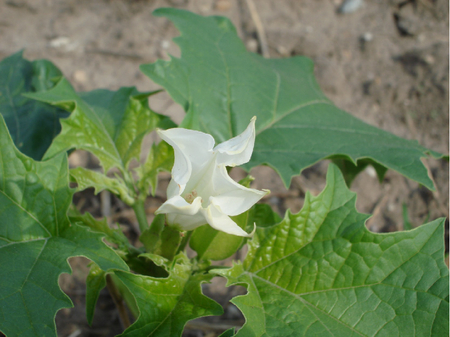
The leaves of the common datura are dark green on top, long-stalked, ovate, pointed, lobed and sometimes very large (20 cm in diameter). The species is characterized by a great variability in appearance. Depending on nutrient, water, and competition conditions, growth height at seed maturity can vary from a few centimeters to more than 150 cm.
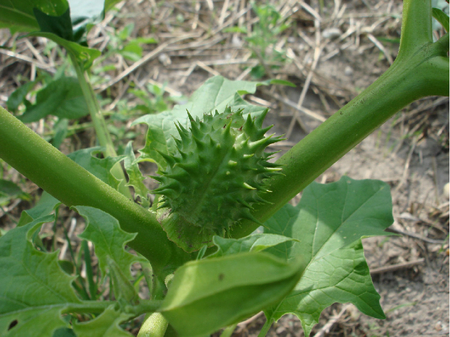
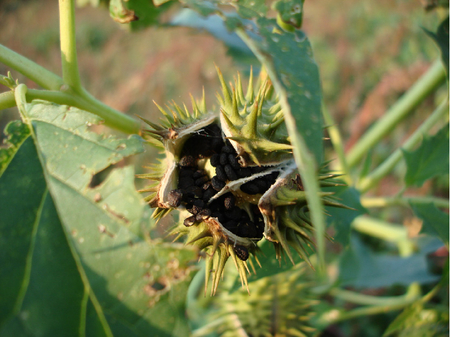
The trumpet flowers stand upright in the branch forks. From them a characteristic densely spiny, walnut-sized capsule is formed, in which deep brown to black seeds are found.
Distribution
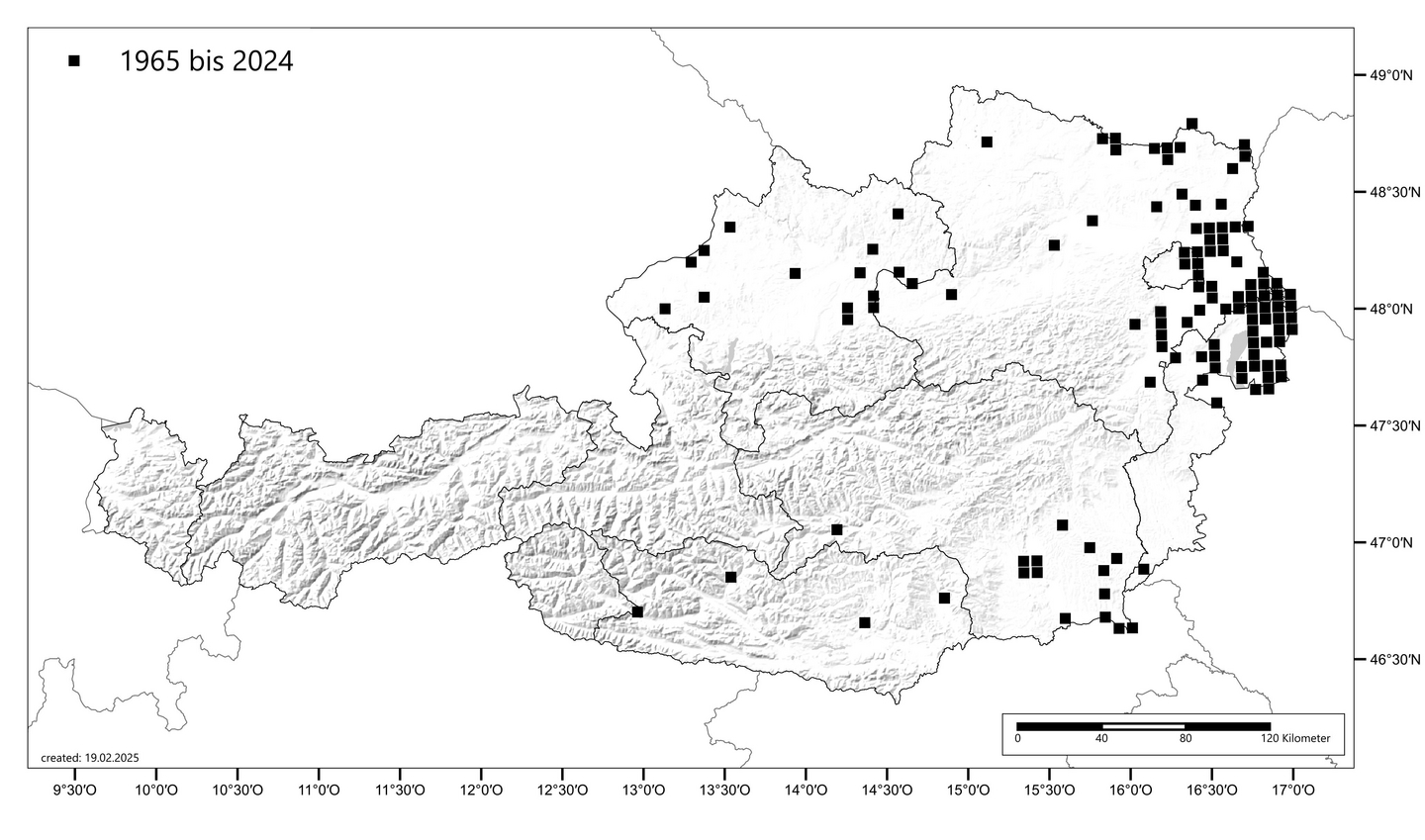
The common datura occurs in all federal states. The plant mainly colonises nutrient-rich ruderal areas (e.g. rubbish tips, compost heaps, urban wasteland) and fields.
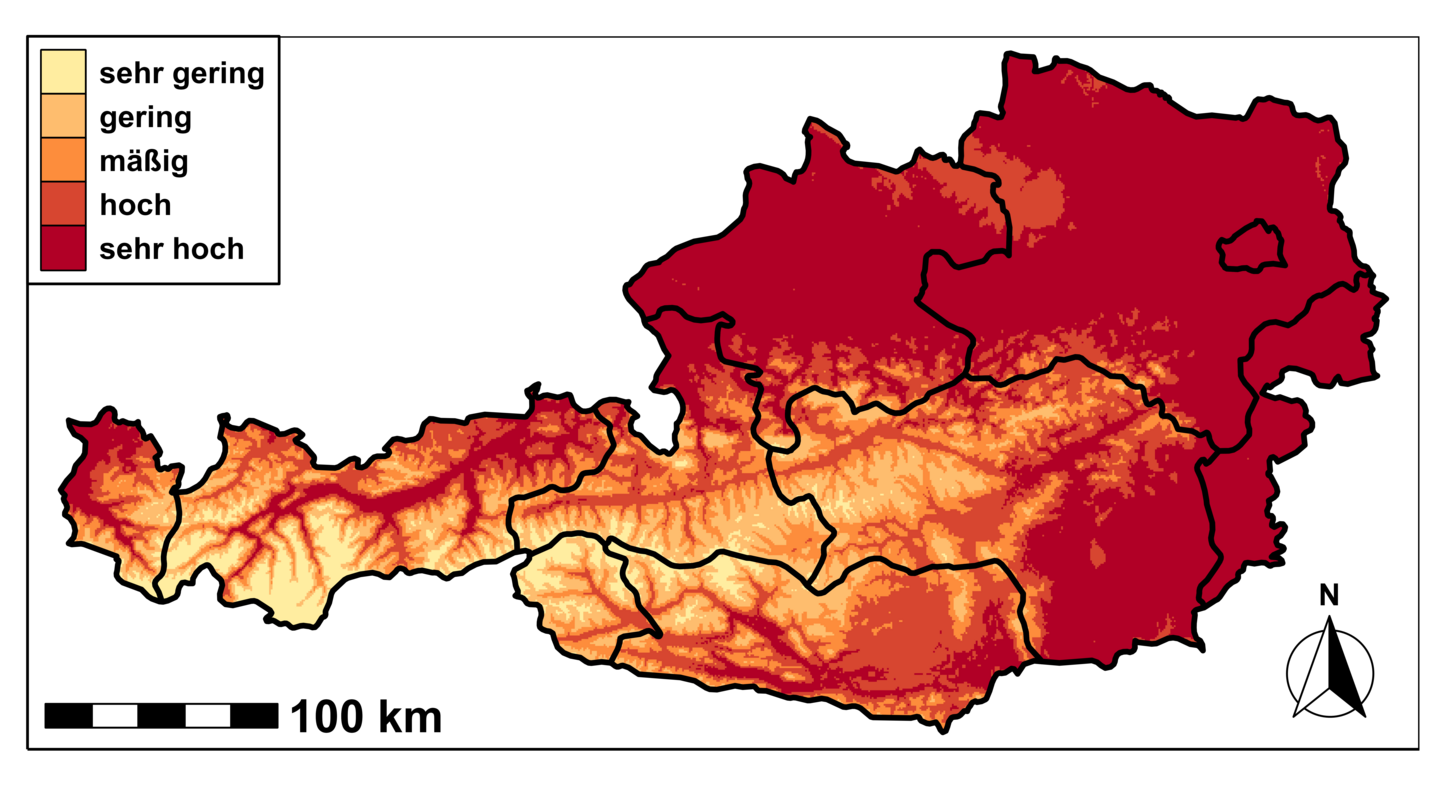
The species has only become an important weed in recent decades. An increased occurrence was first observed in the 1990s. The "hotspots" of datura in agriculture are currently located in the warm lowlands of northern Burgenland and eastern Lower Austria. In southern and south-eastern Styria and in Upper Austria, occurrences have been observed in the fields in recent years. There are only isolated records in fields in Carinthia. Further west, no occurrences in fields have been described to date.
The area of Austria that is highly to very highly suitable for datura under the current climatic conditions is over 70 % and covers more than 90 % of the arable land.
Spread and transmission
- Natural dispersal: Seeds are dispersed from the capsules when they burst and also by wind movements up to a distance of 1 to 3 metres from the mother plant.
- Anthropogenic dispersal: Seeds are spread over long distances with the help of agricultural equipment and harvesting machines.
Economic significance
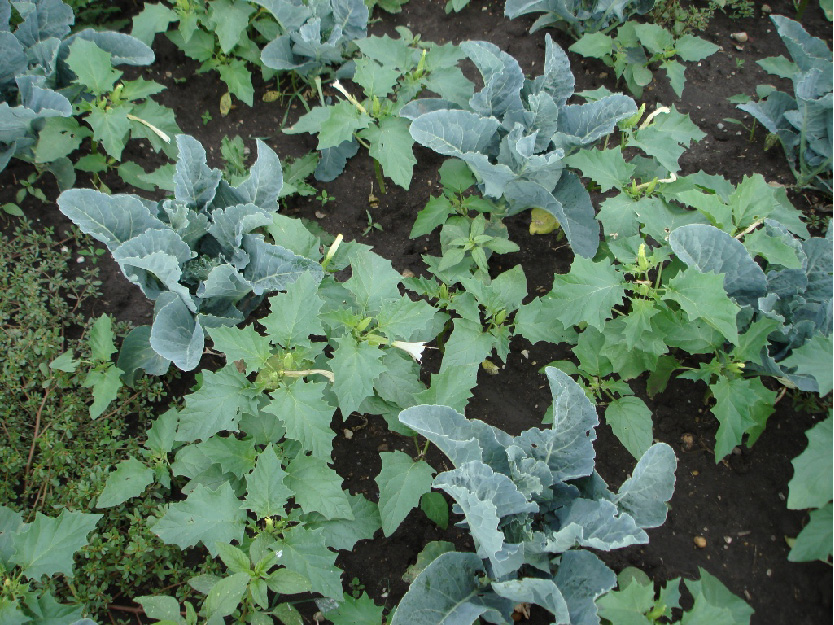
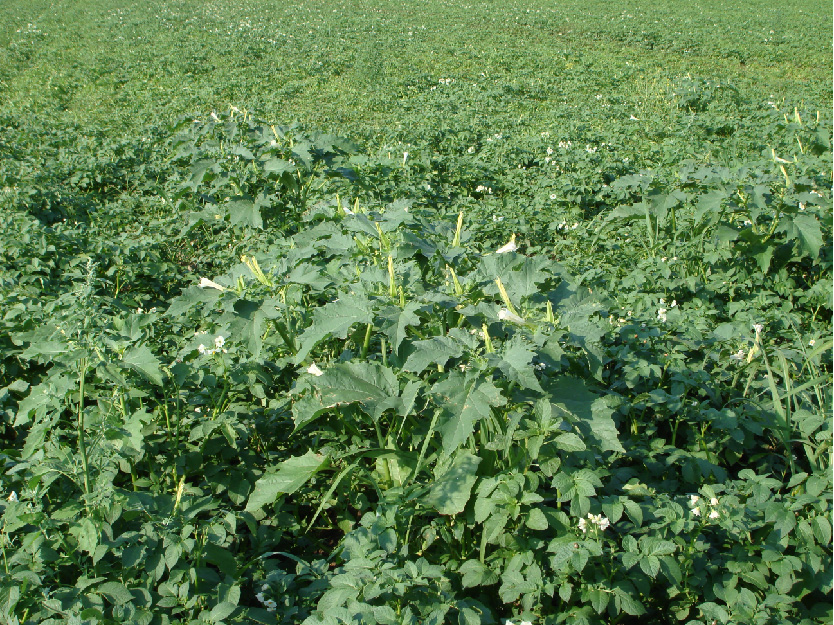
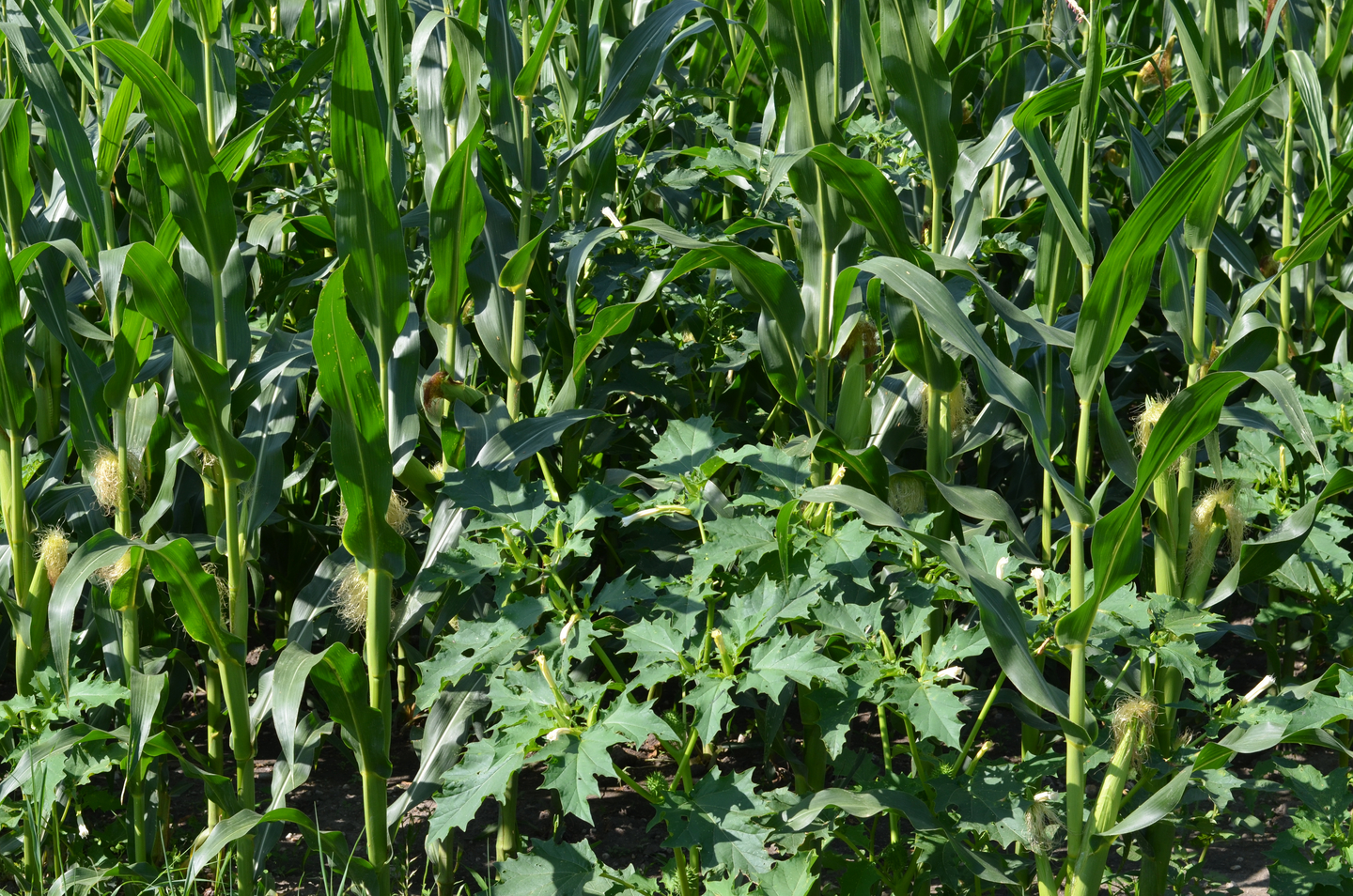
As a heat-loving plant, the common datura emerges late in the season and is therefore found in fields, particularly in summer annual crops such as maize, soya beans, potatoes, sunflowers and millet. An increased spread of the datura has also recently been observed in vegetable crops.
Particularly in field crops with low plant height, the common datura can become highly competitive and lead to yield losses. A far greater problem is that the entire plant is highly toxic, as it contains organic compounds (tropane alkaloids). Contamination occurs when the harvested crop comes into contact with plant parts and sap of the (green) datura during harvesting. Relatively small amounts of these alkaloids can lead to poisoning (hallucinations, nausea, drowsiness, respiratory paralysis) if ingested with food.
Prevention and control
Indirect and direct measures
- Preventing spread or introduction into fields: monitoring field margins and transition areas (field margins, fallow land); soil material and harvesting machinery may be contaminated with seeds
- Crop rotation/alternation of summer and winter crops
- Dense, uniform stands suppress datura more effectively. Adjust sowing rate and ensure high seed quality
- Mechanical weed control using harrows and hoes. Harrows are only effective on small plants. Hoeing also controls larger plants. Plants growing in rows are often difficult to control.
- Selection and use of effective herbicides in crops (list of plant protection products authorised in Austria)
Crop inspection
- Inspect the crop before it closes up, but at the latest before harvest: plants must be removed before seed formation.
- Removal is best achieved by pulling out or digging up (wear gloves!).
- Disposal: If the plant is removed before seed capsules form, the plant material can be dried, preferably under controlled conditions on areas where regrowth and rooting of the pulled-up plants is prevented. After flowering and at the start of capsule formation, the plants should be removed from the field. The seed capsules of the datura continue to ripen and can produce viable seeds. Where possible, farms should dispose of the plant material in quality-assured composting or biogas facilities.
Technical information
Guidance
Publications
Follak S, Biçici UC, Griesbacher A, Kuchling S, Reiter E, Schwarz M, Treiblmeier M, Riegler-Nurscher P (2026): Datura stramonium L. in soya in Austria: risk areas, extent of late-season infestation and management implications. Die Bodenkultur: Journal of Land Management, Food and Environment 77, 1–11.
Follak S, Biçici UC, Griesbacher A, Kuchling S, Reiter E, Schwarz M, Treiblmeier M, Riegler-Nurscher P (2025): Weed infestation of soya beans with thorn apple. Der Pflanzenarzt 78(8), 12–15.
Follak S, Essl F, Glaser M, Hörmann GM (2025): Potential distribution areas of major problem weeds. *Der Pflanzenarzt* 78(5): 16–18.
Follak S, Reiter E, Riegler-Nurscher P, Treiblmeier M (2024): Datura detection using drones. Der Pflanzenarzt 77(6–7), 14–15.
Follak S, Hochfellner L, Schwarz M (2023): Watch out! Datura is becoming an increasing problem. Der Pflanzenarzt 76 (6–7), 30–31.
Projects
StopDatura: Strategies to prevent contamination of agricultural crops with Datura stramonium and its alkaloids
AgriWeedClim: New weed species under the influence of climate and land-use changes in Central Europe
Last updated: 21.08.2026
automatically translated