Summary
The Horizon 2020 project INVITE aimed to promote plant varieties with high resistance to unfavourable environmental influences. To this end, variety testing is to be improved in order to better assess the characteristics and performance of new varieties. With the help of models, improved networks and databases, faster and more efficient variety testing should be achieved following the project.
Project description
The aim of the INVITE project was to promote new varieties with high resistance to biotic (living) and abiotic (e.g. chemical and physical) stresses. Existing varieties will be better adapted to sustainable farming methods and made more resistant to climate change through research and breeding. Different tools for genotyping (determination of differences in genetic make-up) and phenotyping (determination of appearance) were tested during the project in variety testing on the crop species wheat, maize, sunflower, forage grass (English ryegrass), potato, tomato, apple as well as soya, rapeseed and alfalfa. In terms of their diversity and breeding frequency, these species represent the entire food and feed production of the EU.
The following topics were addressed:
- Identification of plant traits and bioindicators associated with efficiency, sustainability and resilience to different environmental conditions
- Development of new phenotyping and genotyping tools to assess bioindicators related to better adaptation to more sustainable cultivation practices and variable climatic conditions, and to improve the speed, accuracy and efficiency of variety testing
- Creation of crop models and statistical tools that allow prediction of variety performance
- Improve existing variety testing protocols for variety characterisation (distinctness, uniformity and stability - DUS) and performance testing (VCU)
- Definition of new procedures for the management of reference collections
- Propose organisational innovations to improve variety testing networks, taking into account their socio-economic and environmental impact
- Recommendations to policy makers to improve the harmonisation of DUS and VCU testing at EU level
- Facilitate data exchange within the consortium and develop a prototype of a common database
- Design of a prototype decision support system for variety selection (DSS-VC)
As part of the project, we provided historical VCU and DUS data as a testing office for national variety authorisation and as a testing office for post-registration variety testing. We are also involved in international trials for wheat, maize and ryegrass-clover mixtures. In the case of soya bean, we were responsible for the crop species in the project. Other responsibilities included the harmonisation of variety descriptions in the national Descriptive Variety Lists and the evaluation of synergies between VCU and DUS testing.
Results
Historical data going back to 2003 were provided from the value test for winter wheat, maize, sunflower, English ryegrass and soya bean and from the register test for wheat, maize and soya bean.
Wheat
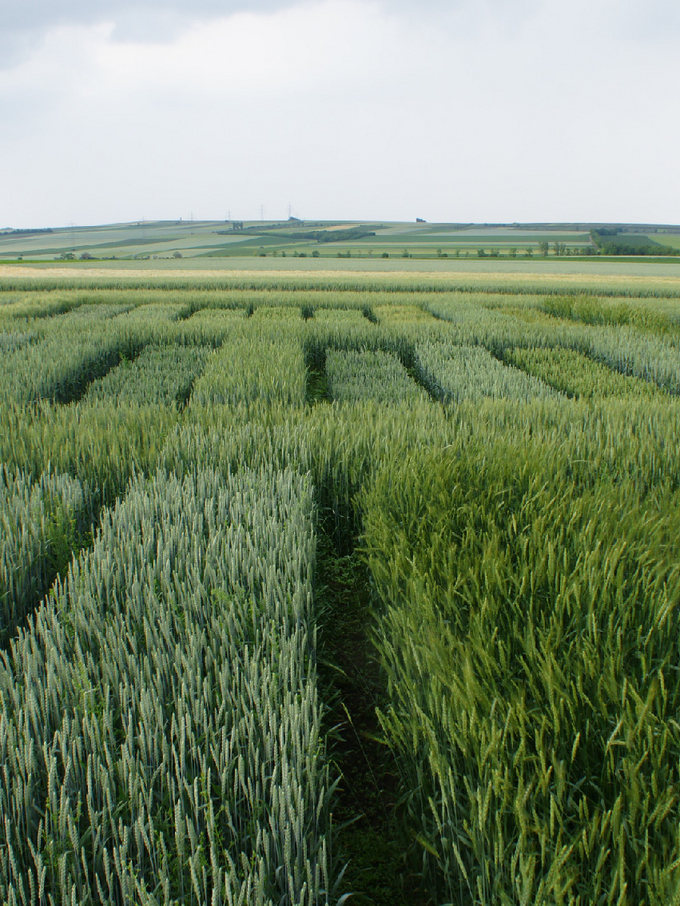
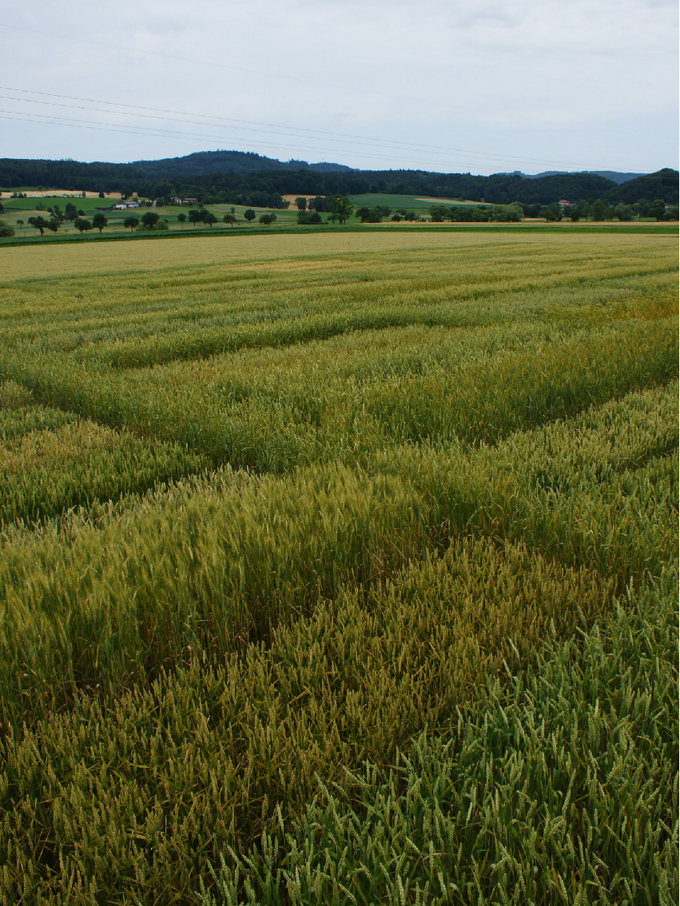
Wheat variety trials including variety mixtures and populations under organic and conventional conditions in 2021 and 2022 in Großnondorf and Grabenegg, in Großnondorf with soil sensors.
In winter wheat, we were involved in international trial series at the locations Großnondorf (Hollabrunn district) and Grabenegg (Melk district) with an international assortment, variety mixtures and populations under organic and conventional conditions. Soil sensors were installed in Großnondorf and provided the data. The field trials were completed in 2022 and analysed together with the project partners. In Austria, dough and baking tests were also carried out in addition to the field parameters and indirect quality parameters.
Grain maize
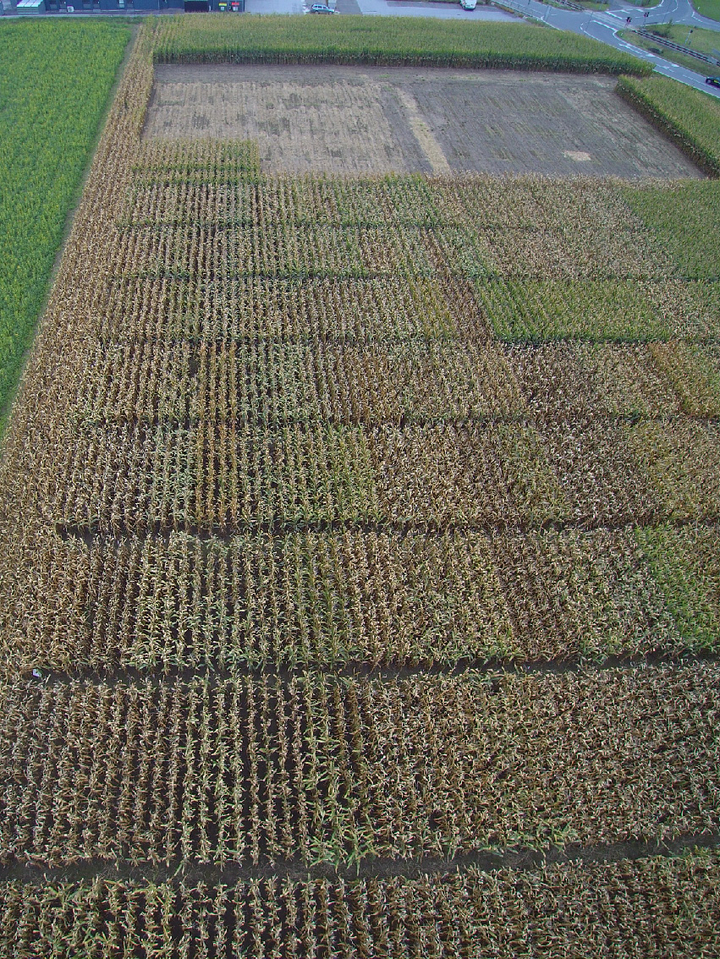
Internationally coordinated grain maize variety trials were conducted in Gleisdorf in 2021 and 2022, and additionally at the Pachfurth trial location in 2022. The following parameters were measured in the maize trials Grain yield, grain moisture, thousand grain weight, stalk lodging, root lodging, early growth, occurrence of the pests Helminthosporium turcicum and Ustilago spp, plant height, silking, leaf maturity and plant number. In addition, the number of leaves, plant height, total height (incl. panicle), cob height, leaf senescence (first signs, +15 days, +30 days), extent of cob fertilisation, leaf size and the grain rows on the cob were recorded on selected standard varieties. Weather data (air temperature, humidity, rain, wind speed) and soil data (soil water content) were also collected. The results obtained are used by the project partners to create models.
Wheat and spelt
In connection with drone flights, we tested the app system for ground cover"Canopeo" in the organic VCU wheat and spelt/wheat trial at BBCH 43-47. The digital values for the ground cover levels were correlated with visual observations. A drone flight over the wheat INVITE trials and over VCU trials in June 2022 targeted the parameters RGB, NDVI (vegetation index), CIR (colour infrared) and single spike detection. These data were correlated with grain yields.
Forage crops
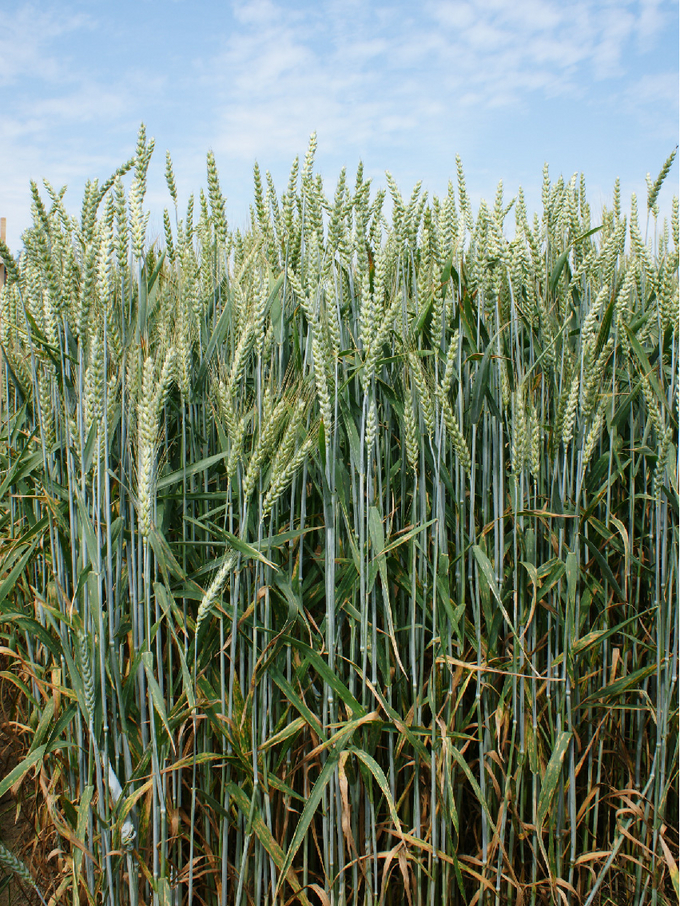
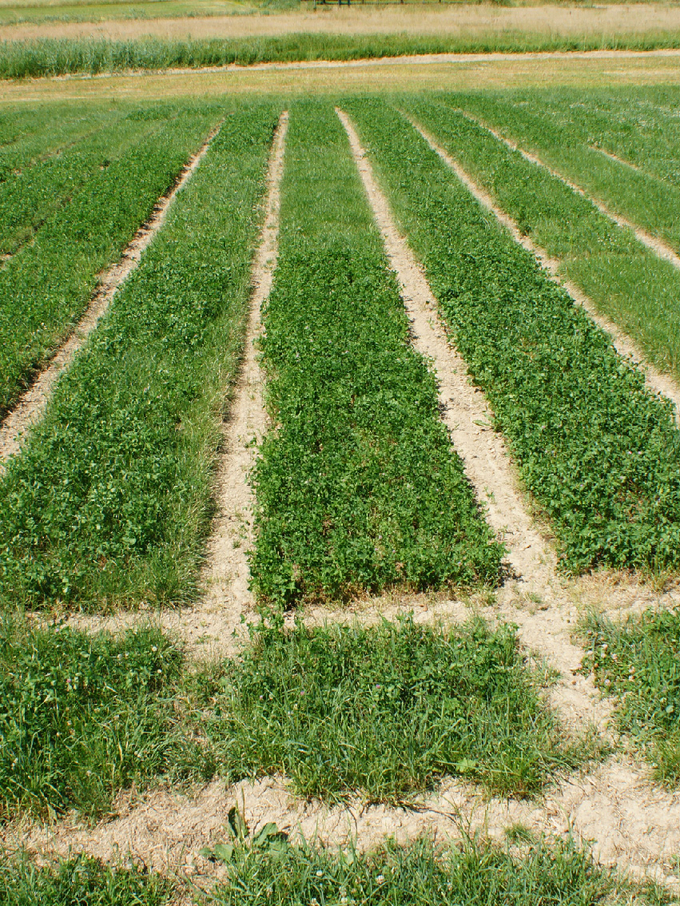
From 2020 to 2022, trials with English ryegrass-red clover mixtures were carried out at the Grabenegg and Hagenberg trial sites. The aim was to expand the guidelines for variety testing to include trials with species mixtures. In addition to the usual parameters used in forage plant variety testing, the proportion of species was also recorded. New phenotyping tools were also tested.
Harmonisation of variety rating scales
We led the task on harmonisation of variety rating scales and synergisms between VCU and DUS tests. In a survey to the national variety evaluation offices (EOs) and post-approval variety testing organisations (PROs) in the INVITE project, the possibilities of harmonising the scales of the national Descriptive Variety Lists were explored.
A further survey investigated synergies between VCU and DUS testing In summary, there is a willingness among INVITE POs and PROs to harmonise the scales in the national Descriptive and Recommended Lists. However, they emphasised the high value of long-term data sets and some could not imagine changing their system based on the raw data. However, harmonisation in the use of rating scales would not require them to be changed.
For countries wishing to adapt their rating systems, the first step recommended is to discuss with stakeholders and economic operators a switch to a scale score of 1 for a very low value of a property and 9 for a very high value.
The potential for synergies between DUS and VCU testing was assessed for each of the plant species tested in INVITE. 28% of the parameters are partly used in DUS and VCU testing. However, there are differences between countries. Some parameters are carried over from the DUS test to the VCU test, such as the seasonal type in wheat. Others are better suited for synergies, such as the navel colour in soybeans. Differences in scale between VCU and DUS should be avoided for these parameters. In the future, image analysis could be used more frequently for visual characteristics in VCU and DUS.
Project details
Project acronym: INVITE
Project management: Francois Laurence, INRAE
Project management AGES: DI Clemens Flamm
Project partners: INVITE brings together 29 partners from twelve European countries: Research Institutes and Universities, Examination Offices for National Variety Approval (EOs), Post Approval Variety Testing Organizations (PROs), a technical institute for advisory services, private breeding companies, a breeders' representative, a policy and impact assessment consultancy and a specialized project management company. More information on the project partners can be found on the INVITE project website.
Funding: the INVITE project is funded by the EU Horizon 2020 research and innovation funding program, Grant Agreement No. GA 817970.
Project duration: 07.2019 to 12.2024
Publications
Flamm Clemens: Invite - Innovations in European Variety Testing. 75th Annual Meeting of the Working Group for Veterinary, Food and Agricultural Sciences (ALVA), Oct 2021, LFZ Francisco Josephinum, Wieselburg, Austria.
Flamm Clemens: Comparison of the descriptive/ recommended lists of Europe and synergies between DUS and VCU. 14th EU-VCU Expert Seminar, online, Sept 2021, Agroscope, Switzerland.
Flamm Clemens: INVITE project: Where is the journey of variety testing in Europe heading? Proceedings of the 7th D-A-CH-Meeting for applied Cereal Science, Oct 2021, AGES, Vienna.
Heiden Caroline: Evaluation of baking quality of wheat population varieties. Proceedings of the 8th ICC D-A-CH-Convention, 6th - 7th Oct. 2022, Uzwil, Switzerland.
Field days
Hagenberg: Field day 22 June 2021, Hendler Martin: Clover-grass mixture trial from the INVITE research project Comparison of Austrian seed mixtures for intensive use.
Gleisdorf: Virtual field visit 20 July 2021, Bernhard Muchitsch: Presentation of the INVITE maize trial in Gleisdorf to INVTE partners
Grabenegg: Field day Sept. 7, 2021, Hendler Martin: Presentation of INVITE raygrass trial to farmers and consultants
Grabenegg and Großnondorf: Virtual field visit 9 June 2022, Flamm Clemens, Guger Michael and Heiden Caroline: Presentation of INVITE wheat trials in Grabenegg (conventional) and Großnondorf (conventional and organic) to INVTE partners.
Hagenberg: Field day 21 June 2022, Hendler Martin: Presentation of the clover-grass mixture trial from the INVITE research project to farmers, objectives.
Gleisdorf: field day August 29, 2022, Starnberger Philipp and Hans Felder: Presentation of INVITE maize variety trial to farmers and advisors.
Last updated: 17.12.2025
automatically translated