Cotton bollworm
Appearance
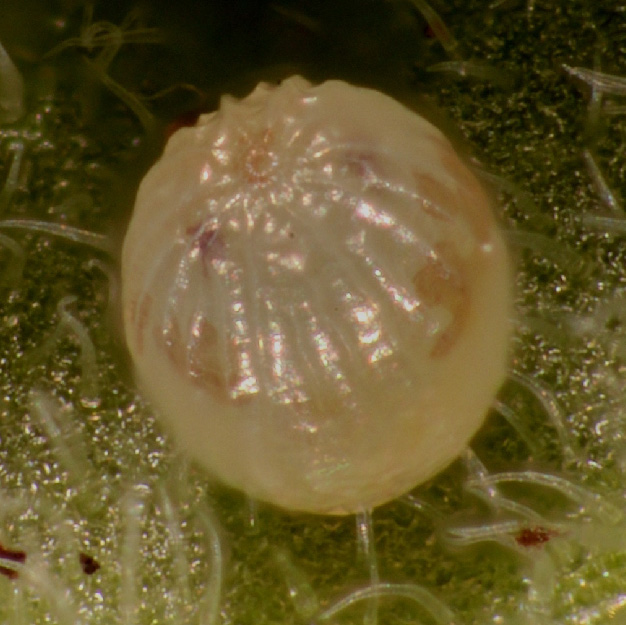
The eggs of the cotton bollworm are cream-coloured and are laid individually or in small groups. They are spherical with a diameter of around 0.5 mm and have a finely textured surface. They cannot be distinguished from the eggs of related species and are very difficult to recognise with the naked eye.
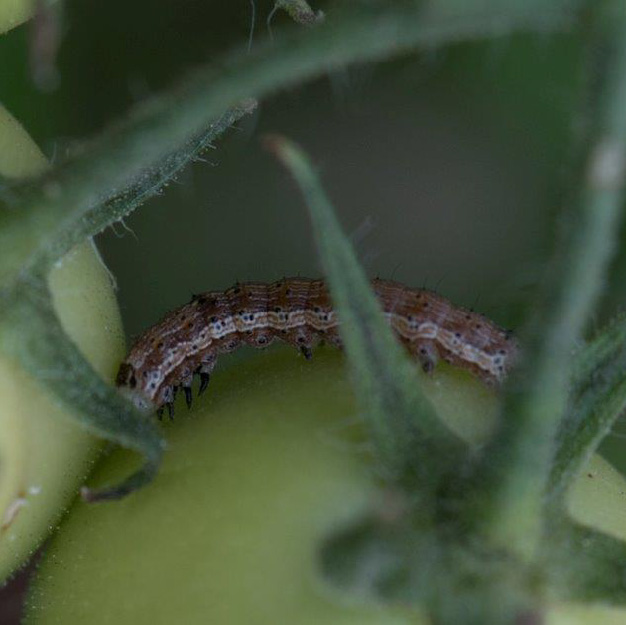
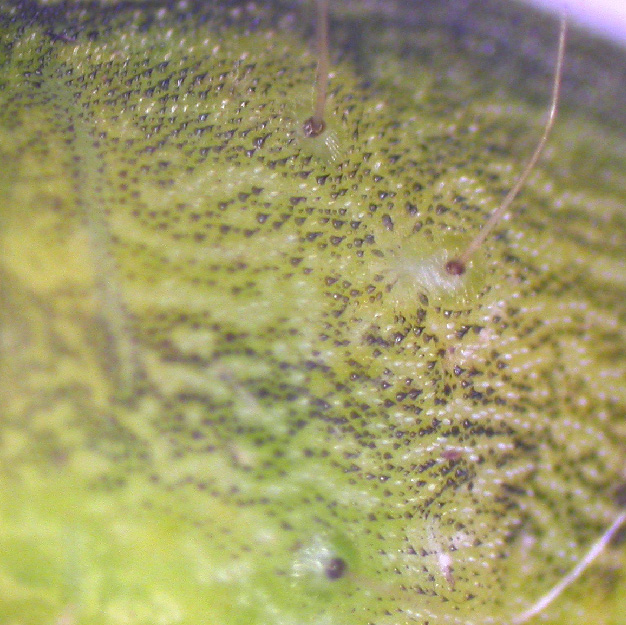
The cotton bollworm is a very variably coloured caterpillar. In addition to green, there are also reddish to brownish colour variants. Characteristic are the longitudinal bands that are broken up into fine lines and bristles that stand on strongly hardened (sclerotised) bases. The skin of the body is covered with very fine cones, which can only be recognised with a magnifying glass. The caterpillar must be reared until it becomes a moth in order to be sure of its identity.
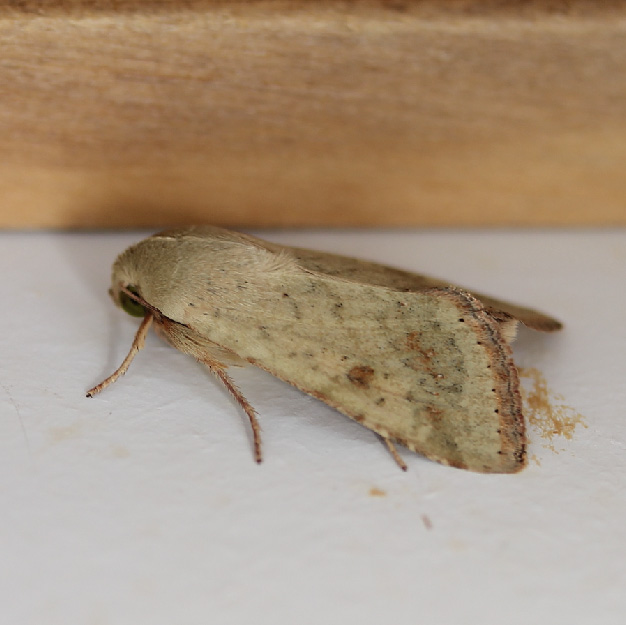
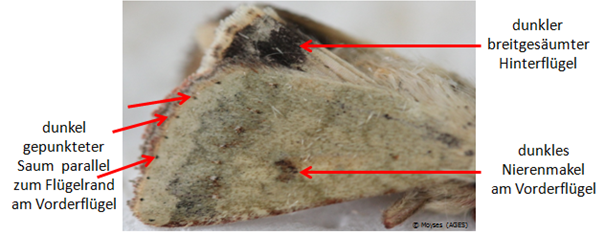
The wings of moths of the cotton bollworm are extremely variably coloured in various shades of brown (females) and grey (males) and have a wingspan of about 35 mm. Characteristic features of the forewings are the dark kidney-shaped spots and the dark dotted border parallel to the wing edge. The hind wings have a broad dark border.


Biology
The cotton bollworm(Helicoverpa armigera) is the caterpillar of a moth that belongs to the owl moth family (Noctuidae).
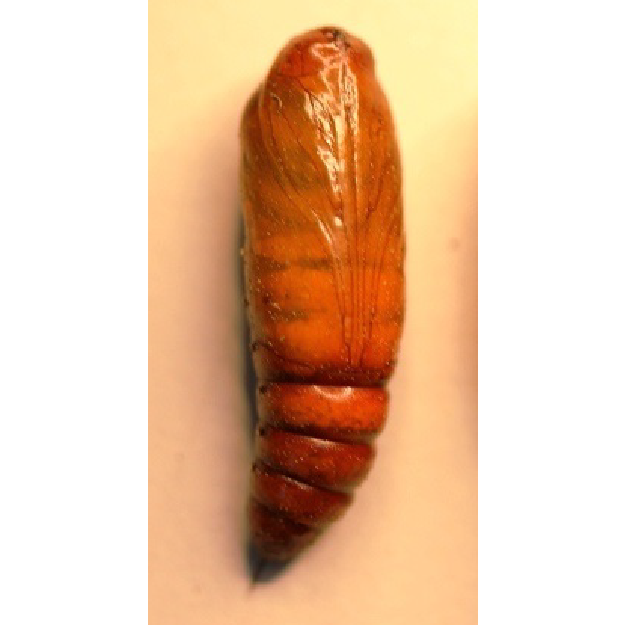
Cotton bollworms lay their eggs on the host plants, usually near flowers or fruit. Females can lay over 1000 eggs, depending on the nutritional status of the caterpillar from which they developed. In the course of development, six caterpillar stages are passed through. The caterpillars prefer to feed in flowers, shoot tips or fruits. If they have the opportunity, they bore into plant parts and then stay in the fruits/flowers/etc.. The ripening seeds are favoured as food. To pupate, the caterpillar leaves its host plant and digs a small burrow, which it lines with spider silk and in which it pupates. Depending on the temperature, several generations of moths can develop each season.
Damage symptoms
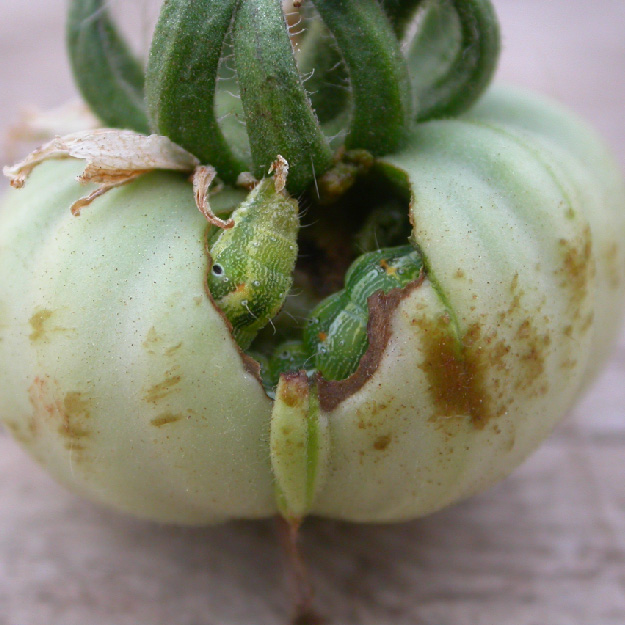
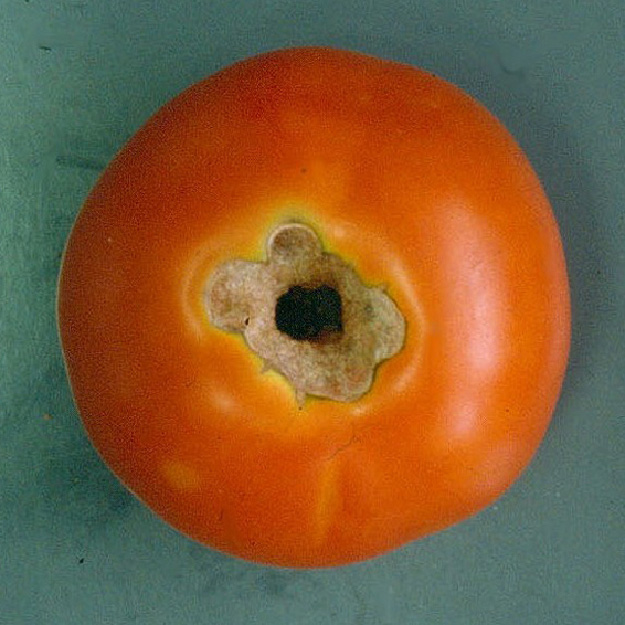
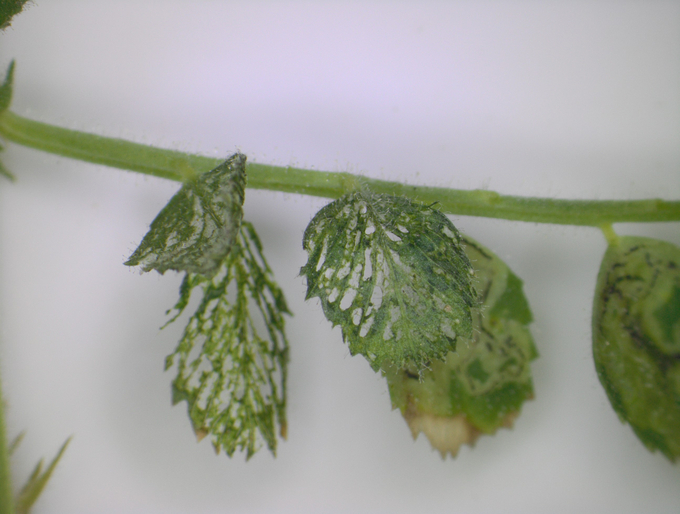
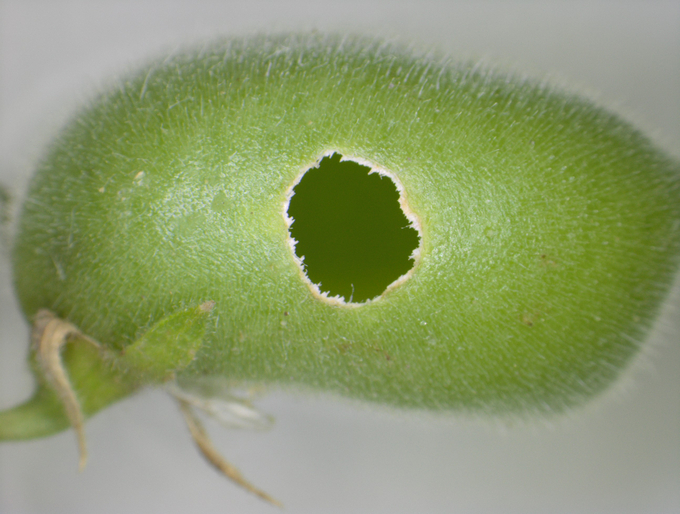
Typical symptoms are boreholes in vegetable fruits and various seed heads, but also in flower buds. Younger larval stages can cause window feeding on the leaves of chickpeas, for example, before they bore into pods to feed on the seeds. This leads to contamination by faecal crumbs and signs of rotting caused by secondary pathogens.
Host plants
The caterpillars have so far been found in Austria in the fruits of nightshade plants (peppers, tomatoes, melanzani), on bush beans, chickpeas, edamame, artichokes, cucumber shoots, corn cobs, hemp, Chinese cabbage as well as in lettuce, gerbera and pelargonium flowers.
It is particularly notorious worldwide for infesting cotton bolls, which is where its German name comes from.
However, its entire list of host plants includes more than 120 wild and cultivated plants, one of its favourite host plants being maize.
Distribution
The bollworm is widespread in the tropics and subtropics of Asia, Africa, America and Oceania. In Europe, it is common in the Mediterranean region and is also found to some extent in temperate climate regions.
In Austria, particularly in the peripheral areas of the Pannonian Plain, the bollworm occurs annually, and masses can occur especially in very hot years. It is also found in western Austria every year, albeit to a much lesser extent.
Please refer to the monitoring map of the Austrian Chamber of Agriculture, which is compiled in co-operation with us.
Spread and transmission
Hibernation as a pupa is possible in dry, not too cold soils. In addition, the moth can fly very well and is able to cover greater distances of up to 1,000 kilometres with the help of wind drift. This means that in summer it can travel from the south and east far into northern Europe.
Economic significance
The feeding activity of the caterpillars severely devalues fruit, buds and seeds. This can result in considerable yield losses due to a reduction in the quality of the infested fruit. So far, damage has been observed in arable crops (maize) and field vegetables (lettuce, bush beans, artichokes, edamame, chickpeas, ...), but also in glasshouse crops (tomatoes, peppers, aubergines, ...). Damage was also observed in domestic and allotment gardens.
Prevention and control
- Before the start of cultivation, check that the greenhouse and polytunnel are free of infestation using specific pheromone traps.
- Carry out regular infestation checks during the season.
- Carry out intensive soil cultivation in greenhouses and polytunnels before and after the start of cultivation.
- Only buy infestation-free young plants.
- In the case of persistent infestation in greenhouses and polytunnels, keep the soil very moist in winter: this simple measure impairs the overwintering of the drought-loving species.
- Treatment with an authorised, effective plant protection product against free-feeding butterfly caterpillars or owl caterpillars (see list of authorised plant protection products in Austria)
- Use of authorised biological plant protection products: Bacillus thuringiensis var. aizawai and kurstaki and/or a nucleopolyhedrovirus preparation against young caterpillars. Young caterpillars must be controlled before they bore into the fruit/buds.
Specialist information
Diagnosis
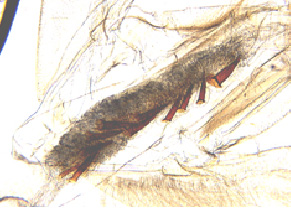
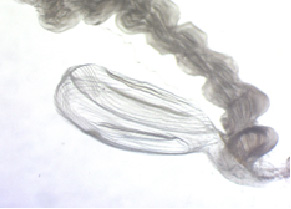
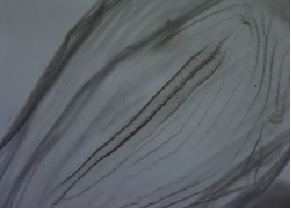
The genital tract of the moths must be examined in order to reliably identify the cotton bollworm:
In the male, typical chitinous horns (cornuti) can be found inside; in the female, a vesicular receptaculum seminis is visible next to the spirally twisted gut, which is covered with fine teeth arranged in four longitudinal grooves.
Last updated: 22.01.2026
automatically translated